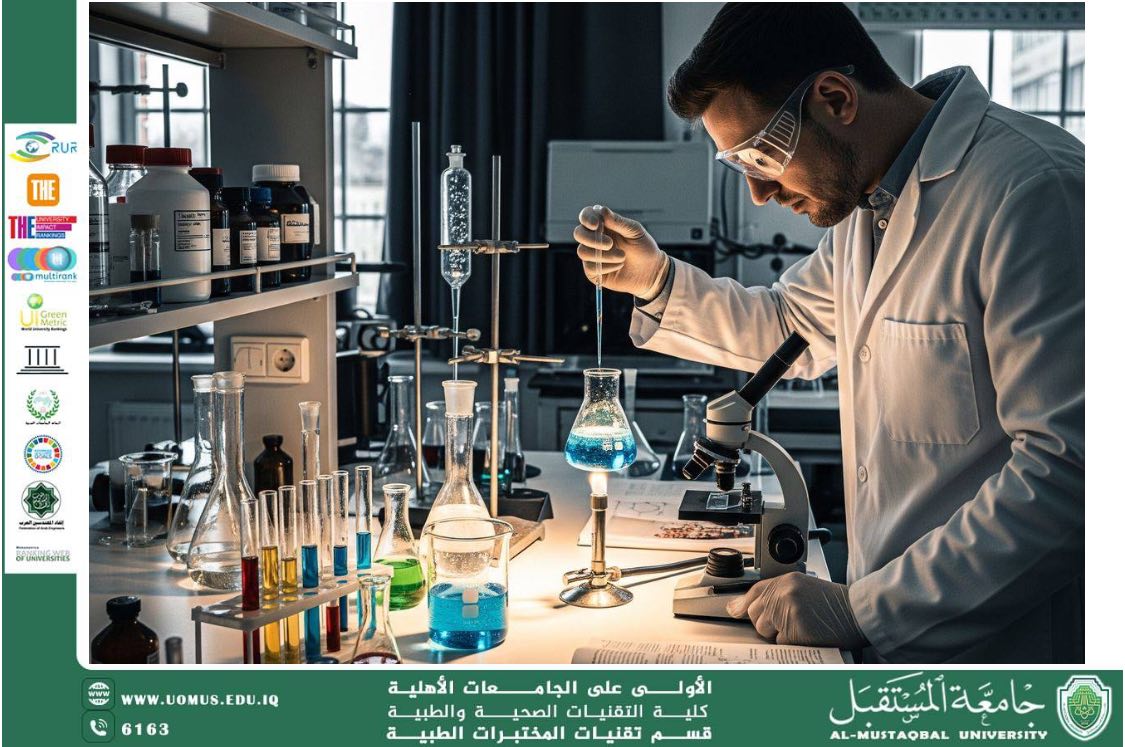
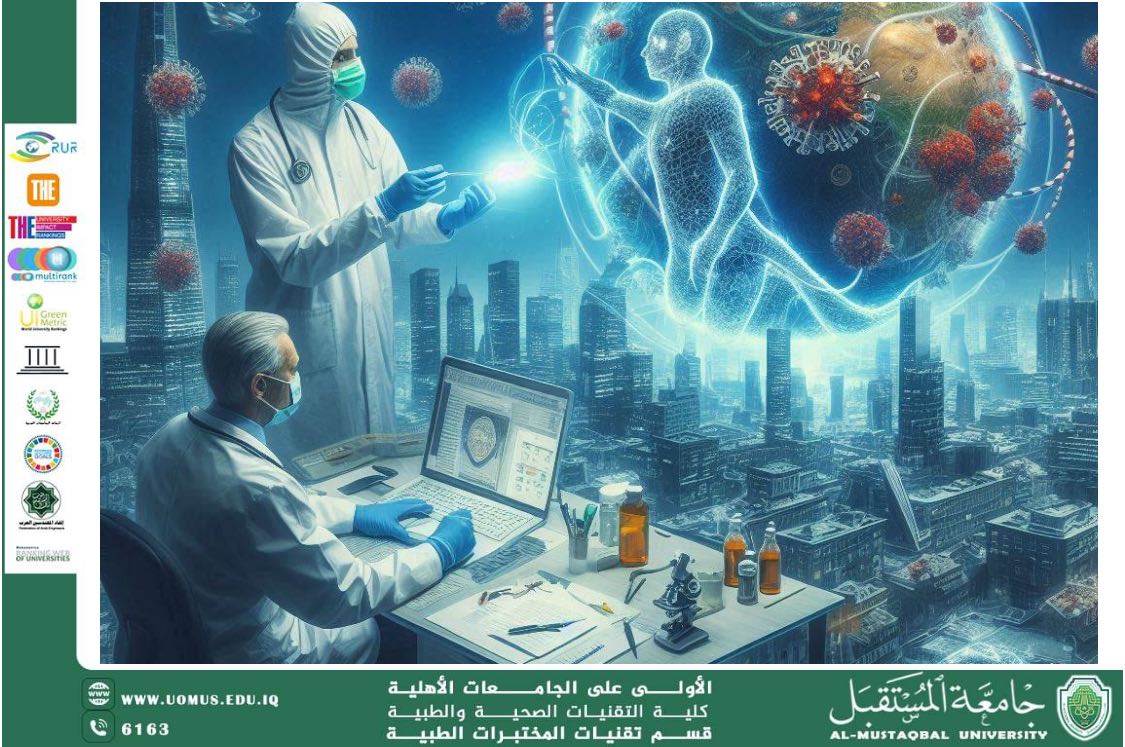
A Scientific Article by Ms. Banin Turki Armut Titled: The Role of Artificial Intelligence in Developing Medical Laboratories and Improving Diagnostic Accuracy
The healthcare sector is witnessing rapid development as a result of technological advancement, and Artificial Intelligence (AI) is considered one of the most prominent modern technologies that has brought a qualitative transformation to the fields of medical diagnosis and laboratory analysis. Medical laboratories rely heavily on accuracy and speed in analyzing samples and issuing results, and here emerges the pivotal role of artificial intelligence in improving the quality of laboratory services and reducing human errors, thereby supporting medical decision-making and enhancing patient care.
The Concept of Artificial Intelligence in the Medical Field
Artificial intelligence is a branch of computer science that aims to design systems capable of simulating human thinking, such as learning, analysis, and decision-making. In the medical field, AI relies on multiple technologies, including Machine Learning and Deep Learning, to analyze vast amounts of health and laboratory data with high accuracy.
Applications of Artificial Intelligence in Medical Laboratories
1. Analysis of Laboratory Test Results
Artificial intelligence contributes to analyzing blood, biochemical, and immunological test results more quickly and accurately by comparing them with thousands of reference values and disease patterns stored in databases, which helps in the early detection of diseases.
2. Reducing Human Errors
Errors resulting from manual data entry or inaccurate interpretation are among the most significant challenges in medical laboratories. AI systems work to automate processes and reduce human intervention, thereby decreasing error rates and increasing the reliability of results.
3. Analysis of Microscopic Sample Images
AI is used in analyzing images of blood smears, tissue samples, and blood cells, as it can identify abnormal cellular changes with accuracy that sometimes exceeds the human eye, especially in diagnosing anemia, leukemia, and cancerous diseases.
4. Laboratory Workflow Management
Artificial intelligence helps organize laboratory work by managing samples, tracking them, prioritizing tests, and predicting peak times, which improves operational efficiency and reduces result turnaround time.
5. Disease Prediction and Medical Decision Support
By integrating laboratory test results with clinical data, AI can predict the likelihood of disease progression or complications, thereby supporting physicians in making treatment decisions based on accurate data.
The Impact of Artificial Intelligence on the Quality of Laboratory Services
The introduction of artificial intelligence has led to an improvement in the quality of medical laboratory services, as results have become more accurate and faster, and operational costs have decreased in the long term. It has also contributed to improving patient safety by reducing misdiagnosis and enhancing early disease detection.
Challenges Associated with the Use of Artificial Intelligence
Despite its significant benefits, the application of artificial intelligence in medical laboratories faces several challenges, including:
• The need for advanced technological infrastructure.
• Protecting the privacy of health data.
• The necessity of training laboratory personnel to use intelligent systems.
• Overreliance on automated systems without adequate human supervision.
The Future of Artificial Intelligence in Medical Laboratories
The future of medical laboratories is expected to witness greater expansion in the use of artificial intelligence, with the development of more intelligent systems capable of continuous learning. AI will play a fundamental role in smart laboratories, personalized medicine, and health sustainability by reducing waste and optimizing resource utilization.
Conclusion
Artificial intelligence represents a true revolution in the operation of medical laboratories, as it has contributed to improving diagnostic accuracy, accelerating procedures, and reducing human errors.
With the continuous advancement of smart technologies, artificial intelligence will become an indispensable element in modern medical laboratories, provided that a balance is achieved between technology and human expertise to ensure the best health outcomes.
Al-Mustaqbal University is the first university in Iraq
Department of Medical Laboratory Techniques – First in the Iraqi National Ranking.