

Rethinking Cybersecurity
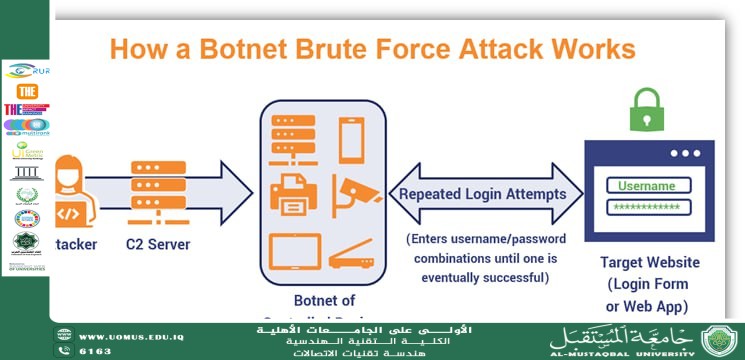
Prepared by Dr. Noor Abdul Kareem Department of Communication Technologies .Cybersecurity is often imagined as an unbreakable technical system, yet its true strength lies in human decisions. Password security, for example, is not about complexity but length. While short complex passwords can be cracked within hours, longer passwords exponentially increase resistance, turning brute-force attacks into an impractical effort.
Security, however, goes far beyond mathematics and algorithms. Ethical responsibility cannot be automated; it requires human judgment and awareness of social impact. Secure systems must be designed with the public good in mind, ensuring inclusivity, accountability, and minimizing unintended harm.
This human focus is also evident in red teaming. The true purpose of these exercises is not to glorify attackers but to evaluate defenders. Red teaming measures how well people, processes, and technologies detect, respond, and adapt under real-world pressure and uncertainty.
At the technical level, strong security means systems should never know users’ passwords. By storing only irreversible hashes instead of actual credentials, organizations ensure that even if databases are breached, the data remains useless to attackers.
Finally, modern threats increasingly exploit human psychology rather than code. AI-powered deepfakes target trust, authority, and urgency, making awareness and critical thinking essential components of cybersecurity. The future of security is human-centered where technology provides the tools, but ethics and awareness provide true resilience
Al-Mustaqbal First University in Iraq