
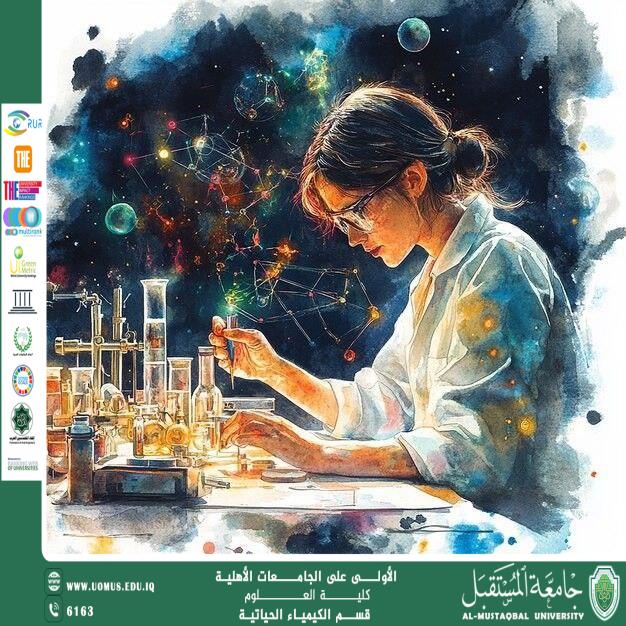
Environmental Chemistry: The Science of Protecting Life and Ecological Balance Scientific Article by: Asst. Estabraq Aref Mohammed
Environmental chemistry is one of the most important branches of chemistry, focusing on the study of chemical interactions occurring in the surrounding environment and their effects on air, water, soil, and living organisms. This field plays a vital role in understanding the nature of pollutants, their sources, and mechanisms of impact, in addition to providing scientific solutions to mitigate their risks and preserve ecological balance.
Environmental chemistry emphasizes the analysis of the natural chemical components of the environment and compares the changes that occur due to human activities such as industry, agriculture, and transportation. Industrial emissions and the burning of fossil fuels release harmful chemical compounds, including sulfur and nitrogen oxides, which contribute to acid rain formation and the deterioration of air quality.
Environmental chemistry also plays a fundamental role in studying water pollution, analyzing both organic and inorganic compounds from industrial waste, agricultural pesticides, and heavy metals such as mercury, lead, and cadmium. These pollutants adversely affect human health and aquatic life, and they may accumulate in the food chain, causing long-term hazards.
In soil, environmental chemistry helps understand the effects of pollutants on fertility and the soil’s ability to support plant life. Overuse of fertilizers and pesticides alters the chemical composition of soil, affecting agricultural productivity and food quality.
The role of environmental chemistry is not limited to diagnosis; it extends to the development of practical solutions, including chemical treatment technologies for polluted water, the use of catalysts to reduce gaseous emissions, and the application of green chemistry principles aimed at minimizing toxic substance production and replacing them with environmentally friendly alternatives.
In conclusion, environmental chemistry is a pivotal science in protecting life on Earth. It contributes to raising environmental awareness, supporting sustainable development, and emphasizes that a balance between industrial progress and environmental preservation can only be achieved through a deep understanding of the chemical interactions that govern our environment.
Al-Mustaqbal University
Ranked First Among Private Universities in Iraq