Economic diversification and renewable energy as inputs for poverty reduction
Poverty is one of the most prominent challenges facing developing countries, especially those whose economies depend on a single source of income such as oil or raw materials. International experience has proven that such dependence makes the economy vulnerable to crises and fluctuations in global prices, which negatively impacts living standards and job opportunities. Hence, the emergence of The concept of economic diversification as a key strategy for achieving stability and sustainable development.
At the same time, renewable energy has become one of the most important drivers of the modern economy because of the investment and employment opportunities it provides and the reduction of environmental costs. Therefore, linking economic diversification with the expansion of renewable energy represents a practical approach to reducing poverty and promoting social justice.
First: The concept of economic diversification and its importance
Economic diversification means expanding the productive base by developing multiple sectors such as industry, agriculture, tourism, and services, instead of relying on a single sector. Its importance lies in reducing the risks of economic shocks resulting from fluctuating oil prices or global crises, and increasing job opportunities by creating new sectors that can absorb the workforce The workforce, improving public revenues, diversifying national income sources, and enhancing social stability by raising income levels and reducing unemployment. When diversification is absent, poverty rates worsen due to weak productive activity and the state's reliance on government employment and rentier support.
Second: Renewable energy as a driver of development
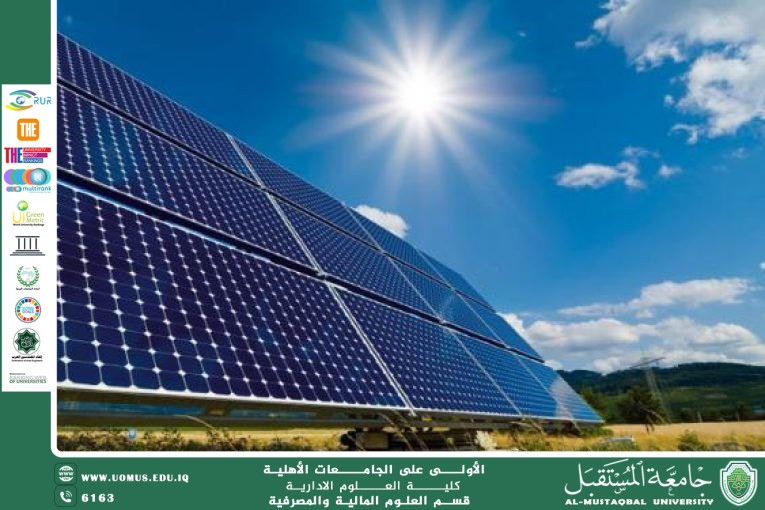
Renewable energy includes solar, wind and hydroelectric power. These sources represent a strategic alternative to fossil fuels and contribute to reducing electricity production costs in the long term, reducing emissions and pollution that affect human health in particular, creating new industries such as manufacturing solar panels and recycling waste, as well as delivering energy to remote rural areas, thus supporting small projects. Investing in this sector is not limited to the environmental aspect, but rather it becomes an economic engine that generates income and opens the door to thousands of jobs in the fields of installation, maintenance and operation.
Third: The relationship between economic diversification and renewable energy in combating poverty
*Creating sustainable job opportunities: Renewable energy projects require trained local labor, which contributes to absorbing unemployment, especially among young people, who are the most vulnerable to poverty.
*Supporting small projects: Providing stable and cheap electricity is essential for the success of agricultural and home-based industrial projects such as food processing plants and crafts, which raises the income of poor families.
*Rural development: Many villages suffer from a lack of traditional energy, and with the spread of solar systems, education, health and irrigation services can be improved, thus improving the quality of life.
*Reducing state expenditures: When a state relies on clean sources, the cost of importing fuel decreases, which allows savings to be directed towards social protection programs and support for the poor.
Fourth: Requirements for success
To transform renewable energy and economic diversification into effective tools for poverty reduction, a clear national strategy must be developed to link energy investment with operational plans, encourage the private sector through tax incentives and soft loans, train young people in technical skills in green energy fields, support scientific research and universities to localize technology, and also protect vulnerable groups by linking projects to local development programs. It is clear that poverty is not an inevitable fate, but rather a result of economic choices that can be modified. Economic diversification provides a solid foundation for growth, and renewable energy represents one of the most important paths of this diversification in the modern era. When economic policies are integrated with green investment, a productive economy can be created that achieves social justice and gives future generations the opportunity to live in dignity. Adopting this approach, especially in countries rich in solar resources such as Iraq, constitutes an essential step towards a less poor and more sustainable future.