

The Role of Food in Artificial Intelligence: Scientific and Applied Dimensions
Prepared by: Asst. Lecturer Maryam Abdullah Kazim
The contemporary world is witnessing rapid advancements in Artificial Intelligence (AI), making it a fundamental component across various scientific, medical, and economic fields. Among these fields, the food and nutrition sector stands out as a vital domain that directly intersects with AI, both by providing the data necessary for developing intelligent algorithms and by employing these technologies to improve dietary systems and human health. The significance of food lies in its influence on human cognitive performance, which constitutes the foundation for the design and development of artificial intelligence systems.
First: Nutritional Data as a Basis for Artificial Intelligence Development
Artificial intelligence systems fundamentally rely on the analysis of big data, and nutritional data are among the most important types of data used in this field. These data include the nutritional values of foods, dietary consumption patterns, long-term health effects, and the environmental and social factors associated with food.
Such data are utilized to train machine learning and deep learning models in order to predict nutrition-related health risks, analyze dietary behavior, and support decision-making in medical and food-related fields.
Second: Artificial Intelligence in Dietary Systems Analysis and Personalized Nutrition
Artificial intelligence has contributed to a qualitative shift in the field of personalized nutrition, as intelligent algorithms are now capable of designing individualized dietary plans based on biological characteristics, health status, lifestyle, and even genetic factors.
In addition, computer vision technologies are used to analyze food images and estimate calorie content and nutrient composition, which enhances nutritional awareness and promotes healthier dietary behavior.
Third: The Impact of Nutrition on Cognitive Abilities Related to AI Development
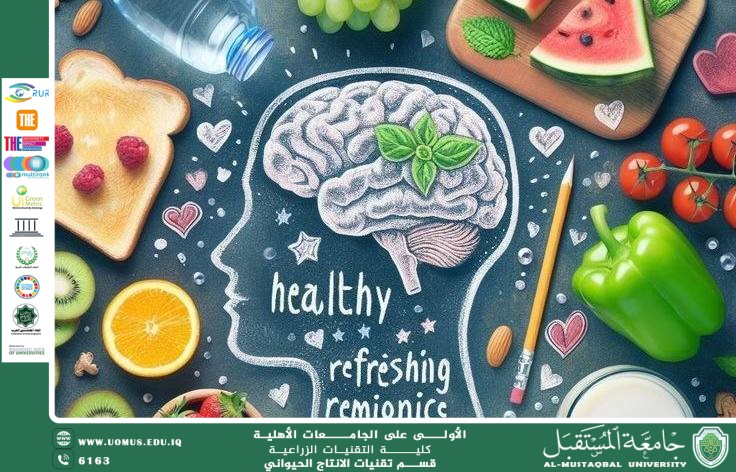
Proper nutrition plays a key role in supporting higher cognitive functions such as concentration, memory, analytical thinking, and creativity. These functions are essential for researchers and developers working in the field of artificial intelligence.
From this perspective, food can be viewed as an indirect factor in the advancement of AI, as it contributes to improving the mental performance of the human element responsible for innovating and developing these technologies.
Fourth: Applications of Artificial Intelligence in the Food Industry
AI applications have improved the efficiency of the food industry through product quality monitoring, early detection of food contamination, supply chain forecasting, and the reduction of food waste. Artificial intelligence is also used in the development of new food products with high nutritional value by analyzing interactions between food components and their effects on the human body.
It is evident that the relationship between food and artificial intelligence is a multidimensional and complementary one. Food represents an important source of data upon which intelligent systems are built, while AI technologies contribute to improving food quality and enhancing public health. With continued scientific progress, this field is expected to witness further developments that support global food security and human health.
Al-Mustaqbal University… the leading private university in Iraq.