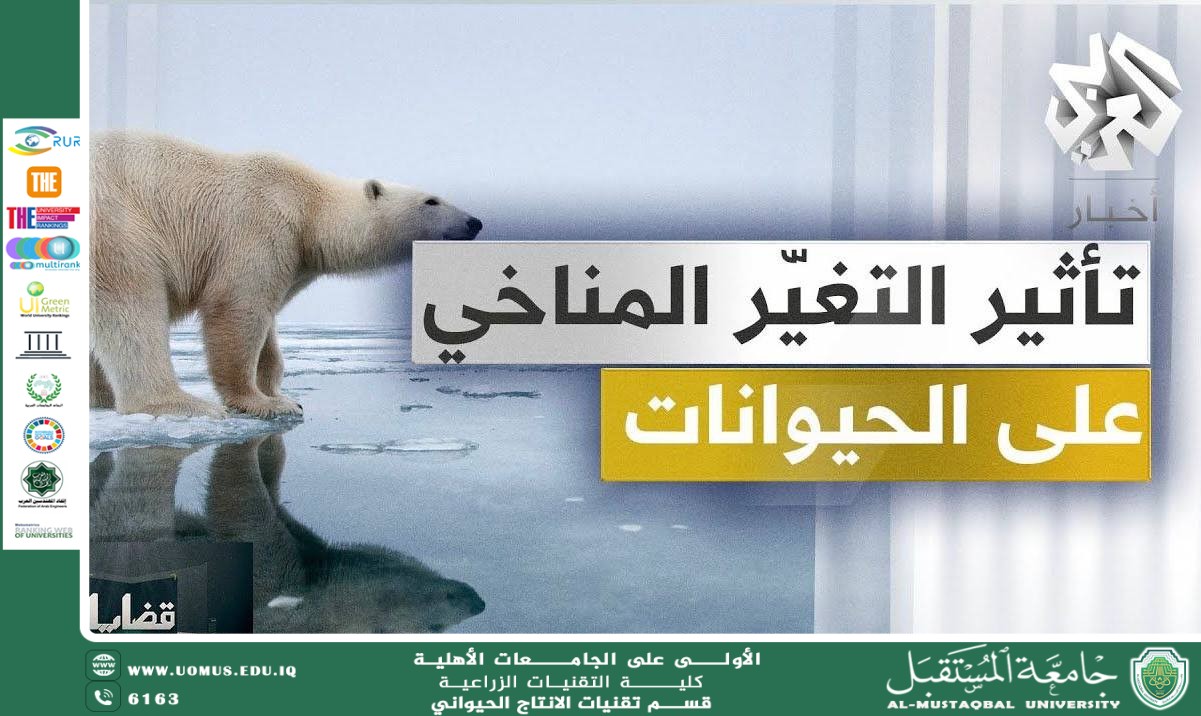

Climate Change and Its Impact on Livestock
Climate change is considered one of the most serious environmental challenges facing the world today, as it has direct and indirect effects on various sectors, including the livestock sector. It is represented by rising temperatures, changes in rainfall patterns, and increased droughts and floods, which negatively affect animal health and productivity.
High temperatures cause heat stress in animals, leading to reduced growth rates, lower milk and meat production, decreased fertility, and weakened immunity. In addition, animals consume more water under harsh climatic conditions, which increases production costs and places a greater burden on farmers.
Another important impact of climate change is the degradation of natural pastures and the shortage of feed resources due to irregular or reduced rainfall. This results in lower feed quality and availability, which negatively affects animal health and increases mortality rates in some regions.
Climate change also contributes to the spread of diseases and parasites, as changing environmental conditions favor the growth and transmission of pathogens. This can lead to significant economic losses in livestock projects and threaten food security.
On the other hand, livestock production also contributes to environmental impacts, as some animal activities emit greenhouse gases such as methane, which intensify global warming. Therefore, it has become necessary to adopt modern farming practices that reduce environmental impacts.
To address these challenges, adaptation strategies should be applied, such as improving feeding systems, using heat-resistant breeds, providing well-ventilated housing, and managing water resources efficiently. In addition, scientific research and environmental awareness among farmers should be promoted.
In conclusion, climate change represents a real challenge to the livestock sector and requires joint efforts from governments, researchers, and communities to develop sustainable solutions that ensure production continuity and protect natural resources for future generations.
Al-Mustaqbal University… the leading private university in Iraq.