“Ancient Iraqi Sculpture: The Journey of the Chisel from Clay to Immortality”by Lecturer Assistant Ahmed Mohammed
Introduction: The Spirit of Stone in Mesopotamia
The ancient Iraqi sculptor was not merely an artist, but a mediator between earth and sky, between the king and the people. In an environment lacking hard stone in the south (Sumer and Babylon), artists imported stone from distant lands and transformed it into immortal works. Meanwhile, the Assyrians in the north took advantage of the abundance of Mosul marble (alabaster) to create some of the grandest visual epics in ancient history.
First: Sumerian Sculpture (Early Dynastic Period) – The Language of Wide Eyes
Sumerian sculpture was characterized by profound spirituality and a strong focus on worship.
Artistic Features:
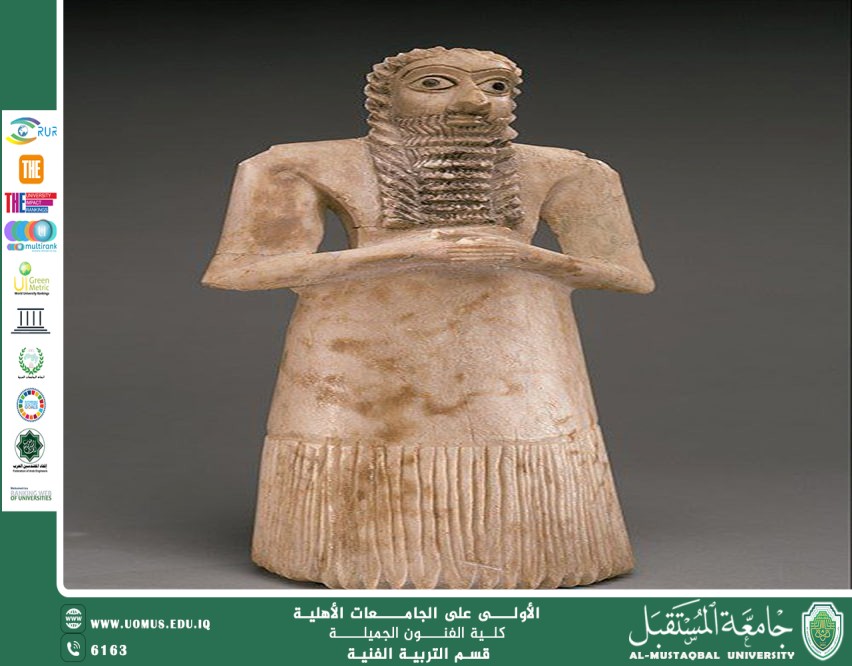
Wide eyes inlaid with lapis lazuli (a symbol of spiritual vigilance), and hands clasped over the chest (a prayer posture).
Major Works:
The Tell Asmar Statues: A group of figures of varying sizes representing worshippers in a state of sacred awe before the deity.
The Warka Head: Considered the earliest attempt to represent the human face at life-size scale, distinguished by remarkable anatomical harmony dating back to the fourth millennium BCE.
Second: Babylonian Sculpture – The Majesty of Law and Symbolism
Babylonian art moved from pure spirituality toward the consolidation of state authority and law, while maintaining refined aesthetic elegance.
Artistic Features:
Balanced composition, meticulous attention to garment details, and the integration of cuneiform text with sculptural form.
Major Works:
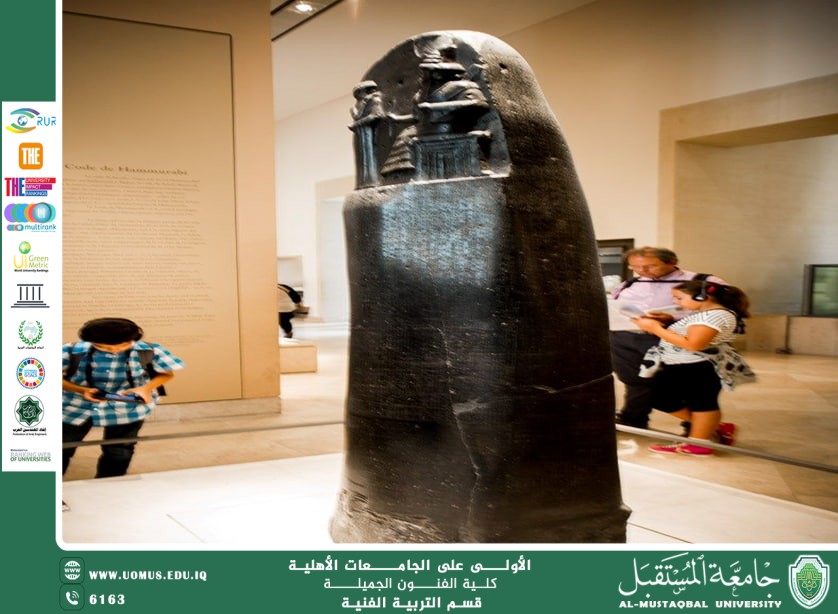
The Stele of Hammurabi: A complete sculptural and political work; at its summit appears a relief of King Hammurabi receiving the laws from Shamash, the sun god, granting divine legitimacy to earthly justice.
The Lion of Babylon: A massive black-stone sculpture symbolizing strength and dominance, depicting a lion standing over its enemy—an explicit metaphor for the power of the Babylonian Empire.
Third: Assyrian Sculpture – An Epic of Power and Movement
Assyrian sculpture represents the pinnacle of relief sculpture in the ancient world, as palace walls were transformed into vast visual narratives documenting victories and campaigns.
Artistic Features:
Exceptional anatomical precision (emphasizing muscles and veins), dynamic portrayal of movement, and the use of mythical creatures to guard entrances.
Major Works:
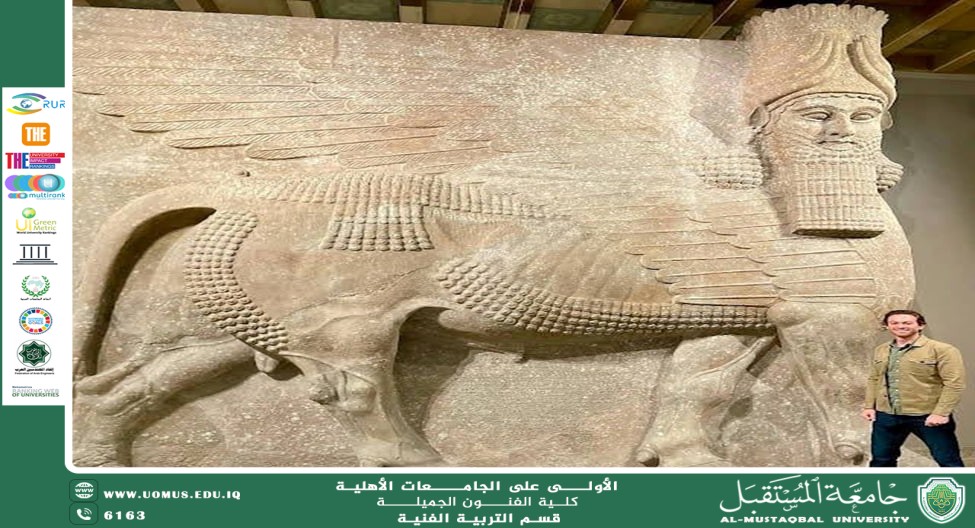
The Winged Bull (Lamassu): A mythical creature with a human head, bull’s body, and eagle’s wings, featuring five legs so it appears stationary from the front and in motion from the side—an extraordinary example of sculptural and engineering ingenuity.
The “Wounded Lioness” Relief: A scene from royal hunting expeditions depicting the animal’s suffering with such anatomical and emotional precision that it has moved modern art critics to tears.
Conclusion: The Genius of Continuity
Ancient Iraqi sculpture never failed to harmonize material with meaning: the Sumerian sculpted the spirit, the Babylonian sculpted order, and the Assyrian sculpted power. These works are not merely archaeological remains, but foundational roots from which global sculpture derived its dignity and earliest principles.
Selected Works:
Tell Asmar Statues (Sumerian Sculpture): Reflect the spirituality and wide-eyed expression characteristic of Sumerian civilization.
The Stele of Hammurabi (Babylonian Sculpture): Depicts King Hammurabi before the sun god at the top of the famous stele.
The Winged Bull – Lamassu (Assyrian Sculpture): Represents the pinnacle of power and precision in monumental Assyrian sculpture.
Al-Mustaqbal University The First University in Iraq