Cells and Tissues as Biological Evidence at the Crime Scene (Asst. Lecturer Huwayda Nazzal Hussein)
Introduction
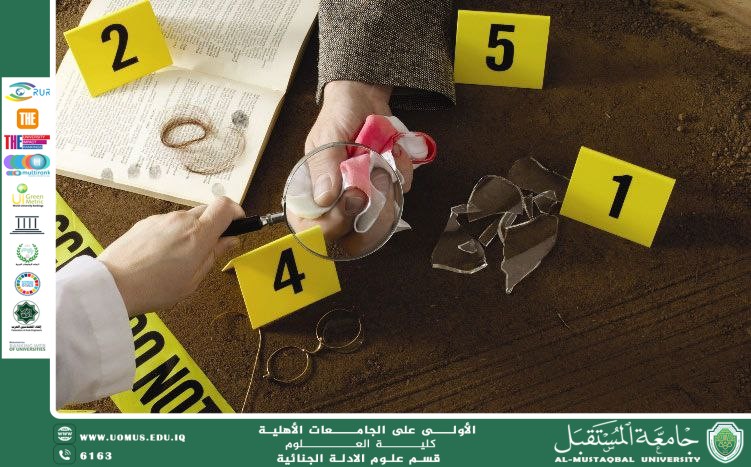
Cells and tissues are among the most important biological evidence collected from crime scenes. They contain valuable biological information that can be used to reconstruct criminal events and link individuals to crimes. Forensic science relies heavily on cellular and tissue analysis.
Types of Cellular and Tissue Evidence
Such evidence includes:
Skin cells from touch
Bloodstains
Tissue fragments
Hair with roots
These materials may be found on clothing, weapons, or surfaces.
Collection and Preservation Methods
The value of cellular evidence depends on proper collection and preservation, including:
Preventing contamination
Using sterile tools
Maintaining appropriate storage conditions
Improper handling may destroy evidence.
Role of Cellular Analysis in Crime Reconstruction
Cell and tissue analysis helps to:
Identify individuals
Determine injury types
Link weapons to crimes
Support DNA findings
Thus, it plays a vital role in reconstructing crimes.
Legal and Forensic Value
Cellular evidence is highly reliable due to its scientific basis and is often decisive in cases lacking eyewitnesses.
Conclusion
Cells and tissues serve as a bridge between life sciences and forensic investigations, making them essential tools in uncovering criminal truth.
Al-Mustaqbal University – the first university in Iraq.