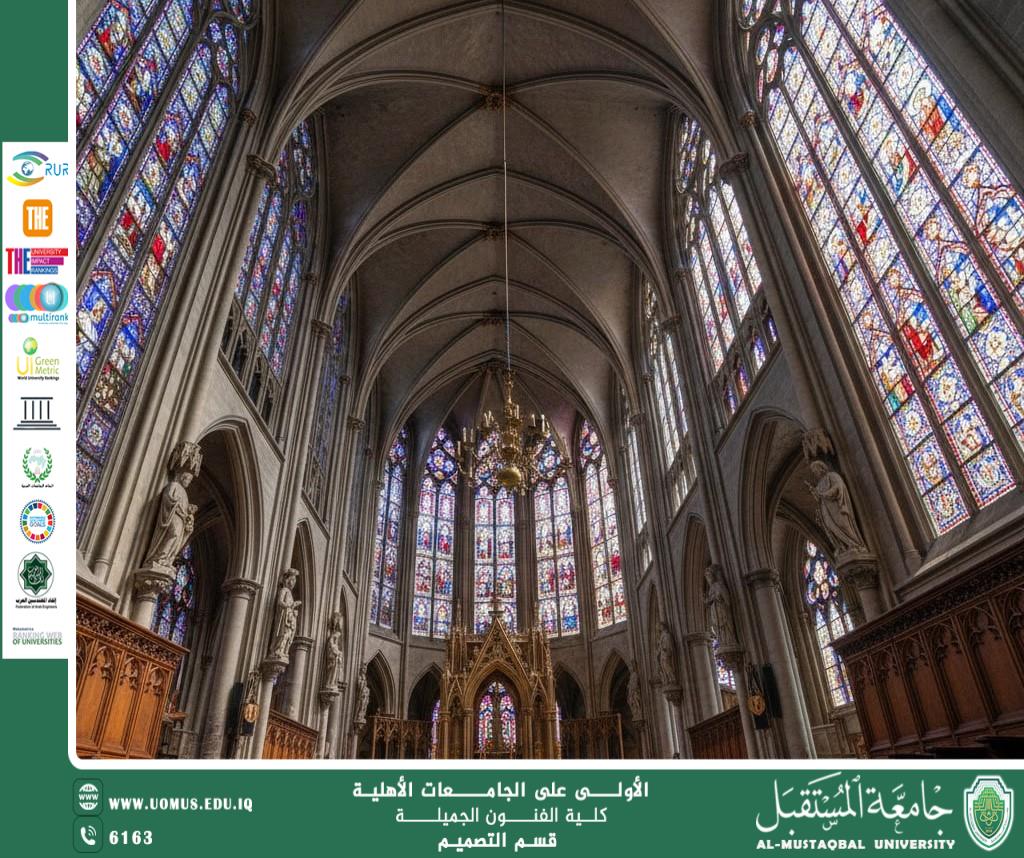

Interior Design in Gothic Art Dr. Asrar Samandar
Gothic art represents a pivotal stage in the history of European interior design, marking a profound transformation of interior spaces from purely structural frameworks into immersive spiritual and visual experiences. This transformation relied on key elements such as vertical elevation, natural light, and the extensive use of stained glass to evoke a contemplative atmosphere that symbolically connected humans with the heavens within architectural space. Gothic art emerged in Europe between the twelfth and fifteenth centuries and was closely associated with Christianity and ecclesiastical institutions. This strong connection was clearly reflected in the design of interior spaces, which evolved beyond functional purposes to become a visual discourse expressing the relationship between humanity and the divine.
The Gothic structural system was based on a stone skeleton rather than massive load-bearing walls, leading to the development of pointed arches, flying buttresses, and ribbed vaults. This structural innovation allowed walls to be opened for large-scale windows, introducing light as a primary design element that shaped interior space and enhanced its spiritual character. In Gothic architecture, light was not merely a functional component but a symbolic element representing divine illumination.
Stained glass windows are among the most distinctive features of Gothic interior design. These windows depicted religious narratives derived from biblical texts, transforming incoming light into a symbolic and spiritual medium. As sunlight passed through the colored glass, the interior space became a dynamic composition of shifting colors, reinforcing the sacred atmosphere and elevating the spiritual experience of the observer.
Gothic interiors were also characterized by rich ornamental detailing, including plant, animal, and human motifs. Architectural openings were predominantly defined by pointed arches, which emphasized verticality and a sense of transcendence. Staircases were often designed in spiral forms that combined structural strength with aesthetic elegance, serving both functional and symbolic roles within the interior space.
Gothic furniture reflected solidity and monumentality. While furnishings were limited among the general population, they were elaborate and richly decorated in palaces and religious buildings. Common furniture pieces included long tables, high-backed chairs, multi-purpose chests, and canopied beds adorned with curtains. The extensive use of metal fittings and hinges further emphasized durability and craftsmanship.
Spatial accessories and interior complements played a significant role in reinforcing the visual and symbolic unity of Gothic interiors. Tapestries, colored textiles, heavy draperies, chandeliers, and sculptural elements with religious and mythical themes were widely used to enrich interior spaces. Together, these elements contributed to a cohesive environment that blended visual richness with symbolic meaning.
In conclusion, Gothic interior design represents a transition from material architecture to spiritual architecture, where light, height, and ornamentation became fundamental elements in shaping the human experience within architectural space.
Almustaqbal University, The First University in Iraq.
الهدف 11 – المدن و المجتمعات المستدامة