Sustainable Animal Production as an Approach to Address Environmental and Food Challenges
A Scientific Article by Assistant Lecturer Maryam Abdullah Kazim
Animal production is considered one of the fundamental pillars of global food security, as it provides rich sources of animal protein and essential nutrients necessary for human health. However, this sector faces increasing environmental and food-related challenges, most notably climate change, degradation of natural resources, and the rising demand for food as a result of population growth. In this context, the concept of sustainable animal production has emerged as an integrated approach aimed at achieving a balance between increasing production, protecting the environment, and ensuring the sustainability of resources for future generations.
In recent decades, global agricultural systems—particularly the animal production sector—have experienced growing pressure due to continuous population growth and changing dietary consumption patterns. Traditional livestock production practices have led to negative environmental impacts, including greenhouse gas emissions, water depletion, and soil degradation. Therefore, it has become essential to adopt sustainable animal production systems that ensure production efficiency while minimizing environmental harm.
Concept of Sustainable Animal Production
Sustainable animal production is defined as a production system that aims to meet human needs for animal products while maintaining environmental balance, improving animal welfare, and achieving economic viability for livestock producers. This concept is based on the rational use of natural resources, the application of modern agricultural practices, and the reduction of waste and pollution.
Role of Sustainable Animal Production in Addressing Environmental Challenges
Sustainable animal production contributes to reducing negative environmental impacts through:
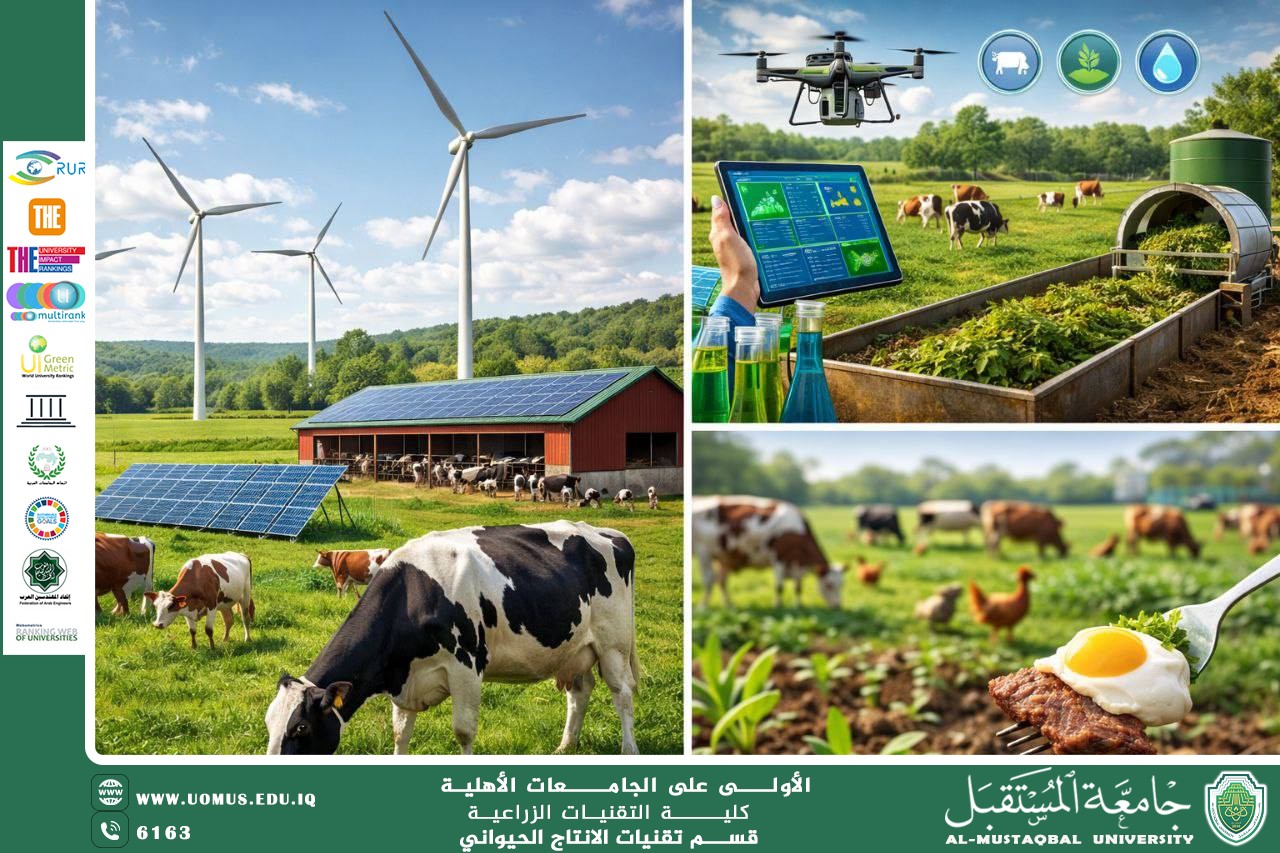
• Reducing greenhouse gas emissions by improving feeding systems and livestock waste management.
• Rationalizing the use of water and feed resources, thereby alleviating pressure on natural resources.
• Conserving biodiversity through sustainable grazing systems.
• Improving the management of animal waste and converting it into sources of energy or organic fertilizers.
Role of Sustainable Animal Production in Achieving Food Security
This approach supports food security by:
• Increasing the efficiency of meat, milk, and egg production with high nutritional quality.
• Providing sustainable protein sources to meet the growing needs of the population.
• Supporting small-scale livestock producers and improving their income, which positively contributes to social and economic stability.
• Reducing food losses at various stages of production and marketing.
Sustainable animal production represents one of the strategic solutions to contemporary environmental and food challenges. Achieving this goal requires the integration of scientific research, agricultural policies, and raising breeders’ awareness of the importance of sustainable practices. Adopting this approach not only ensures the sustainability of natural resources but also contributes to achieving comprehensive agricultural development that meets present needs while safeguarding the rights of future generations.
Al-Mustaqbal University… the leading private university in Iraq.