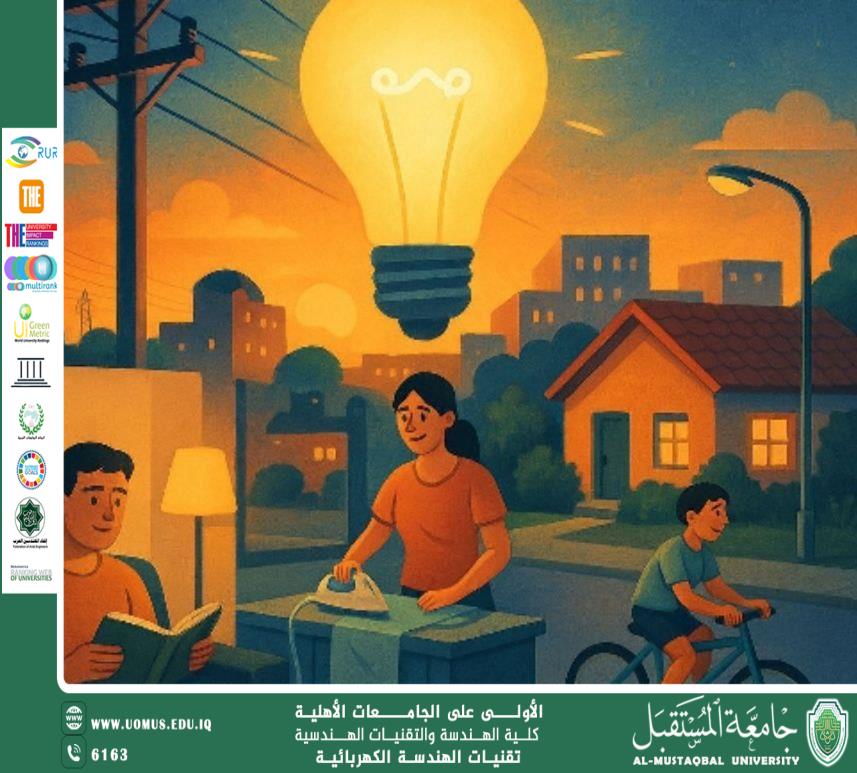
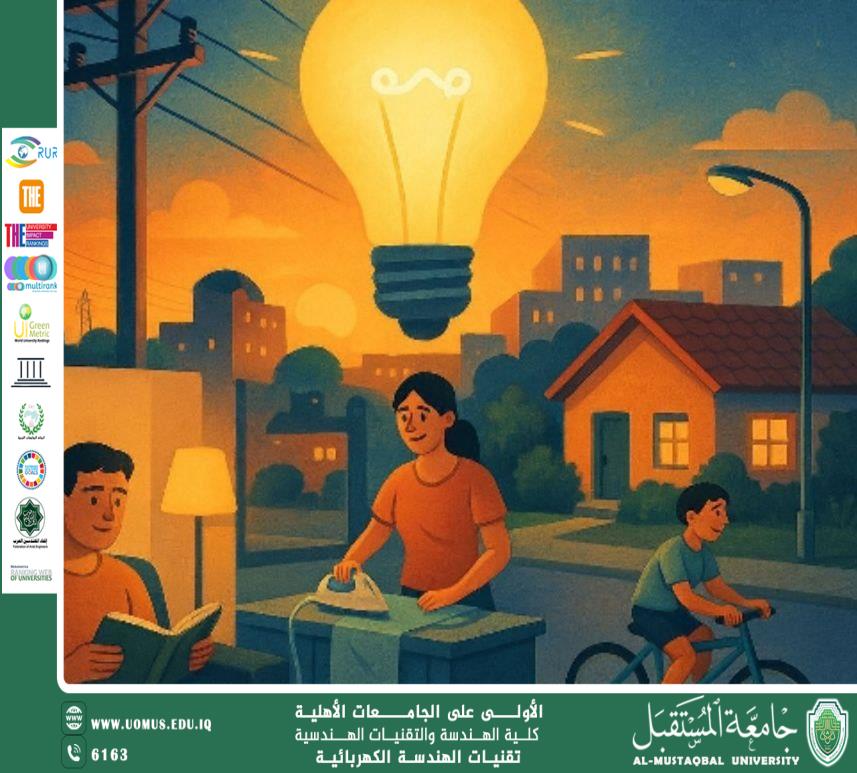
Electrical energy is a key pillar in improving the standard of living
Engineer Suhad Abdul-Amir states that electricity is one of the most fundamental pillars for improving living standards and developing modern societies, as it is directly linked to meeting basic human needs and supporting various vital sectors. Daily activities in homes and institutions depend on the availability of electricity to operate devices and equipment that contribute to comfort, safety, and efficiency in work performance. For example, the availability of electric lighting extends hours of productivity and learning and reduces accidents associated with darkness, thus positively impacting quality of life.
In the healthcare sector, electricity is a crucial element in operating medical equipment such as ventilators, incubators for premature infants, and X-ray and MRI machines. Vaccine and drug storage systems also rely on continuous refrigeration, which requires a stable power supply. Power outages in healthcare facilities can pose serious risks to patients' lives, highlighting the importance of a reliable electrical infrastructure in enhancing the level of healthcare.
In the education sector, the availability of electricity enables the use of modern technologies such as computers, projectors, and interactive whiteboards, in addition to providing access to the internet, which represents a vast source of information. This use enhances the efficiency of the educational process, contributes to developing students' digital skills, and increases opportunities for self-learning and scientific research, thus raising the scientific and cultural level of society.
Electricity plays a pivotal role in supporting the national economy by powering factories, workshops, and small and medium-sized enterprises. Industrial processes rely on electricity to operate production lines and machinery, increasing productivity and reducing human effort. The availability of electricity also encourages attracting local and foreign investment, contributing to the creation of new job opportunities, thereby improving individual income and reducing unemployment rates.
In the agricultural sector, electricity is used to power water pumps and modern irrigation systems, increasing the efficiency of water resource use and improving crop productivity. It is also used to store agricultural products in refrigerated warehouses to preserve their quality and reduce spoilage. This development impacts food security and promotes price stability in the markets.
Technological development and digital transformation depend fundamentally on the availability of electricity, as it forms the basis for operating communication networks, data centers, and smart systems. Smart cities, traffic monitoring systems, and e-government services all rely on a stable electricity supply. The proliferation of smart home devices and renewable energy systems enhances energy efficiency and improves overall well-being.
Reliance on renewable energy sources such as solar and wind power contributes to a more sustainable electricity supply and reduces the environmental impact of fossil fuels. Investing in these sources supports sustainable development, reduces greenhouse gas emissions, and preserves natural resources for future generations. Diversifying energy sources also enhances energy security and reduces the risk of disruptions.
Quality of life is closely linked to the stability and efficiency of the electricity grid. More advanced and reliable networks lead to improved public and private services. Therefore, developing the electricity infrastructure, promoting energy conservation, and encouraging innovation in energy production and storage are fundamental pillars for achieving sustainable social and economic prosperity.
Al-Mustaqbal University, the leading university in Iraq.