Scientific ArticleThe Role of Medical Physics in Developing Targeted Radiotherapy Protocols for Oncology Patients by Dr. Anees Ali
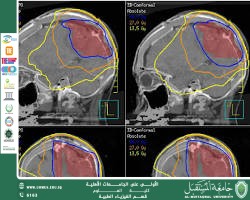
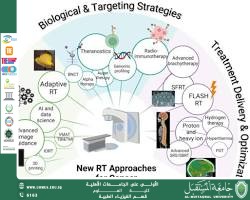
1. IntroductionRadiotherapy has undergone a radical transformation in recent decades, shifting from a "comprehensive" treatment to a high-precision "targeted" therapy. The Medical Physicist plays a pivotal role in this system, bearing the responsibility of ensuring the delivery of the maximum possible radiation dose to the tumor (Tumor Control Probability - TCP) while maintaining the lowest radiation levels for the surrounding healthy tissues (Normal Tissue Complication Probability - NTCP).2. 3D-Conformal Radiation Therapy (3D-CRT) and 4D-RTMedical physics has contributed to the development of computer-based planning systems relying on Computed Tomography ($CT$) and Magnetic Resonance Imaging ($MRI$).Modern Innovation: The development of 4D Radiotherapy, which accounts for tumor motion caused by respiration (such as in lung and liver tumors), allowing for pinpoint radiation guidance during organ movement.3. Intensity-Modulated Radiation Therapy (IMRT) and VMATIMRT technology is a revolution in medical physics, where the radiation beam is divided into thousands of small "beamlets" with varying intensities.The Physicist's Role: The medical physicist utilizes complex algorithms (Inverse Planning) to design dose maps that fit the tumor's shape with millimeter precision. This has significantly reduced side effects for patients with head, neck, and prostate tumors.4. Quality Assurance (QA) and Radiation SafetyNo therapeutic protocol can be implemented without a rigorous Quality Assurance system. The role of the medical physicist at Al-Mustaqbal University and advanced health institutions includes:Linear Accelerator (Linac) Calibration: Ensuring the device delivers the specified dose with at least $99\%$ accuracy.Patient-Specific QA: Using detectors to simulate the treatment plan before applying it to the actual patient to ensure compliance with physical calculations.5. Image-Guided Radiation Therapy (IGRT)Modern protocols have evolved to include in-room imaging.Application: Utilizing Cone Beam CT (CBCT) technology integrated with the treatment machine to verify the tumor's location daily before the session. This compensates for any slight displacement in the patient's position or changes in tumor size.6. Applied Study: Contributions of the Medical Physics Department at Al-Mustaqbal UniversityThe Medical Physics Department at Al-Mustaqbal University serves as a regional center for research and development. Applied studies focus on:Nanotechnology Integration: Studying the role of nanoparticles (e.g., Gold) as radiosensitizers to increase the sensitivity of cancer cells to radiation.AI in Planning: Developing software based on "Deep Learning" to accelerate tumor boundary identification (Auto-contouring), reducing human error and saving time.7. Conclusion and RecommendationsThe future of oncology treatment relies fundamentally on advancements in Medical Physics. To improve treatment outcomes, we recommend:Continuously updating radiation planning software to integrate Artificial Intelligence techniques.Intensifying clinical training for medical physicists on the latest international equipment.Enhancing collaboration between physicians and medical physicists to develop Personalized Medicine protocols tailored to each patient's specific case.
Al-Mustaqbal University The First University in Iraq