Advanced Carbon Capture and Storage Technologies
Tabark Mohsin Ashoor
Carbon Capture and Storage (CCS) technologies are among the most
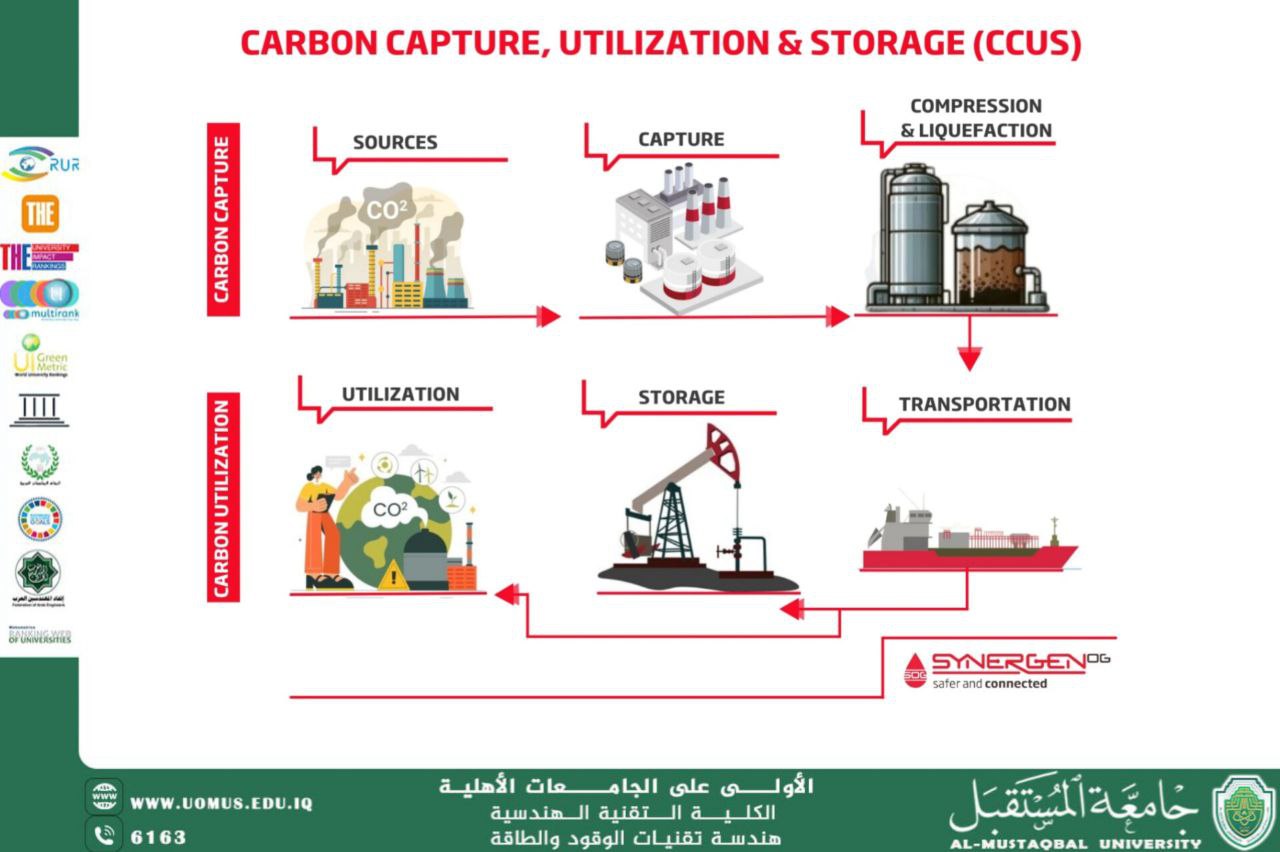
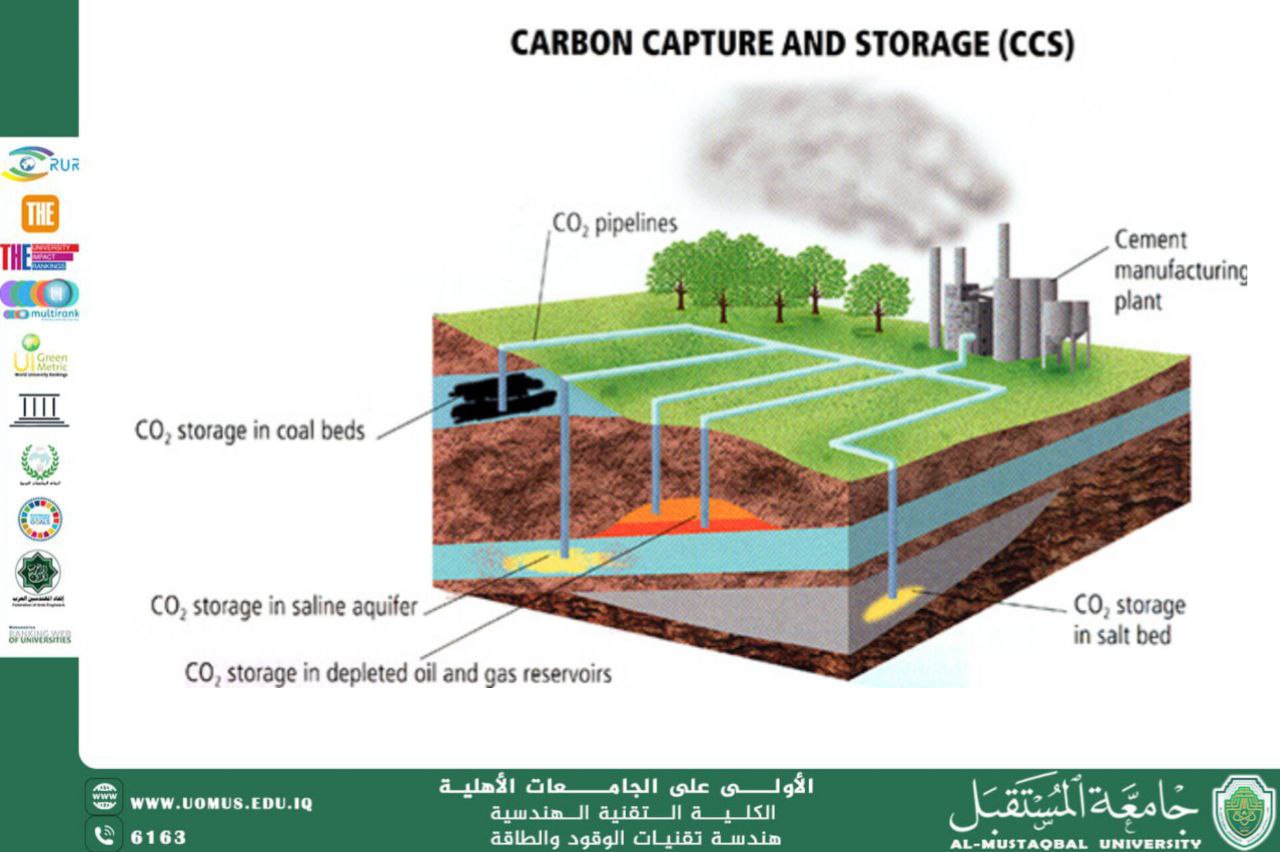
strategic fields in modern chemical engineering due to their pivotal role in reducing carbon dioxide emissions from heavy industries and power generation plants, especially in light of the escalating climate challenges and the global pursuit of carbon neutrality. The fundamental concept of these technologies involves separating CO₂ from flue gases before they are released into the atmosphere, then compressing and transporting it through specialized pipelines to be stored in deep geological formations such as depleted oil reservoirs or saline aquifers, or alternatively, reusing it industrially as part of Carbon Capture, Utilization, and Storage (CCUS). The capture processes rely on multiple technical pathways, including post-combustion capture using chemical solvents like amines to absorb CO₂ from flue gases, pre-combustion capture by converting fuel into syngas and separating the carbon before combustion, and oxy-fuel combustion, which produces exhaust gas rich in CO₂ that is easier to separate and compress. Here, the chemical engineer plays a crucial role in designing absorption towers, improving solvent performance, developing advanced solid adsorbents such as metal-organic frameworks (MOFs), and designing high-efficiency selective membranes, in addition to reducing energy consumption through process integration and heat recovery techniques, as energy penalty and high capital costs remain major challenges for these systems. Long-term storage also requires detailed studies in subsurface fluid mechanics, stability analysis of geological layers, and ensuring zero leakage to maintain environmental safety. With the emergence of the circular carbon economy concept, CO₂ is no longer seen merely as a pollutant but as a raw material that can be converted into economically valuable products such as methanol, urea, synthetic fuels, carbon-enhanced construction materials, and even for enhanced oil recovery, opening new industrial opportunities and improving economic feasibility. CCS systems can also be integrated with blue hydrogen production, where hydrogen is generated from natural gas with simultaneous capture of emissions, or with renewable energy to power separation units, thereby reducing the overall carbon footprint. Carbon capture represents a fully integrated engineering system combining thermodynamics, mass transfer, reactor design, process analysis, life cycle assessment, and economic evaluation, making it one of the most complex and interdisciplinary areas in contemporary chemical engineering. Without these technologies, achieving global emission reduction targets would be significantly more difficult and costly, particularly in sectors where carbon removal is inherently challenging. Therefore, developing more efficient, energy-saving, and cost-effective capture systems remains a top priority in scientific research and industrial applications for the coming decades, ensuring a sustainable balance between economic growth, environmental protection, and resource preservation for future generations.