A Scientific Article by Ms. Tamara Nihad Abbas Entitled: Brain–Computer Interfaces
Brain–Computer Interfaces (BCI)
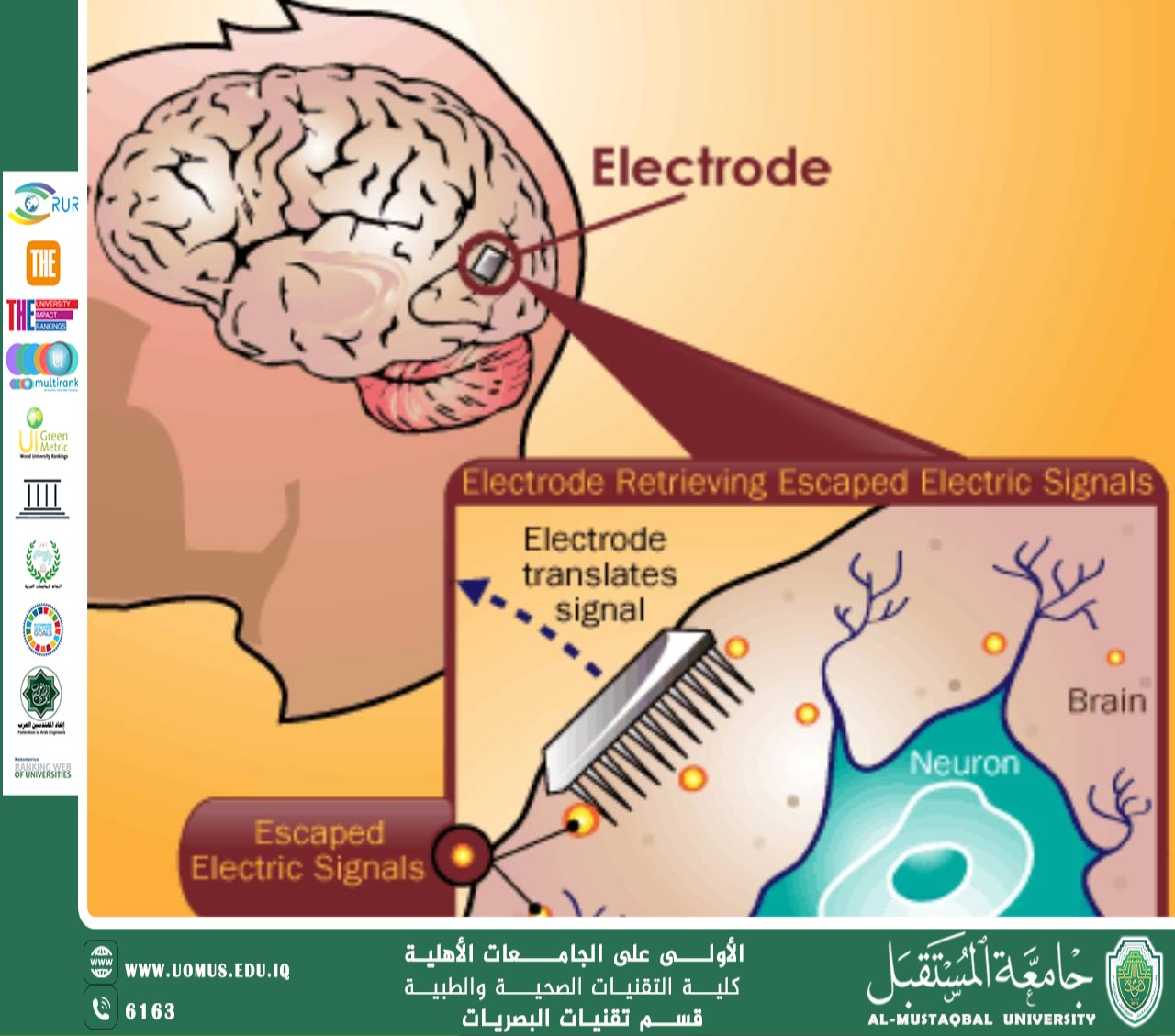
Brain–Computer Interfaces (BCIs) are among the most advanced neurotechnologies that enable direct communication between the brain and electronic devices without relying on traditional muscle movement. This technology works by capturing neural signals from the brain, analyzing them, and converting them into commands that control a computer or smart devices.
What are Brain–Computer Interfaces?
A Brain–Computer Interface is a system that connects the brain’s electrical activity to an external device, such as a computer or prosthetic limb. This is achieved through sensors that detect neural signals, which are then processed using advanced algorithms to translate them into digital commands.
How It Works
BCI technology operates through several main stages:
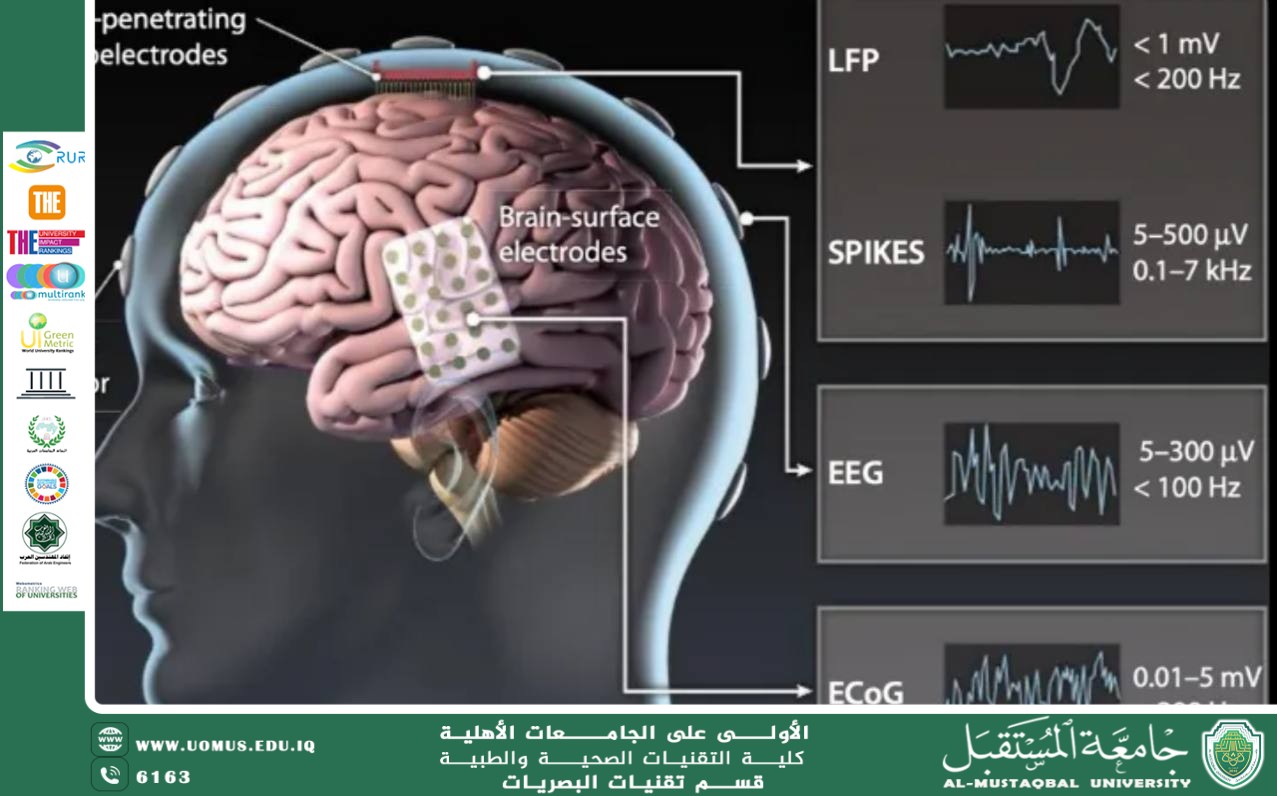
1. Signal Acquisition: Capturing neural signals using Electroencephalography (EEG) or implanted electrodes inside the brain.
2. Signal Processing: Filtering and analyzing the signals to remove noise.
3. Signal Translation: Converting the processed signals into commands understandable by a computer.
4. Command Execution: Performing the desired action, such as moving a cursor on a screen or operating a device.
Types of Brain–Computer Interfaces
1. Non-invasive: Such as EEG devices placed on the scalp; they are safe and easy to use.
2. Semi-invasive: Implanted on the surface of the brain.
3. Invasive (Implanted): Inserted into brain tissue, offering higher accuracy but involving medical risks.
Medical Applications
• Assisting paralyzed patients in communication.
• Controlling prosthetic limbs.
• Supporting neurological rehabilitation after strokes.
• Treating certain neurological disorders.
University of Al-Mustaqbal – The First and Leading Private University