Second: The Dynamic Dimension of the Curved Line and Its Impact on Shaping Outdoor Spaces
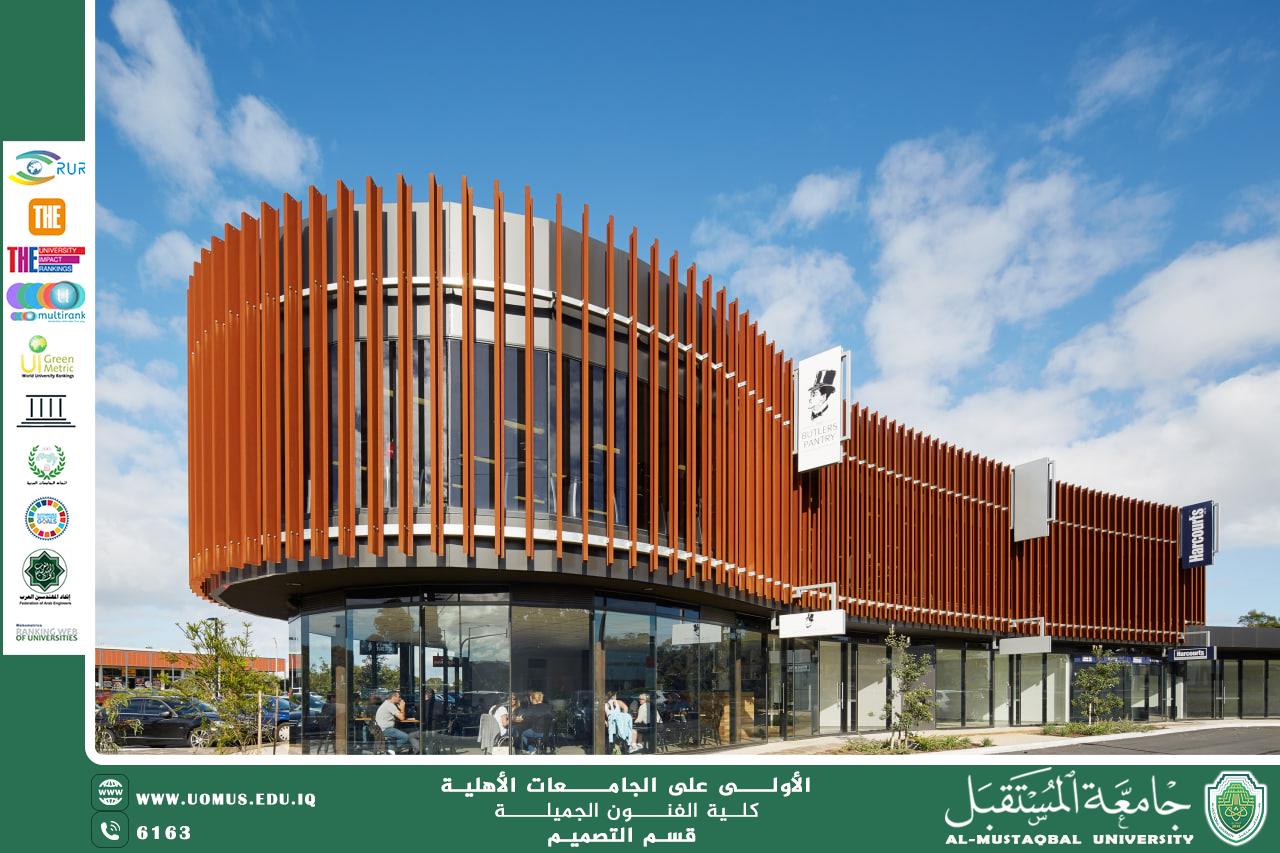
The curved or meandering line is one of the most expressive elements in outdoor spatial design. It visually represents continuity, flow, and transformation, closely connected to natural forms such as rivers and landscapes, making it ideal for gardens, plazas, and open environments.
Curved lines guide movement indirectly, creating gradual transitions that encourage exploration and visual discovery, unlike straight lines that impose direct routes. They enhance relaxation and spatial fluidity, giving outdoor environments a more human-centered character. In urban design, curved lines appear in pathway planning, green landscape layouts, and organic facades, softening rigid architectural masses.
Psychologically, curved lines are associated with softness and comfort, reducing the sense of architectural rigidity and enhancing social interaction in public spaces. When used in sidewalks or plazas, they reduce visual monotony and support contemplative walking experiences. They can also be incorporated into water features to enhance reflections and dynamic lighting effects.
Technically, curved elements require careful study of radii and curvature to ensure safety and accessibility. Designers must balance aesthetics with function, particularly in open educational spaces that promote interaction or therapeutic gardens that enhance calmness and connection to nature.
Curved lines help build a unique visual identity for a place. However, excessive curvature may reduce directional clarity, so they must be integrated within a clear design system. Ultimately, curved lines redefine the relationship between humans and nature and play a key role in achieving visual sustainability in outdoor environments.
Almustaqbal University, The First University in Iraq.