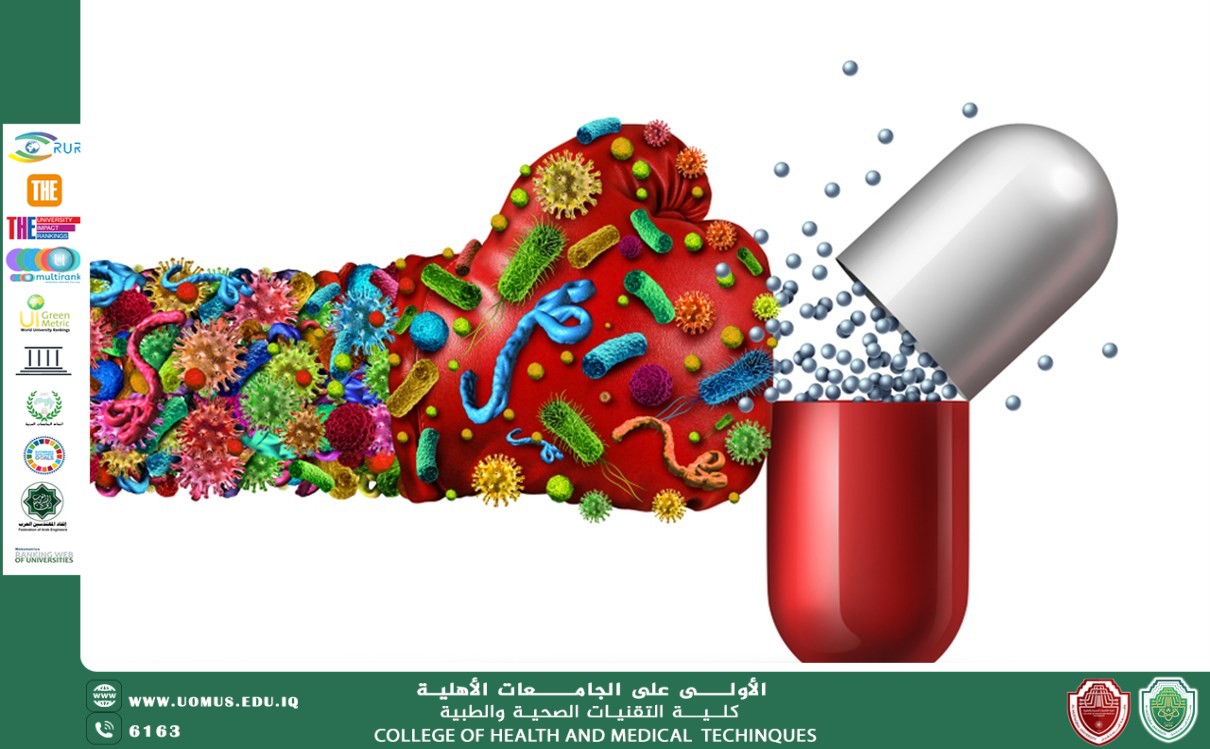

Molecular and Immunological Landscape of Antimicrobial Resistance: From Genetic Determinants to Host–Pathogen Interactions
1. Introduction
Antimicrobial resistance (AMR) is one of the most urgent global health challenges. The increasing prevalence of multidrug-resistant pathogens threatens the effectiveness of antibiotics and complicates clinical management. Resistance arises through genetic mutations and horizontal gene transfer, particularly under selective antibiotic pressure. Antimicrobial resistance remains a growing concern in many developing countries, including our region, where continuous surveillance and rational antibiotic use are essential. Alongside microbial factors, host immune responses—especially CD8⁺ cytotoxic T cells—play a fundamental role in infection control.
2. Molecular Mechanisms of Antimicrobial Resistance
β-lactamase enzymes hydrolyze β-lactam antibiotics. Extended-spectrum β-lactamases such as blaTEM, blaSHV, and blaCTX-M confer resistance to cephalosporins, while carbapenemases are associated with resistance to last-line antibiotics.
Target modification through genes such as mecA results in methicillin-resistant Staphylococcus aureus (MRSA). Efflux pumps and reduced membrane permeability contribute to multidrug resistance. Horizontal gene transfer via plasmids, transposons, and integrons facilitates rapid spread of resistance genes among bacteria.
3. Biofilm and Persistent Infections
Biofilms are structured microbial communities protected by an extracellular matrix. Biofilm-associated bacteria demonstrate reduced metabolic activity, limited antibiotic penetration, and enhanced gene exchange, contributing to chronic and persistent infections.
4. Host Immune Response and CD8⁺ T Cells
CD8⁺ T cells recognize infected cells through MHC class I molecules and induce apoptosis via perforin and granzyme release. Interferon-γ enhances macrophage-mediated pathogen clearance. Some pathogens evade immune detection through MHC downregulation, antigenic variation, and immunosuppressive strategies, promoting persistent infection.
5. Molecular Diagnostic Approaches
Real-time PCR enables rapid detection of resistance genes such as bla, mecA, and vanA with high sensitivity. Whole-genome sequencing provides comprehensive identification of resistance determinants and epidemiological tracking. SNP analysis detects point mutations associated with resistance and microbial adaptation.
6. Limitations
This review is based on previously published data and does not include experimental analysis. Further clinical and molecular studies are required to better understand emerging resistance patterns and host immune interactions.
7. Conclusion
Antimicrobial resistance results from complex molecular and immunological interactions. Understanding resistance genes, biofilm biology, and CD8⁺ T-cell responses is essential for controlling resistant infections. Molecular diagnostics remain critical tools for surveillance and early detection.
References
World Health Organization. Global Action Plan on Antimicrobial Resistance.
Ventola CL. The antibiotic resistance crisis. Pharmacy and Therapeutics.
Munita JM, Arias CA. Mechanisms of Antibiotic Resistance. Microbiology Spectrum.
Abbas AK, Lichtman AH. Cellular and Molecular Immunology.
Davies J, Davies D. Origins and evolution of antibiotic resistance. Microbiol Mol Biol Rev.
Centers for Disease Control and Prevention (CDC). Antibiotic Resistance Threats Report.
Tenover FC. Mechanisms of antimicrobial resistance in bacteria.
Tacconelli E et al. Discovery and development of new antibiotics. Lancet.
Prescott LM. Microbiology, 10th Edition.
Abstract
Antimicrobial resistance (AMR) has become a major global health challenge, reducing the effectiveness of antimicrobial therapy and increasing morbidity and mortality. The development of resistance is driven by genetic mutations, horizontal gene transfer, biofilm formation, and selective antibiotic pressure. Meanwhile, host immune defense—particularly CD8⁺ cytotoxic T lymphocytes—plays a crucial role in controlling intracellular pathogens and shaping infection outcomes. This review discusses the molecular mechanisms of antimicrobial resistance, including enzymatic drug inactivation, target modification, efflux pumps, and biofilm-associated tolerance. It also highlights host–pathogen interactions, immune evasion mechanisms, and modern molecular diagnostic tools such as real-time PCR, whole-genome sequencing, and SNP analysis. Understanding these integrated mechanisms is critically important for improving therapeutic strategies and limiting the spread of resistant infections.
Keywords: Antimicrobial resistance, Molecular microbiology, CD8 T cells, Immune evasion, β-lactamases, Biofilm, PCR, Whole-genome sequencing