Scientific Article by Lecturer Reham Safaa Najem Title: Herpetic Keratitis
Herpetic keratitis is one of the leading causes of corneal blindness worldwide. It is caused by the Herpes Simplex Virus (HSV), most commonly HSV-1. The disease is recurrent in nature, as the virus remains latent in sensory ganglia and may reactivate under certain conditions.
Causes
HSV is transmitted through direct contact with infected secretions. After primary infection, the virus becomes dormant in the trigeminal nerve and may reactivate later.
Triggering factors include:
• Weakened immune system
• Psychological stress
• Excessive sunlight exposure
• Fever or systemic illness
Symptoms
Common symptoms include:
• Eye redness
• Pain or burning sensation
• Photophobia (light sensitivity)
• Excessive tearing
• Blurred vision
• Foreign body sensation
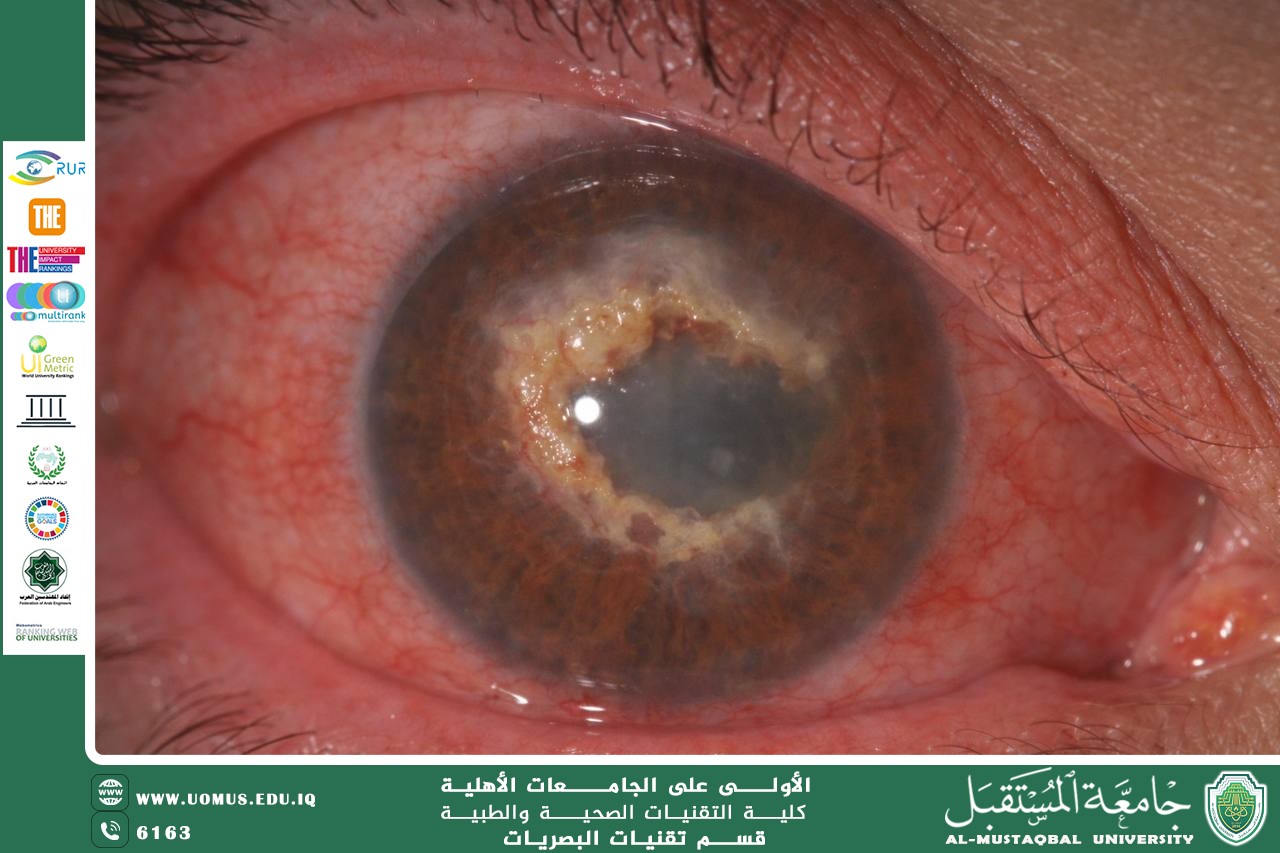
Advanced cases may result in corneal scarring and permanent visual impairment.
Diagnosis
Diagnosis is based on:
• Slit-lamp examination
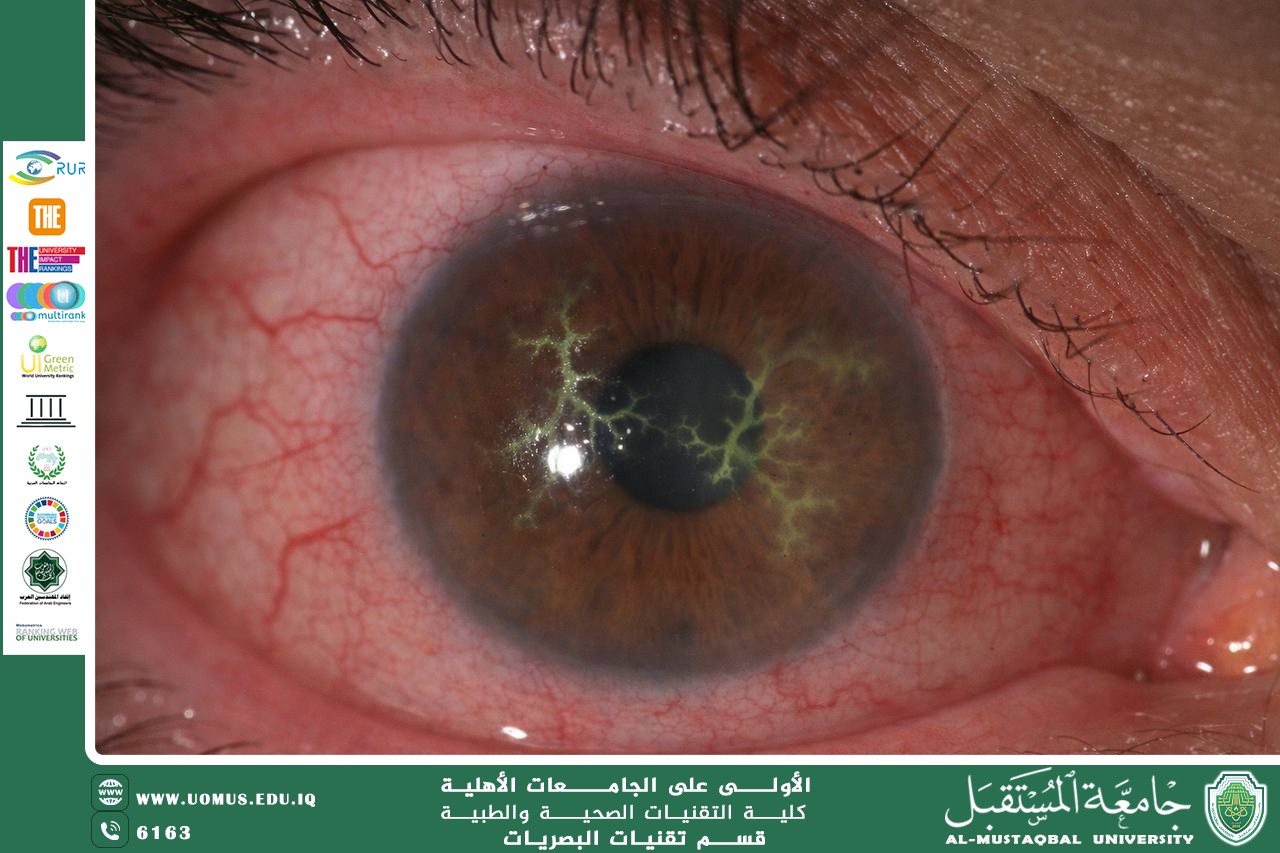
• Fluorescein staining showing dendritic ulcers
• Laboratory tests such as PCR when needed
Treatment
Treatment options include:
• Topical antiviral agents (Acyclovir, Ganciclovir)
• Oral antivirals in severe cases
• Lubricating eye drops
• Corticosteroids only under strict medical supervision
Complications
Untreated cases may lead to:
• Corneal opacity
• Partial or complete vision loss
• Chronic recurrent inflammation
Conclusion
Herpetic keratitis is a serious ocular condition requiring early diagnosis and prompt treatment to prevent visual complications. Regular follow-up with an ophthalmologist is essential.
University of Al-Mustaqbal – The First and Leading Private University