A scientific article by Lecturer Reham Safaa Najem entitled. “The Importance of Drinking Water During Ramadan to Maintain Eye and Body Health.”
Water is considered an essential element for life, constituting approximately 60% of the human body weight and playing a vital role in all physiological processes. During the holy month of Ramadan, fluid intake patterns change due to fasting, which may expose the body to dehydration if water consumption is not properly managed. Water deficiency directly affects overall body health and particularly eye health.
The Role of Water in Body Functions
Water contributes to:
Regulating body temperature
Transporting nutrients and oxygen to cells
Eliminating toxins
Improving digestion
Supporting kidney and heart functions
Maintaining skin elasticity
Lack of adequate water intake can lead to fatigue, headaches, dizziness, constipation, and poor concentration.
The Effect of Dehydration on Eye Health
The eye is one of the organs most affected by fluid deficiency. Dehydration reduces tear production, leading to:
Dry eye
Burning sensation and redness
Blurred vision
Foreign body sensation
Increased risk of eye infections
Insufficient water intake may also worsen symptoms of eye strain, especially among individuals who frequently use smartphones and electronic devices.
The Importance of Drinking Water During Ramadan
To maintain proper fluid balance, it is recommended to:
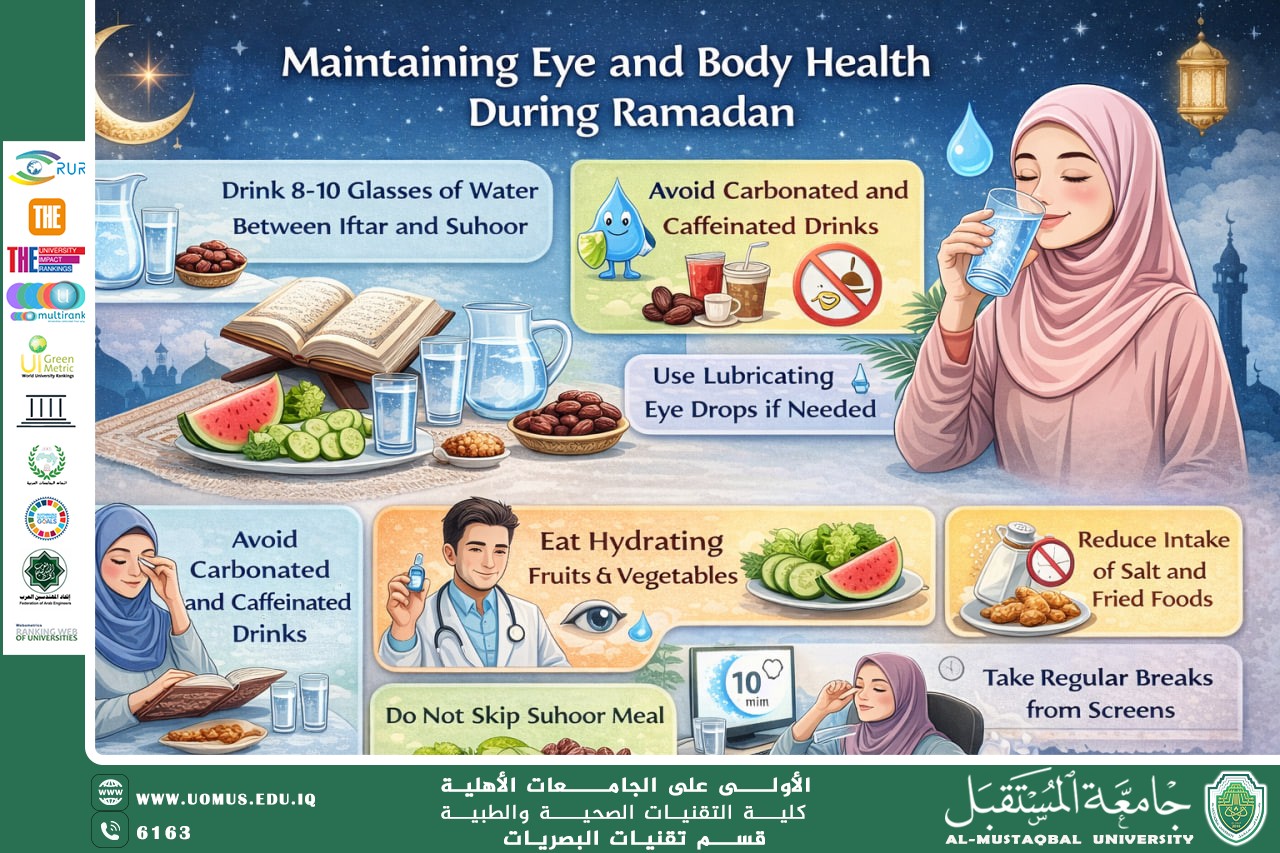
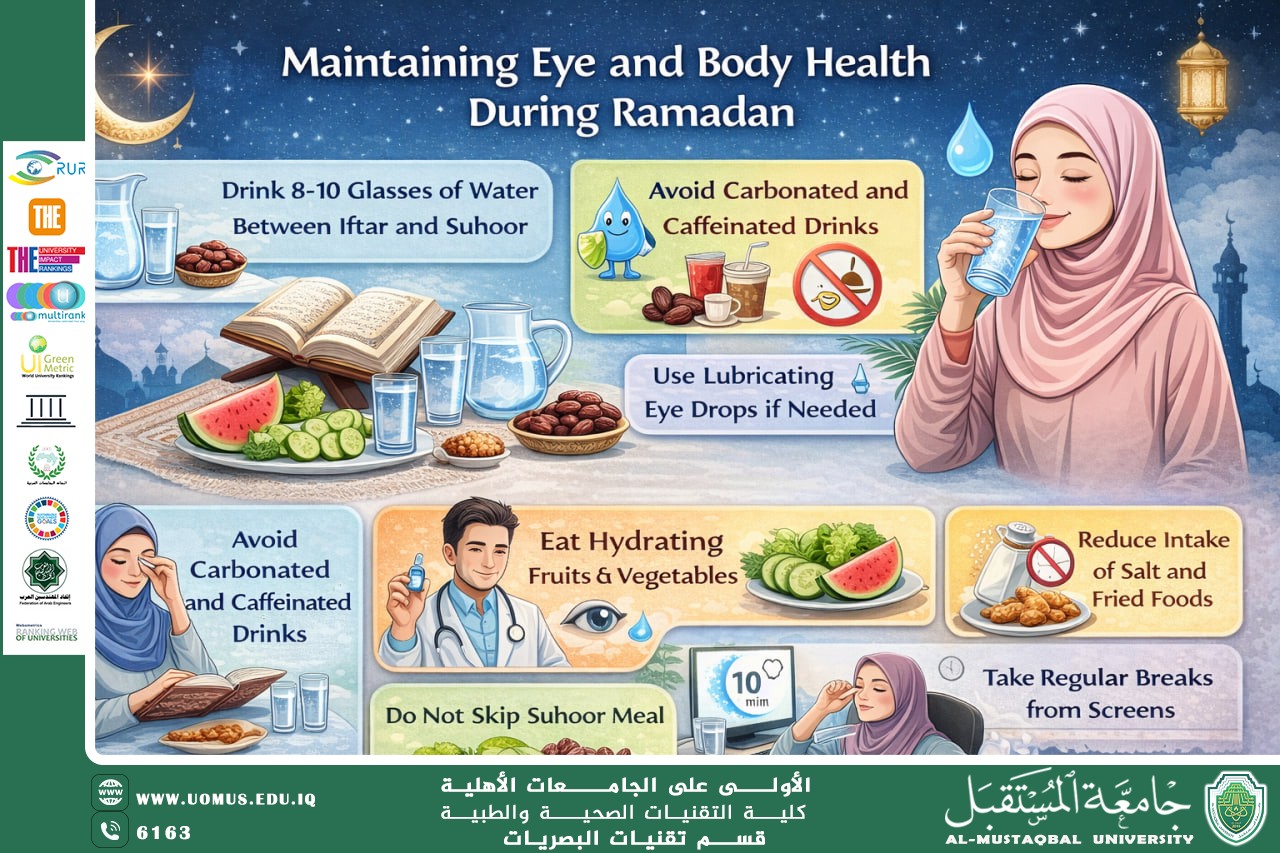
Drink 8–10 glasses of water between Iftar and Suhoor
Distribute water intake evenly rather than consuming it all at once
Avoid carbonated and caffeinated beverages
Increase consumption of water-rich fruits and vegetables such as cucumber and watermelon
Reduce salt and fried foods
The Relationship Between Nutrition and Eye Health in Ramadan
Drinking adequate water along with consuming foods rich in Vitamins A and C and Omega-3 (such as carrots, oranges, fish, and nuts) helps support retinal and corneal health and reduces symptoms of ocular dryness.
Health Recommendations
Start Iftar with water and dates
Drink one glass of water every hour after Iftar
Do not skip the Suhoor meal
Use lubricating eye drops when necessary
Take regular breaks from screens
Conclusion
Ramadan represents an opportunity to reorganize lifestyle habits and promote healthy behaviors. Adhering to adequate water intake significantly contributes to preventing dehydration, supporting eye health, and improving overall body functions. Therefore, awareness of proper hydration is an essential step toward safe and healthy fasting.
University of Al-Mustaqbal – The First and Leading Private University