

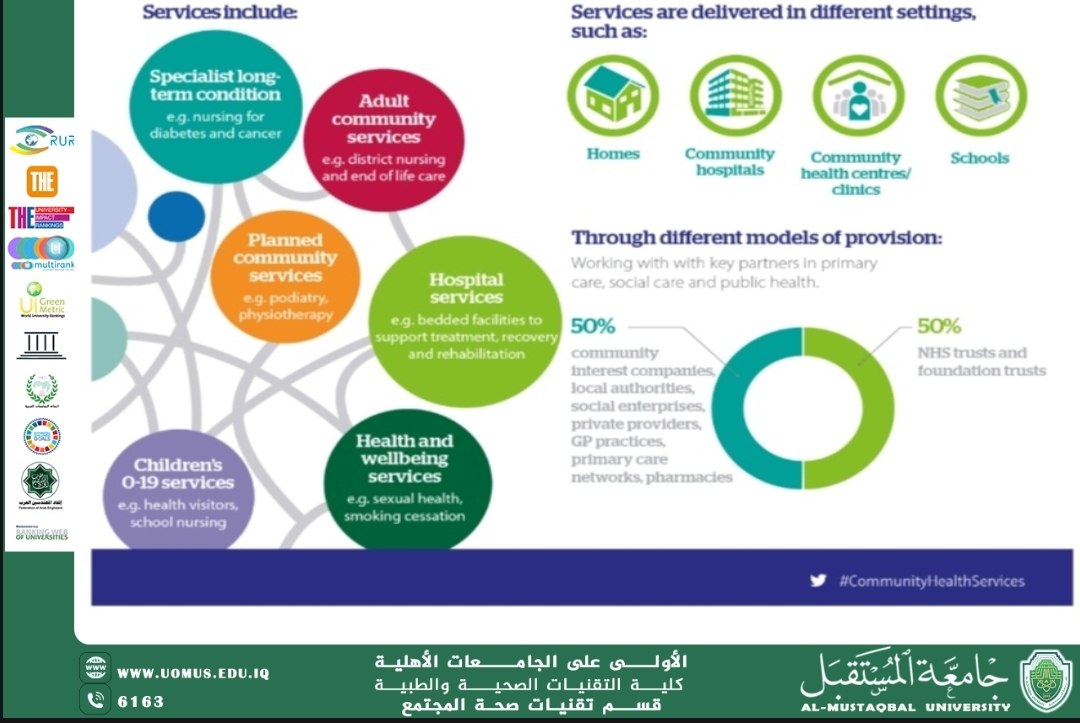
Professor Dr. Aqeel Handhal Taresh authored an article entitled “What Is Community Health and Why Is It Important
Community Health: Concept, Determinants, and Strategic Interventions
Community health constitutes one of the fundamental pillars of the public health system. It aims to improve the health status of populations within a defined geographic or social community through integrated preventive, promotive, and curative interventions. Unlike individual medical care, which primarily focuses on treating disease after its occurrence, community health emphasizes disease prevention, the promotion of healthy behaviors, and the achievement of equity in access to healthcare services.
With the increasing prevalence of chronic diseases, the emergence of epidemics, and the persistence of health disparities among population groups, community-level health interventions have become a strategic necessity to ensure sustainable health development and to enhance overall quality of life.
First: The Concept of Community Health
Community health is a branch of public health that focuses on studying and analyzing the determinants influencing population health and on developing programs and strategic plans that address collective health needs.
It is a multidisciplinary field integrating epidemiology, sociology, environmental sciences, and healthcare management to achieve comprehensive and sustainable health well-being at the community level.
Second: Determinants of Community Health
Community health is influenced by multiple interrelated factors, including:
1. Biological Factors
Such as age, genetic predisposition, and sex, which may affect susceptibility to certain diseases.
2. Behavioral Factors
Including dietary patterns, levels of physical activity, and health-related habits such as smoking or substance misuse.
3. Social and Economic Factors
Such as income level, education, employment opportunities, and social support, all of which play a crucial role in determining access to healthcare services.
4. Environmental Factors
Including housing quality, sanitation systems, pollution levels, and access to safe drinking water, which are critical elements in disease prevention.
Third: Health Promotion and Disease Prevention
Community health is structured around three primary levels of prevention:
Primary Prevention:
Includes immunization programs, health education initiatives, and improvements in environmental and sanitation services.
Secondary Prevention:
Encompasses early detection and periodic screening for conditions such as hypertension and diabetes.
Tertiary Prevention:
Aims to reduce complications of chronic diseases through rehabilitation and ongoing therapeutic management.
Fourth: Community Participation
Community engagement in the planning, implementation, and evaluation of health programs is essential for their success. Participatory approaches ensure that interventions align with cultural and social contexts, enhance collective responsibility toward health, and contribute to the sustainability of health outcomes.
Fifth: Interventions in Community Health
1. Health Education Programs
Designed to raise awareness about proper nutrition, personal hygiene, reproductive health, and chronic disease management. These programs are implemented in schools, community centers, and through media platforms.
2. Environmental Interventions
Including water quality improvement, waste management, pollution control, and sound urban planning, all of which reduce the spread of communicable and non-communicable diseases.
3. Immunization Campaigns
Vaccination programs targeting children and high-risk groups have significantly reduced the incidence of vaccine-preventable diseases.
4. Social Interventions and Public Policies
Policies aimed at reducing social and economic inequalities, such as expanding access to affordable healthcare, food assistance programs, and housing improvements.
Sixth: Challenges Facing Community Health
Despite its pivotal role, community health faces several challenges, including:
Limited financial, human, and infrastructural resources.
Persistent health disparities among population groups.
Cultural and behavioral barriers that hinder acceptance of certain health interventions.
Emerging health threats such as newly emerging diseases, climate change, and rapid urbanization.
Seventh: Future Directions
To strengthen the role of community health in the future, emphasis should be placed on:
Integrating modern technologies such as telemedicine and health information systems.
Implementing evidence-based strategies grounded in scientific data.
Enhancing partnerships between the public and private sectors and civil society organizations.
Aligning community health initiatives with the Sustainable Development Goals (SDGs).
Community health represents the cornerstone of building a balanced and resilient society capable of addressing contemporary health challenges. Achieving effective and sustainable outcomes requires adopting a comprehensive approach that integrates health education, environmental improvement, policy development, community engagement, modern technological applications, and multisectoral collaboration to ensure a healthier future for all.
Al-Mustaqbal University – The First University in Iraq