Scientific article by Ms. Maryam Qassam entitled “Modern Techniques for Early Diagnosis of Anemia” in the Department of Emergency Medical Technology.
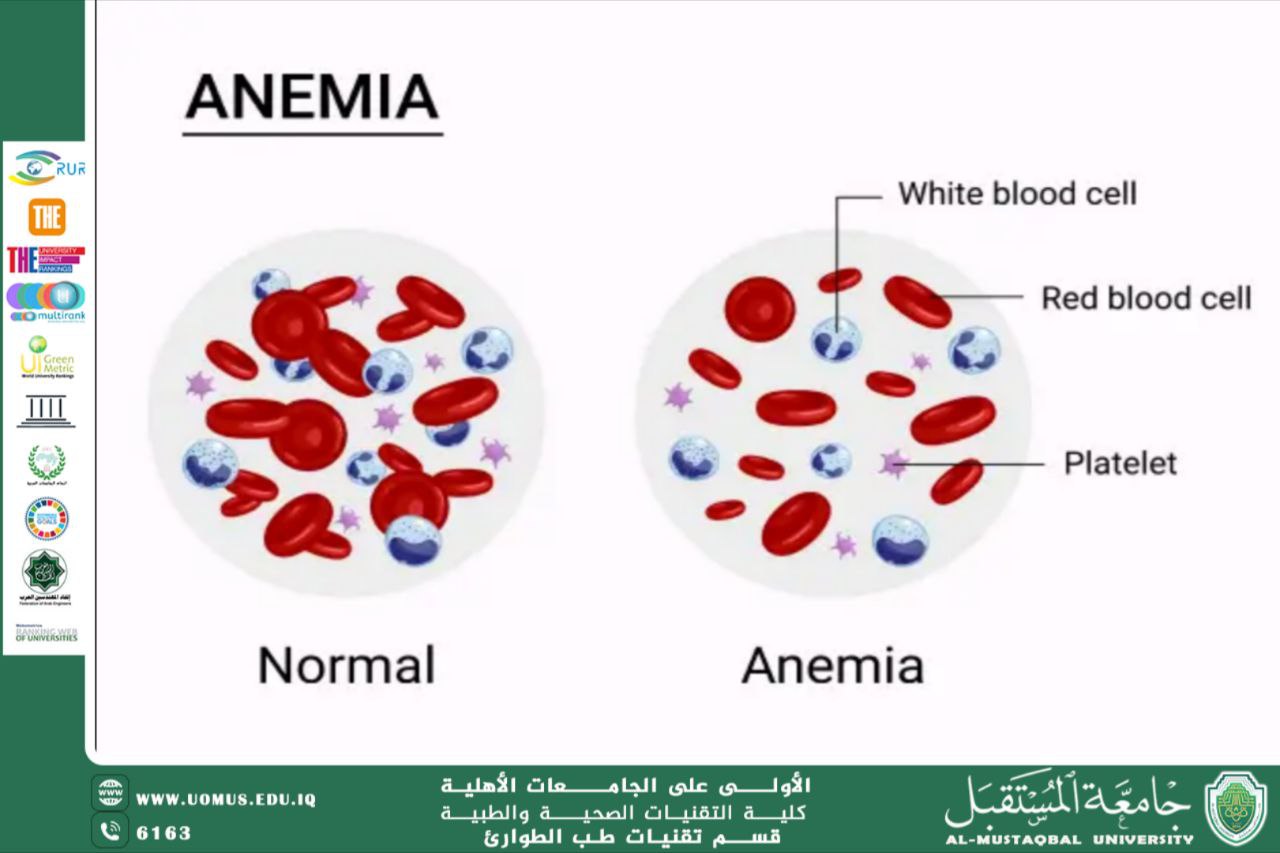
Anemia is one of the most common blood disorders and directly affects vital bodily functions due to decreased hemoglobin levels or reduced red blood cell counts. The condition is particularly serious in children, pregnant women, the elderly, and individuals with chronic bleeding or diseases that impair blood cell production. Early diagnosis of anemia is crucial to reduce complications and improve patients’ quality of life. Studies have shown that early detection allows effective therapeutic intervention before clinical symptoms worsen.
This article, from the Department of Emergency Medical Technology at AL Mustaqbal University, aims to review modern techniques used for the early detection of anemia, with a focus on practical applications in emergency medical settings, where critical cases require rapid diagnosis and precise interventions to minimize health risks.
These techniques include:
Complete blood count (CBC) using advanced automated analyzers, which provide precise measurements of hemoglobin levels, red blood cell volume, and concentration, facilitating the identification of anemia in its early stages.
Iron and essential vitamin tests, such as vitamin B12 and folic acid, which accurately determine the underlying causes of anemia and guide appropriate treatment.
Genetic and molecular tests for diagnosing hereditary forms of anemia, such as sickle cell anemia and thalassemia, enabling early intervention and preventive planning.
Portable rapid detection devices, which allow testing directly in the emergency department or in the field, providing immediate results to support quick and efficient medical decision-making.
AL Mustaqbal University — the first university in Iraq.