A scientific article by Ms. Tamara Nuhad Abaas entitled "Leukemia "
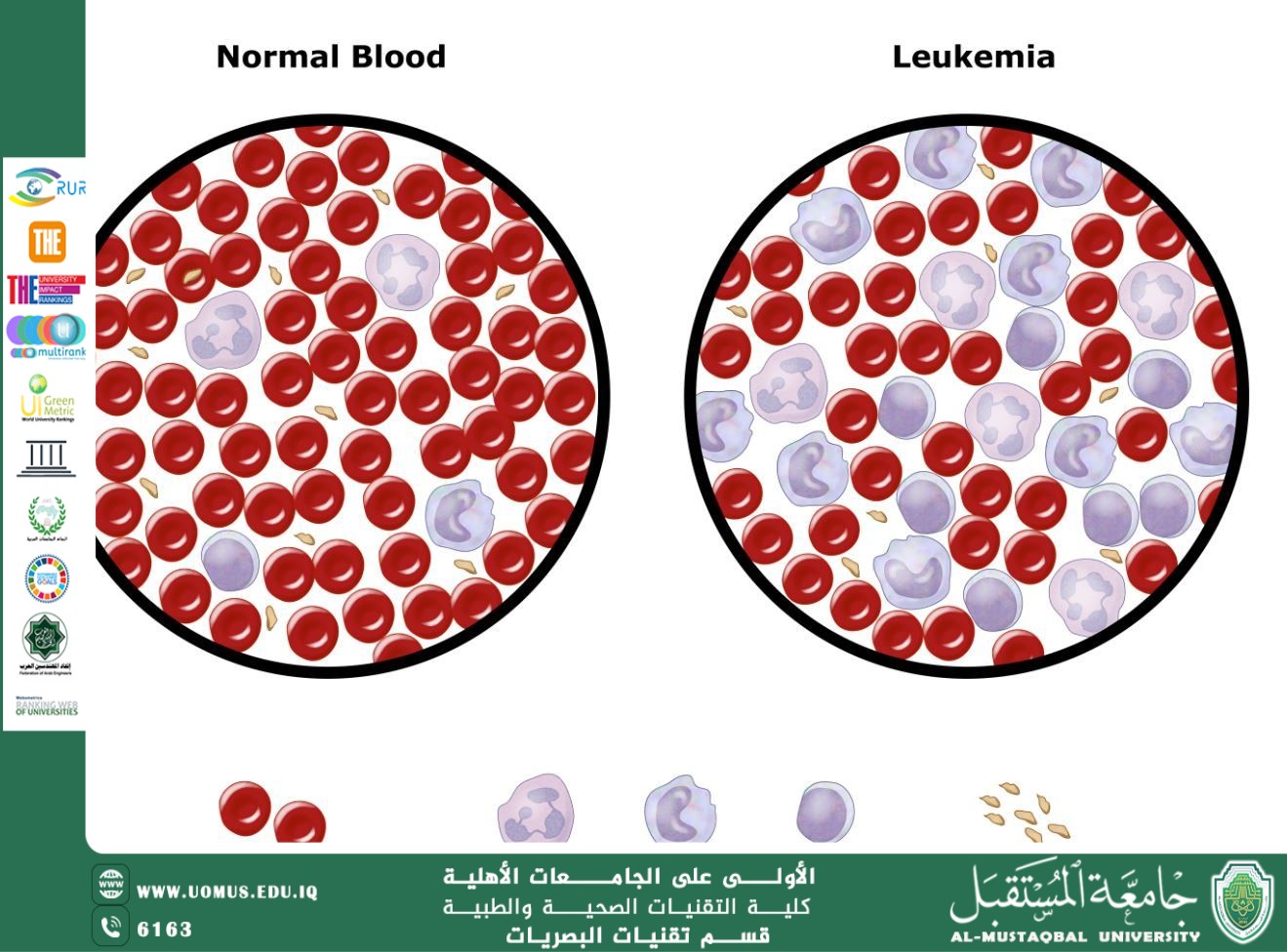
Leukemia is a type of cancer that affects the blood-forming tissues, particularly the bone marrow and the lymphatic system. It occurs as a result of abnormal production of white blood cells, which multiply rapidly and uncontrollably. These abnormal cells interfere with the body’s ability to fight infection and to produce healthy blood cells.
How Does the Disease Develop?
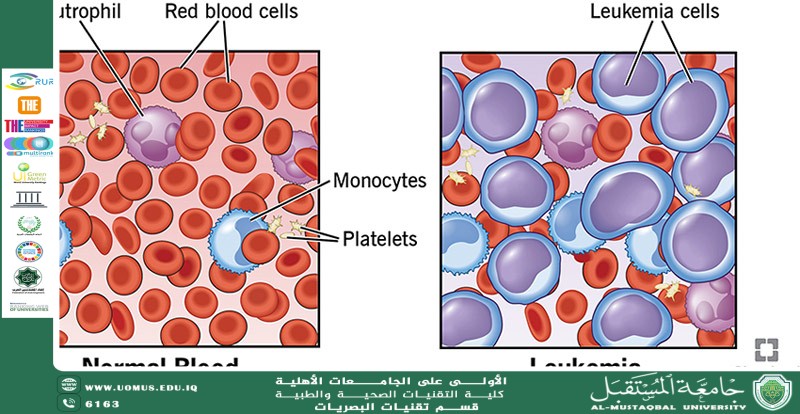
Under normal conditions, the bone marrow produces:
Red blood cells to carry oxygen
White blood cells to fight infections
Platelets to help stop bleeding
In leukemia, the bone marrow produces immature or abnormal white blood cells. These cells accumulate in the blood and crowd out healthy cells, leading to various symptoms.
Types of Leukemia
Leukemia is classified based on how quickly it progresses and the type of cells affected:
Acute leukemia – Develops rapidly and requires immediate treatment.
Chronic leukemia – Progresses slowly and may not cause noticeable symptoms at first.
Lymphocytic leukemia – Affects lymphoid cells.
Myeloid leukemia – Affects myeloid (bone marrow–forming) cells.
Common Symptoms
Persistent fatigue and weakness
Pale skin
Frequent bleeding or easy bruising
Recurrent infections
Fever
Swollen lymph nodes
Bone pain
Causes and Risk Factors
In many cases, the exact cause is unknown. However, certain factors may increase the risk, including:
Exposure to radiation
Certain chemicals
Genetic disorders
Weakened immune system
Diagnosis
Leukemia is diagnosed through:
Complete blood count (CBC)
Bone marrow examination
Genetic and immunological tests
Treatment
Treatment depends on the type and stage of leukemia and may include:
Chemotherapy
Radiation therapy
Targeted therapy
Bone marrow transplantation
University of Al-Mustaqbal – The First and Leading Private University