Artificial Intelligence in X-ray Imaging: A Digital Revolution in the Accuracy of Medical Diagnosis
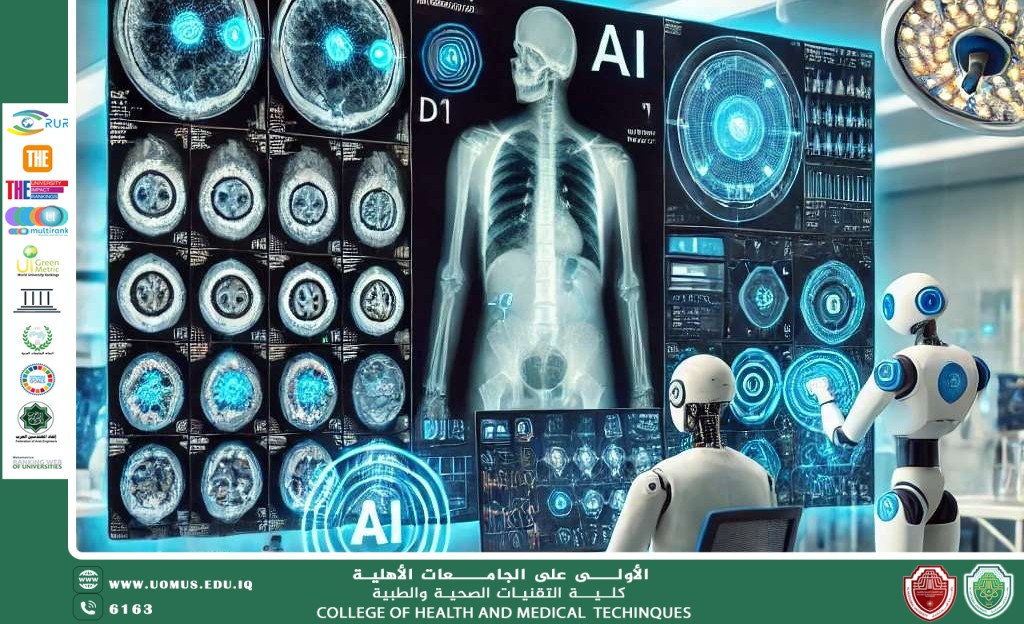
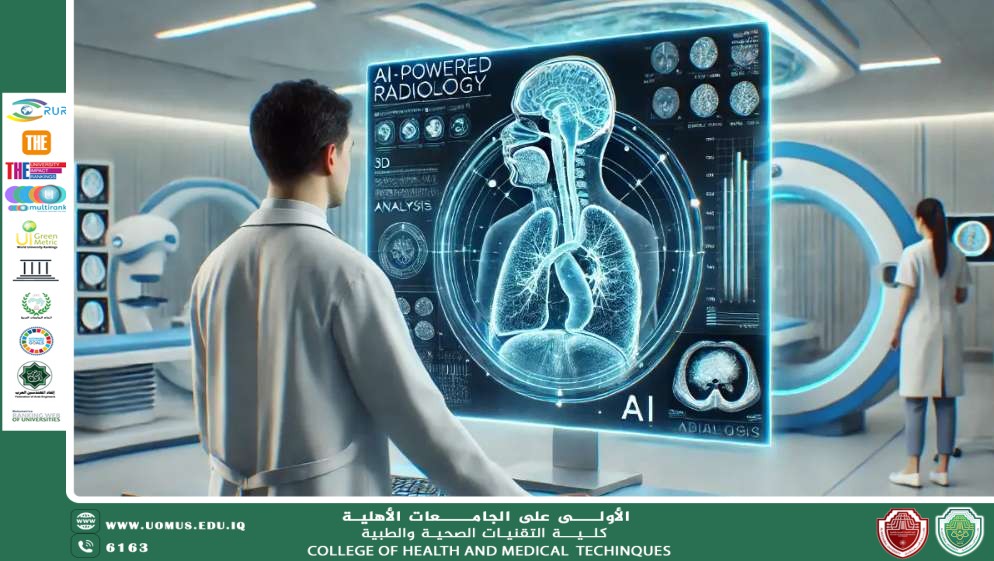
The healthcare sector is witnessing a rapid digital transformation in light of the Fourth Industrial Revolution, with artificial intelligence (AI) emerging at the forefront of technologies that have brought radical change to medical imaging, particularly X-ray imaging, which is considered one of the most widely used diagnostic tools in hospitals and medical centers. Today, AI has become an effective partner for radiologists and radiologic technologists, contributing to improved image quality, faster analysis, and enhanced diagnostic accuracy. This advancement has also helped bridge the gap between the increasing number of examinations and the limited human capacity to interpret them with precision and speed. Intelligent systems can operate continuously without being affected by fatigue or workload pressure, thereby enhancing the continuity and efficiency of medical services.
AI relies on deep learning techniques and Convolutional Neural Networks (CNNs) to analyze X-ray images. These models are trained using large databases of previously labeled radiographic images. Through this training process, systems gain the ability to recognize pathological patterns and compare them with normal cases, enabling the accurate detection of abnormalities. Furthermore, these systems can continuously update their models as new data become available, leading to ongoing performance improvement and increased clinical reliability over time.
First: Enhancing Diagnostic Accuracy
One of the most significant roles of AI is its ability to detect subtle changes that may be difficult to identify with the naked eye, such as hairline fractures, small pulmonary nodules, early signs of inflammation, or degenerative joint changes. This is particularly important in emergency cases, where intelligent systems can promptly alert physicians to critical findings, thereby reducing the likelihood of diagnostic errors and improving treatment outcomes. Additionally, AI can provide quantitative analyses of certain indicators, such as measuring lesion dimensions or comparing current images with prior studies, thus enhancing the accuracy of clinical follow-up.
Second: Accelerating Workflow in Radiology Departments
Many healthcare institutions experience significant pressure due to the growing number of radiological examinations. AI plays a crucial role in organizing workflow by automatically triaging images according to severity and generating preliminary supportive reports for physicians. This reduces the time required to interpret images and improves departmental efficiency. It also minimizes backlog and reporting delays, allowing radiologists to devote more attention to complex cases that require deeper clinical expertise.
Third: Improving Image Quality and Reducing Radiation Dose
Some AI systems utilize advanced reconstruction techniques to reduce digital noise, enhance contrast, and improve overall image clarity. This allows high-quality images to be obtained even when lower radiation doses are used. This development is particularly important for patient safety, especially for children and individuals who require repeated imaging examinations. Moreover, these technologies help reduce the need for repeat scans due to poor image quality, thereby minimizing unnecessary radiation exposure.
Fourth: Supporting Education and Training
AI also contributes to the academic field by providing interactive educational models for students of radiologic technology and medicine. Intelligent systems can simulate various pathological cases and train students on image interpretation and result extraction, thereby strengthening their diagnostic skills. Students can compare their interpretations with AI-generated analyses, which enhances critical thinking and improves academic performance.
Fifth: Challenges and Ethical Considerations
Despite its substantial benefits, the implementation of AI in X-ray imaging faces several challenges. These include the need for accurate and diverse datasets to prevent bias in results, ensuring patient data privacy, and establishing regulatory frameworks to govern the use of AI in medical practice. The final decision remains the responsibility of the specialized physician, as human expertise cannot be replaced in interpreting findings within the full clinical context. It is also essential to build trust between medical professionals and intelligent systems through continuous training and periodic performance evaluation.
The Future of Artificial Intelligence in X-ray Imaging
In the coming years, AI is expected to expand further through integration with electronic health record systems and the combined analysis of clinical data alongside radiographic images, paving the way for more comprehensive and precise diagnoses. AI may also contribute to the development of predictive systems capable of estimating the likelihood of disease progression before clear clinical symptoms appear. With ongoing advances in cloud computing and big data technologies, these systems are likely to become more widely adopted across healthcare institutions.
Conclusion
Artificial intelligence represents a transformative advancement in X-ray imaging, combining speed, accuracy, and efficiency while improving healthcare quality and reducing medical errors. As technological development continues, AI will become an integral component of radiology departments, with the human element remaining central to the diagnostic process and responsible for final decision-making within a collaborative framework aimed at delivering the highest standards of patient care and safety.