Color Integration and Its Impact on the Perception of the External Built Environment
Color is one of the most influential elements in shaping the first impression of a building, as it defines its visual relationship with the surrounding urban and natural context. Color is not merely a surface treatment; it is an expressive tool that highlights architectural identity and reflects the cultural and social dimensions of a place.
In urban environments, color is used to regulate visual harmony among adjacent architectural masses, creating a unified cityscape and reducing visual chaos. In natural settings, however, it aims to blend with the surrounding context by reflecting the tones of the الأرض, vegetation, and sky, thus strengthening the balanced relationship between building and environment.
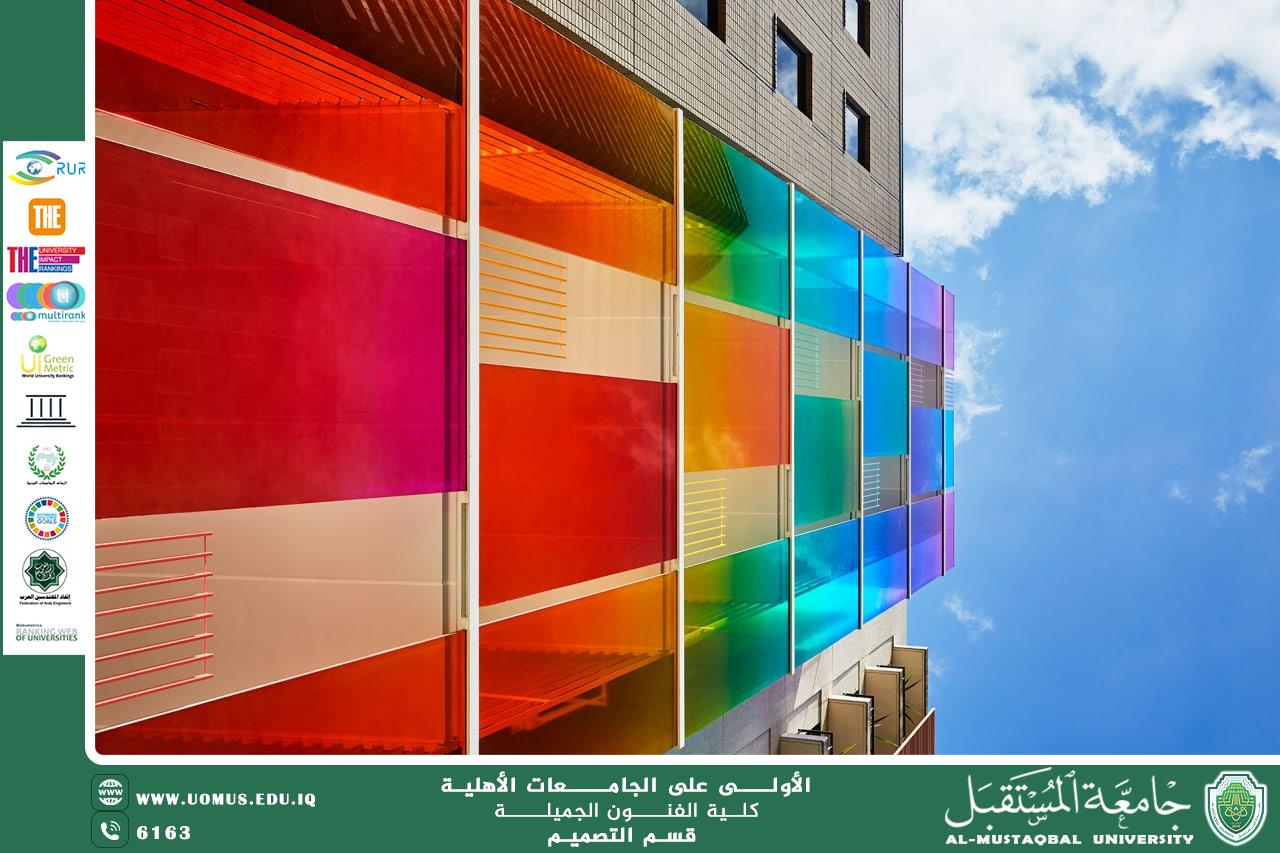
Light colors play a significant role in reflecting light and enhancing the sense of openness and spaciousness, while darker tones convey stability, solidity, and depth. The degree of color saturation affects the clarity of architectural mass, and contrast enhances the visual perception of edges and details.
In hot climates, heat-reflective colors are preferred due to their ability to reduce thermal absorption, positively impacting energy efficiency within buildings. In this sense, color becomes a functional element contributing to environmental performance alongside its aesthetic value.
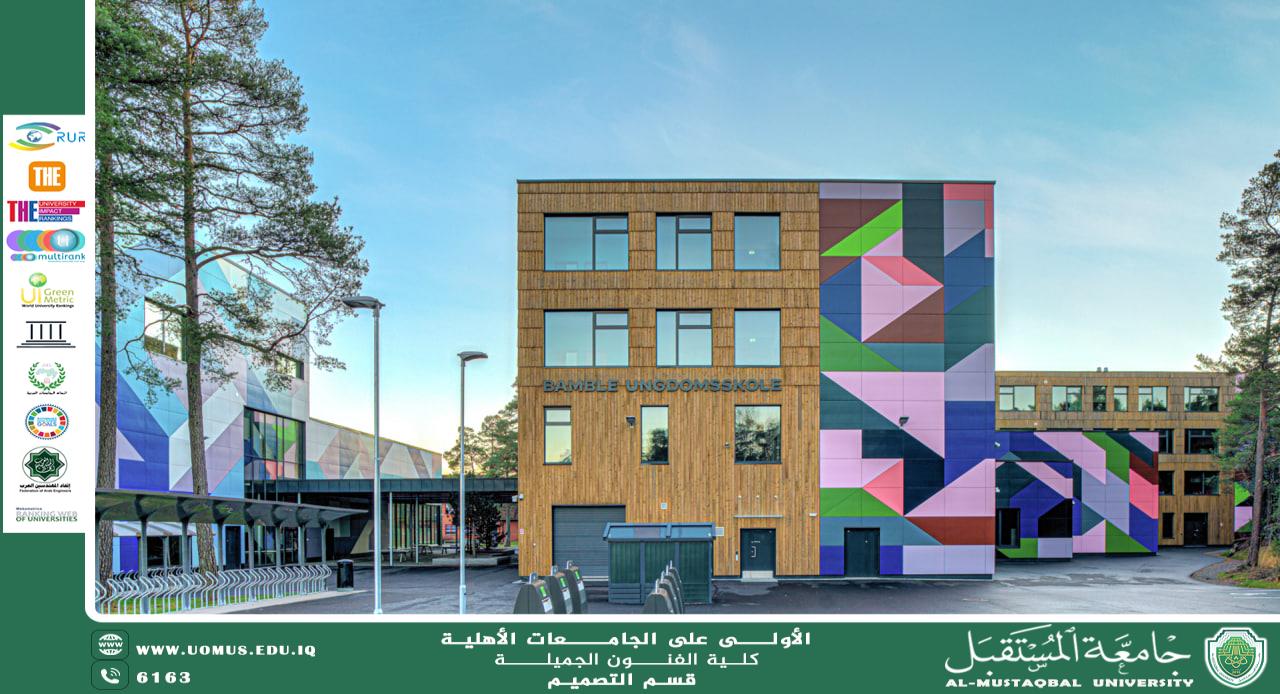
In traditional architecture, color is often linked to local materials such as stone, clay, and wood, reinforcing a sense of belonging and preserving visual identity. In contemporary architecture, color may express boldness and innovation, serving as a means to emphasize institutional identity or modern design direction.
Environmental background strongly influences color selection. Designers must consider the sky, vegetation, and neighboring structures to achieve visual balance. Harmonious color schemes enhance comfort and psychological stability, while poorly planned contrast may create visual tension.
Color also strengthens institutional branding in public, educational, and commercial buildings, and supports visual wayfinding in large complexes by distinguishing entrances and circulation paths.
Technically, color is affected by finishing materials, surface texture, and natural lighting conditions throughout the day. Therefore, its temporal transformation and shadow interaction must be carefully studied. In historic cities, specific color regulations are sometimes imposed to preserve the overall visual identity and prevent urban distortion.
Ultimately, color is not merely a decorative choice but a strategic tool in urban planning. Through it, the relationship between a building and its environment is defined, achieving balance between individuality and integration, and shaping the visual and human experience of place.
Almustaqbal University, The First University in Iraq.