
Scientific Article Titled: “Molecular Mechanisms and Antibiotic Resistance Profiles of Multidrug-Resistant Klebsiella pneumoniae” By: Ms. Taqa Adel Aboud
Molecular Mechanisms and Antimicrobial Resistance Profiles of Multidrug-Resistant Klebsiella pneumoniae Molecular Mechanisms of Multidrug Resistance in Klebsiella pneumoniae: A Systematic Review
Klebsiella pneumoniae has evolved into a formidable multidrug-resistant (MDR) pathogen, presenting a profound challenge to modern clinical therapy and nosocomial infection control. The escalating prevalence of MDR strains, driven by the selective pressure of intensive antibiotic utility, necessitates a comprehensive understanding of the pathogen's genomic and biochemical resistance landscapes. A systematic evaluation of high-impact literature from databases such as PubMed, Web of Science, and Scopus reveals that K. pneumoniae employs a sophisticated array of both chromosomal and plasmid-encoded antimicrobial resistance genes (ARGs) across seven critical antibiotic classes.
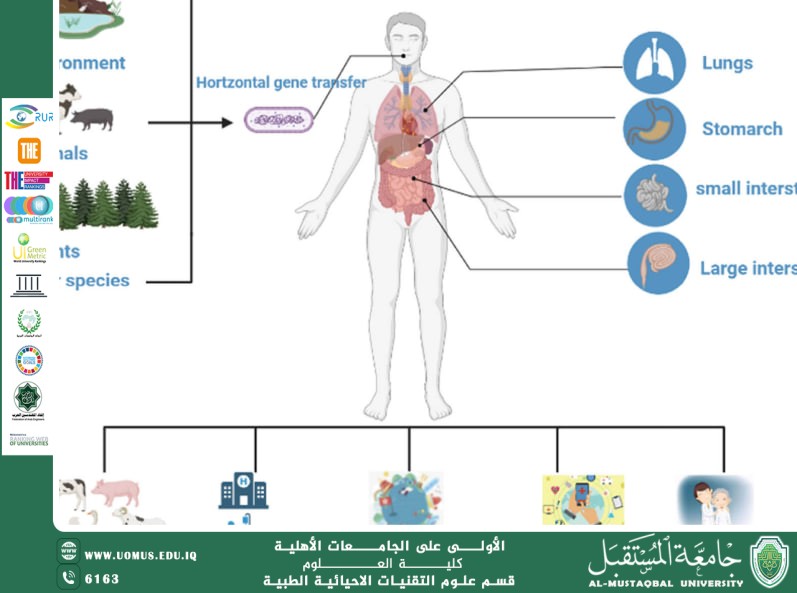
The resistance profile is predominated by the production of diverse \beta-lactamase enzymes, most notably Extended-Spectrum \beta-Lactamases (ESBLs), AmpC cephalosporinases, and the clinically alarming carbapenemases such as bla_{KPC}, bla_{NDM}$, and bla_{OXA-48}. Beyond $\beta$-lactams, the pathogen exhibits robust resistance to aminoglycosides through enzymatic modification and to quinolones via target-site mutations in the gyrA and parC genes and the upregulation of efflux pump systems. The high mobility of these genetic determinants facilitated by horizontal gene transfer positions K. pneumoniae as a primary global reservoir for resistance dissemination. Consequently, deciphering these molecular characteristics is not only vital for the theoretical grounding of clinical prevention but also remains the cornerstone for the design of targeted diagnostic tools and novel antimicrobial control strategies. https://doi.org/10.1515/med-2023-0707