Article titled: “Iraqi Painting Between Digital Art and Traditional Art” By Asst. Lecturer Israa Qasim Ali
Iraqi painting possesses a rich history that extends from the murals of ancient civilizations in Mesopotamia to contemporary artworks displayed in local and international exhibitions. With the advancement of technology in the twenty-first century, a new direction has emerged—digital art—standing alongside traditional art based on brush and paint. Thus, the Iraqi visual arts scene has become a space for artistic dialogue that brings together authenticity and modernity.
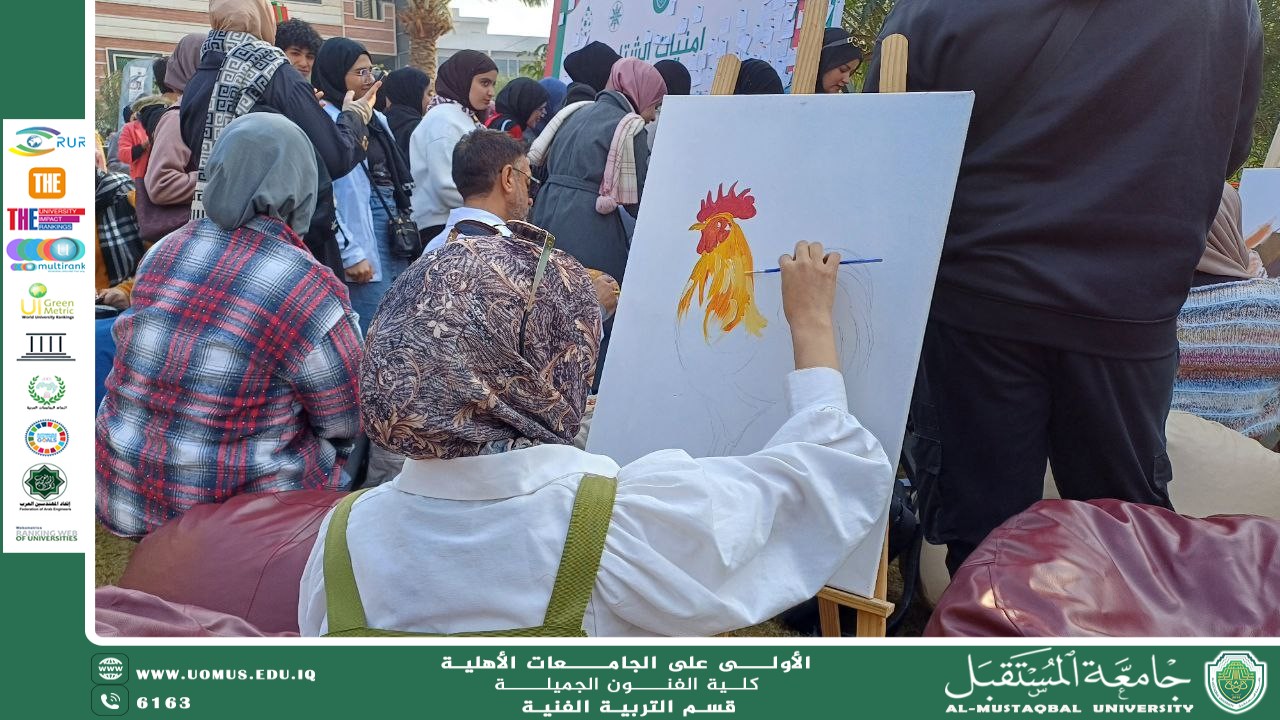
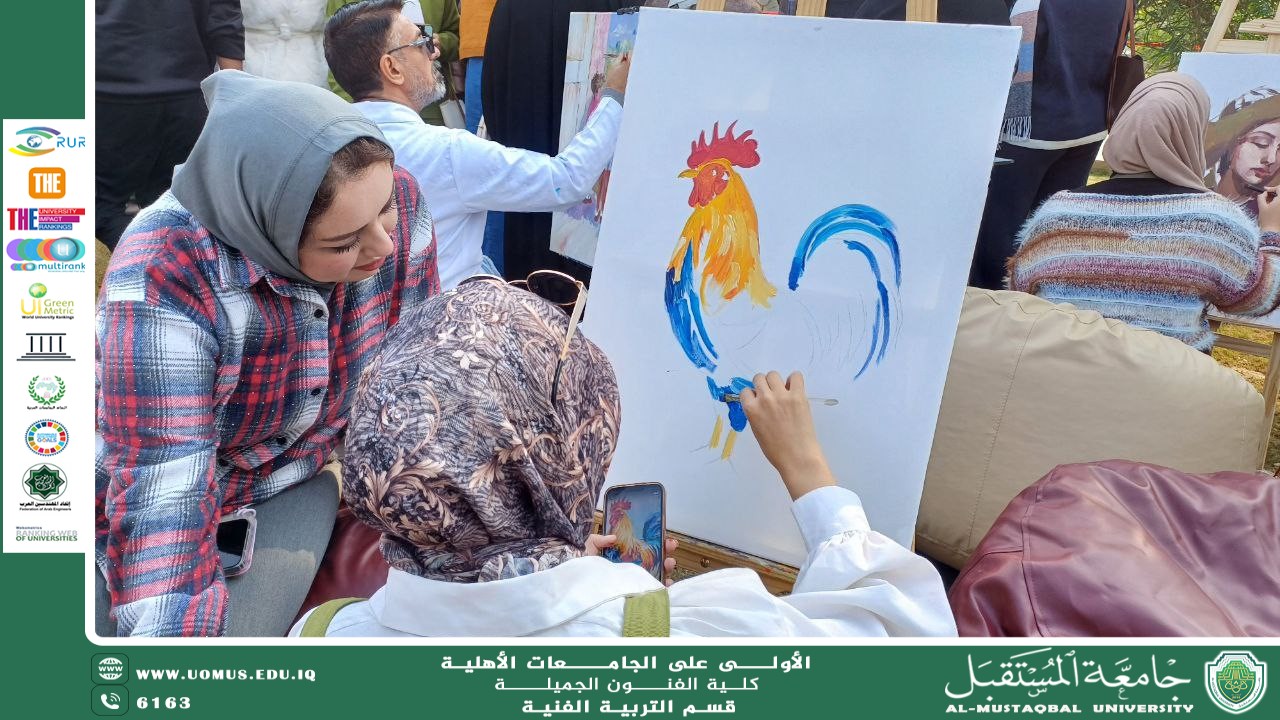
Traditional art relies on classical materials such as oil on canvas, watercolor, and charcoal. Contemporary Iraqi artists have been deeply influenced by the cultural heritage of Mesopotamia, drawing inspiration from Sumerian, Babylonian, and Assyrian symbols, as well as Islamic ornamentation and Arabic calligraphy. Among the أبرز pioneers of this movement is Jawad Salim, who sought to establish a modern Iraqi artistic identity that blends heritage with contemporary style. Together with the Baghdad Modern Art Group, he helped solidify the concept of artistic authenticity. Other artists, such as Faik Hassan, also emerged, focusing on the Iraqi environment and local people in their works. Traditional art is distinguished by its tangible texture and sensory presence, allowing viewers to appreciate the artwork as a unique piece bearing the artist’s direct touch and emotional expression.
With the spread of computers, tablets, and design software, digital art has emerged in Iraq as a new creative path. This type of art relies on digital technologies to produce paintings and illustrations that may either simulate traditional styles or present innovative visual visions. Digital art offers wide possibilities, such as ease of modification, diverse effects, and rapid publication through online platforms. It has also enabled young Iraqi artists to showcase their work beyond geographical borders and participate in international exhibitions and competitions without significant financial constraints. Nevertheless, digital art sometimes raises questions about the concept of “authenticity” and the value of artwork in light of the ease of copying and distribution.
Traditional and digital art differ in tools and mediums, yet they converge in their fundamental goal: expressing identity and reality. Both draw their themes from Iraqi society, whether depicting daily life, reviving historical symbols, or addressing contemporary challenges. Traditional art grants the work a unique physical character, while digital art opens broad technological horizons. In many cases, artists combine both approaches, starting the work manually and then processing it digitally, creating a hybrid visual experience that bridges the past and the future.
Today, Iraqi painting is experiencing a phase of transformation and integration between traditional and digital art. Rather than being in conflict, they can be viewed as complementary paths reflecting the evolution of Iraqi society and its openness to the world. Through this balance between deep roots and modern technologies, Iraqi art continues its journey in expressing a vibrant cultural identity that is constantly renewed over time.....Almustaqbal University, The First University in Iraq.