Eliminating Poverty in Iraq
Prepared by Dr. Riyadh Malik Mohsen
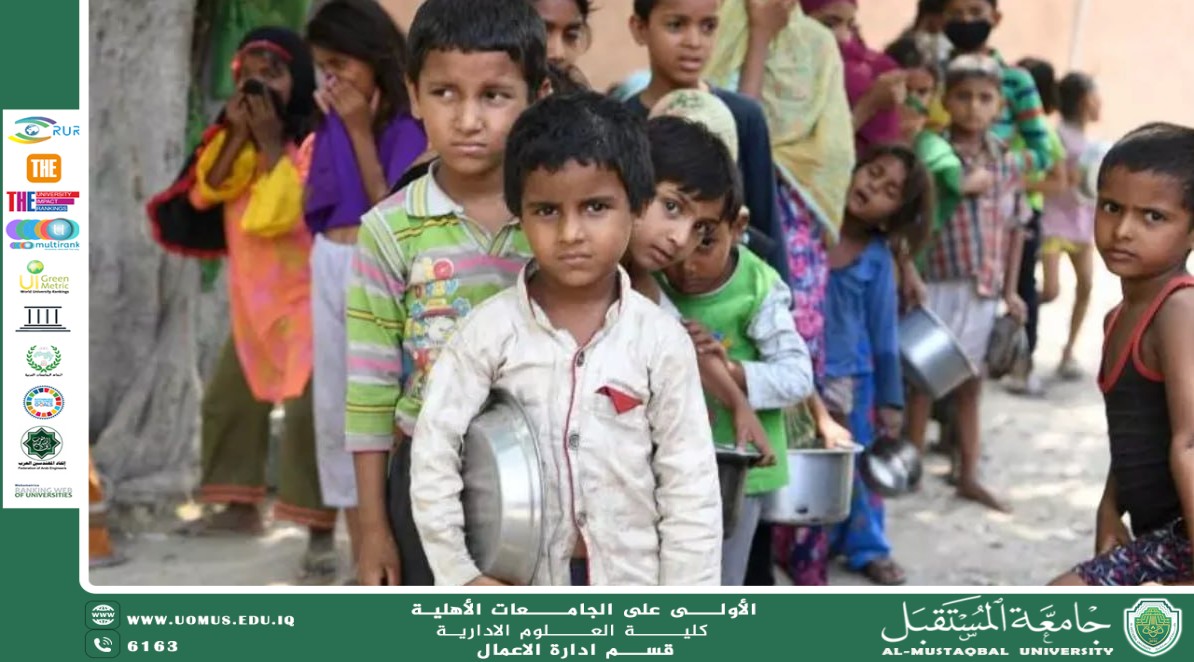
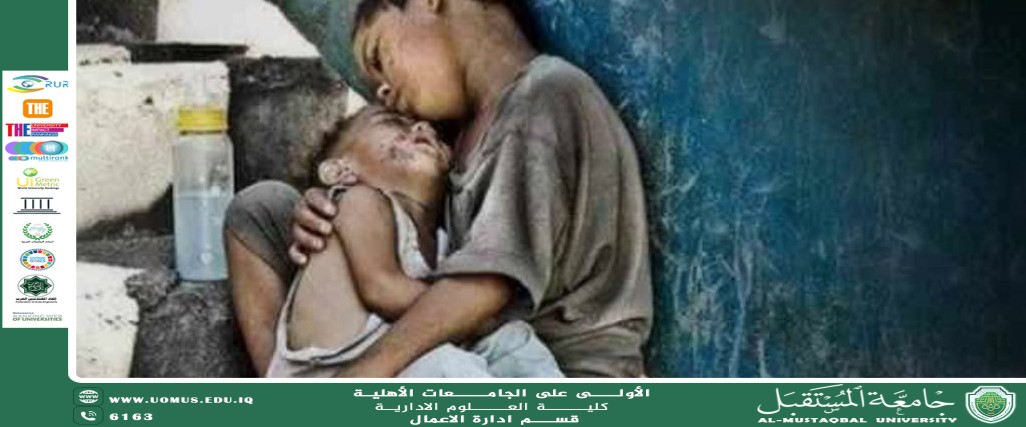
Poverty is considered one of the most prominent development challenges facing Iraq in light of the economic and financial transformations it has witnessed over the past decades. This research aims to analyze the reality of poverty in Iraq, identify its causes and effects, review the adopted mitigation policies, and present practical recommendations to reduce it based on national and international reports.
The Theoretical Framework of the Concept of Poverty
The World Bank defines extreme poverty as living below the internationally established poverty line, measured based on income or expenditure levels. The United Nations Development Programme (UNDP) has also adopted the concept of multidimensional poverty, which includes deprivation in education, health, and living standards.
The United Nations emphasizes in Goal 1 of the Sustainable Development Goals (SDGs) the objective of “ending poverty in all its forms everywhere.”
The Reality of Poverty in Iraq
Iraq witnessed a significant increase in poverty rates after 2003 due to security instability and heavy reliance on the oil sector. According to reports from the Iraqi Ministry of Planning in cooperation with the Central Statistical Organization, poverty rates rose during economic crises (such as declining oil prices and the COVID-19 pandemic), exceeding a quarter of the population in some years, with clear disparities among governorates.
World Bank data indicate that conflict-affected areas, particularly governorates liberated from ISIS, recorded higher poverty rates compared to other regions.
Notes on Geographic Disparities:
• Higher poverty rates in predominantly rural governorates.
• Relatively lower rates in some oil-producing governorates compared to others.
• The impact of internal displacement in increasing deprivation levels.
Causes of Poverty in Iraq
• Dependence on oil: Oil constitutes the main source of public revenue, making the economy vulnerable to global price fluctuations.
• High unemployment rates, especially among youth and graduates.
• Weak private sector and limited economic diversification.
• Administrative and financial corruption, affecting the efficiency of resource allocation.
• The repercussions of conflicts and terrorism, which have caused widespread infrastructure destruction.
Government Policies to Address Poverty
The Iraqi government has launched several programs to reduce poverty, most notably:
• The Social Protection Network managed by the Iraqi Ministry of Labor and Social Affairs, which provides cash assistance to poor families.
• The National Strategy for Poverty Reduction prepared by the Iraqi Ministry of Planning, focusing on improving education, healthcare, and job creation.
• Microfinance programs to support micro and small enterprises.
International organizations, including the United Nations Development Programme (UNDP), have also contributed to supporting stabilization and reconstruction programs in affected areas.
A Simplified Economic Analysis (Applied Example)
Assuming a governorate with a population of one million people and a poverty rate of 30%, the number of people living in poverty would be 300,000.
If an economic empowerment program creates 50,000 job opportunities annually, and assuming 40,000 individuals exit poverty each year, then within five years the number of people living in poverty could be reduced to approximately 100,000, lowering the rate to about 10%.
This example illustrates the impact of direct employment policies compared to relying solely on cash assistance.
Recommendations
• Diversify national income sources and reduce dependence on oil.
• Support small and medium-sized enterprises (SMEs).
• Develop technical and vocational education to align with labor market needs.
• Strengthen transparency and combat corruption.
• Direct support to the most vulnerable groups using accurate and reliable databases.