Analytical Chemistry in Anesthesia
Analytical chemistry plays a fundamental role in modern medicine, particularly in the field of anesthesia. Safe and effective anesthesia depends not only on clinical expertise but also on precise measurement and monitoring of drugs and physiological parameters. Through advanced analytical techniques, anesthesiologists are able to control drug concentrations, monitor respiratory function, and ensure patient stability during surgical procedures. Therefore, analytical chemistry is considered an essential scientific foundation for safe anesthetic practice.
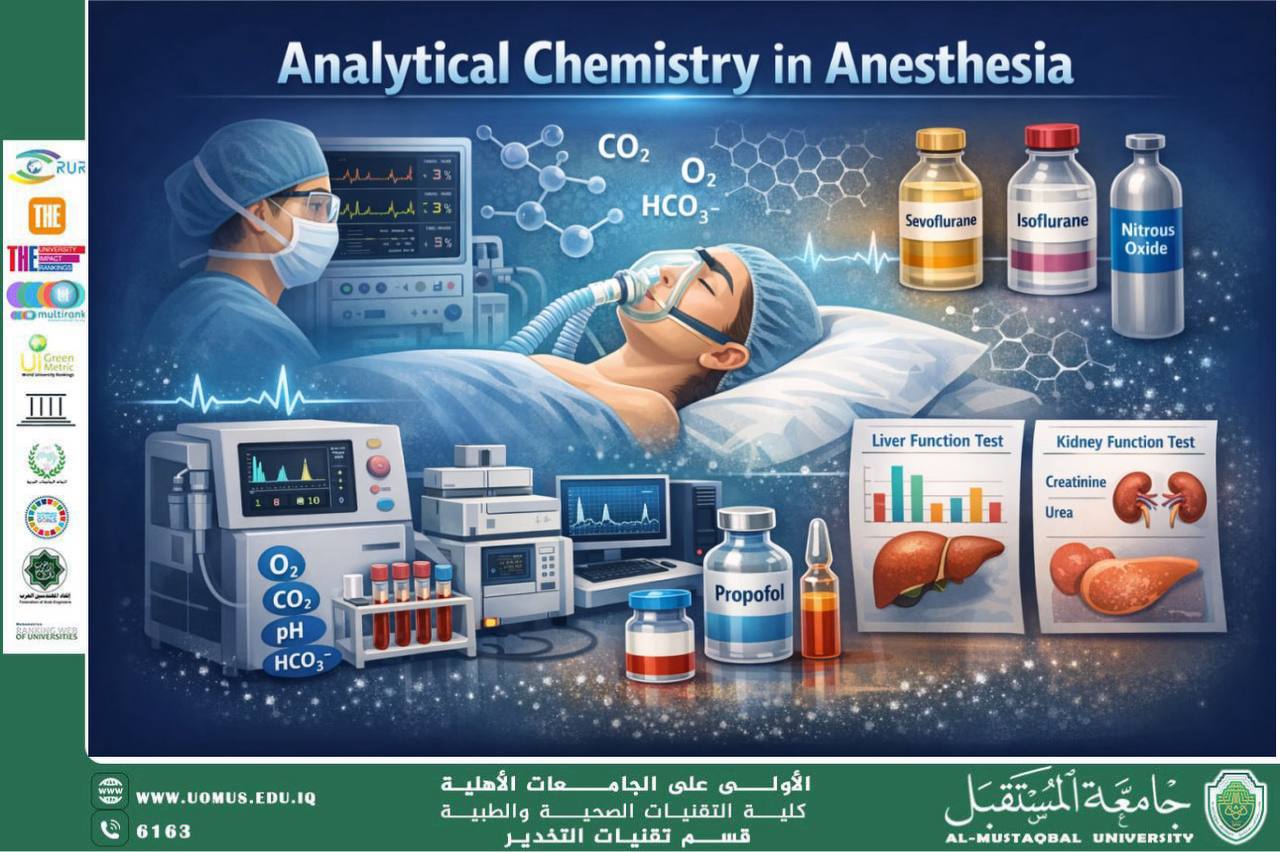
One of the most important applications of analytical chemistry in anesthesia is the measurement of inhaled anesthetic gases. Common anesthetic agents such as Sevoflurane, Isoflurane, and Nitrous oxide must be delivered in carefully controlled concentrations. Modern anesthesia machines contain gas analyzers that continuously measure inspired and expired gas levels. This monitoring ensures that the patient remains at an adequate depth of anesthesia while avoiding overdose or insufficient sedation.
In addition to inhalational agents, intravenous anesthetic drugs are widely used. Medications such as Propofol and Fentanyl require accurate dosing and, in some cases, laboratory measurement of plasma concentration. Analytical techniques such as gas chromatography (GC) and high-performance liquid chromatography (HPLC) are employed in clinical research and toxicology to determine drug levels in blood samples. These methods provide quantitative data that help in understanding drug metabolism, elimination, and therapeutic range.
Another essential contribution of analytical chemistry in anesthesia is blood gas analysis. This test measures oxygen (O₂), carbon dioxide (CO₂), blood pH, and bicarbonate levels. Monitoring these parameters is critical during surgery, especially in patients with respiratory or cardiovascular conditions. Any imbalance detected through chemical analysis allows immediate medical intervention, thereby reducing the risk of complications.
Furthermore, analytical chemistry supports the evaluation of liver and kidney function before and after anesthesia. Since most anesthetic agents are metabolized in the liver and excreted by the kidneys, biochemical tests such as liver enzyme measurements and creatinine levels are necessary to assess organ function. These analyses help anesthesiologists adjust drug dosages according to the patient’s physiological condition.
In conclusion, analytical chemistry is a vital component of anesthetic practice. It ensures precise measurement of anesthetic agents, continuous monitoring of vital biochemical parameters, and early detection of physiological imbalances. Through advanced analytical instruments and laboratory techniques, anesthesia has become safer and more controlled than ever before. As technology continues to evolve, the integration of analytical chemistry into anesthesia will further enhance patient safety and improve surgical outcomes.
Zainab Abbas Malik
Al-Mustaqbal University
The First University in Iraq.