
Artificial Intelligence in Healthcare: Applications in Anesthesia Practice
Introduction
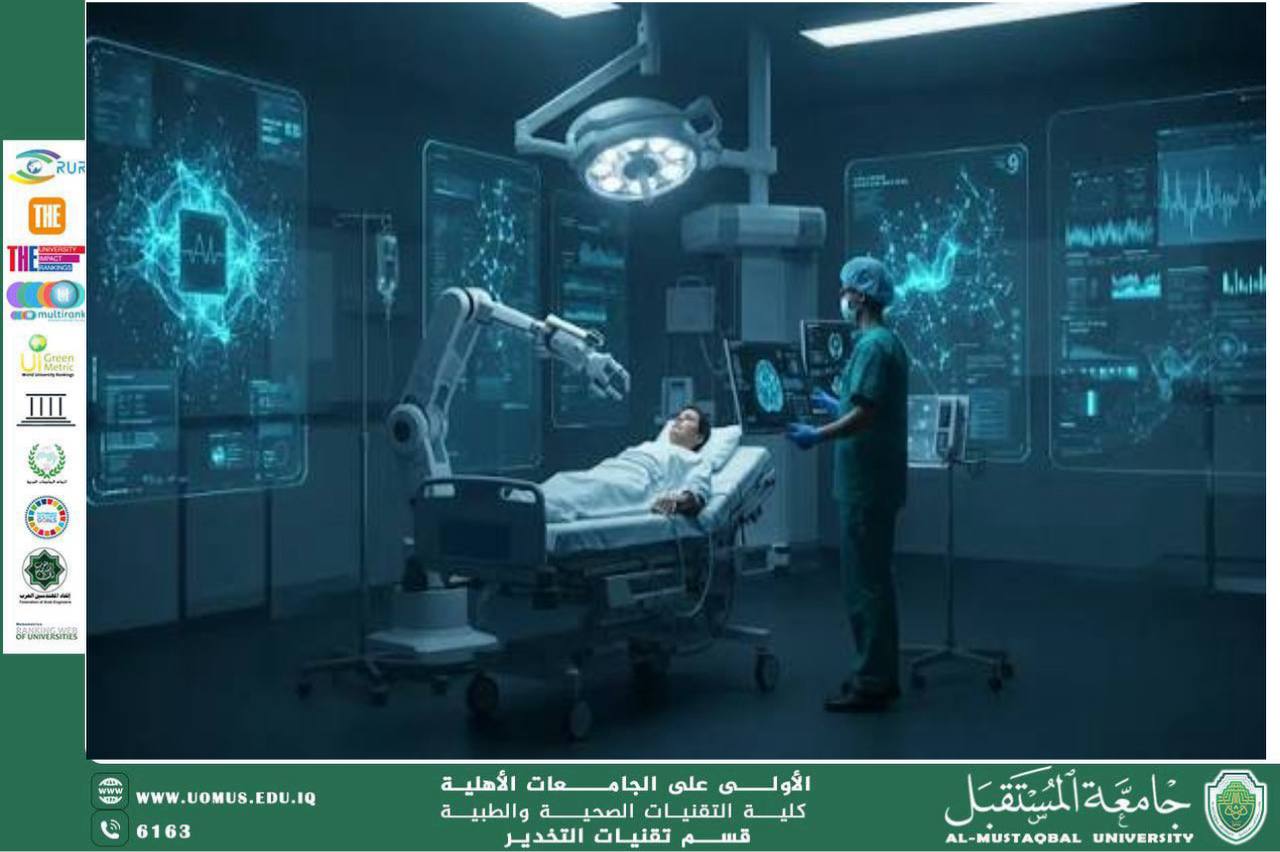
Artificial Intelligence (AI) has become one of the most influential technological advancements in modern healthcare. It refers to computer systems that can perform tasks requiring human intelligence, such as learning from data, recognizing patterns, and making decisions. In recent years, AI has improved diagnostic accuracy, treatment planning, and patient monitoring across various medical specialties. Among these specialties, anesthesia stands out as a field that can greatly benefit from AI because it depends on continuous monitoring, rapid responses, and precise drug management during surgical procedures.
AI in Modern Healthcare
AI is widely applied in different areas of healthcare. In medical imaging, intelligent systems analyze radiological images to detect diseases at early stages. In cardiology, AI assists in interpreting electrocardiograms and predicting cardiac risks. In laboratory medicine, machine learning algorithms process large volumes of biochemical and clinical data efficiently. These applications reduce human error, enhance accuracy, and support healthcare professionals in making better decisions.
Machine learning and deep learning, two important branches of AI, enable computers to learn from large datasets and improve performance over time. By analyzing patient records, laboratory results, and real-time monitoring data, AI systems can identify complex patterns that may not be easily recognized by humans.
Applications of AI in Anesthesia Practice
Anesthesia is a highly dynamic and critical medical specialty that requires constant monitoring of vital signs such as heart rate, blood pressure, oxygen saturation, and carbon dioxide levels. AI contributes to anesthesia practice in several important ways:
1. Predictive Monitoring
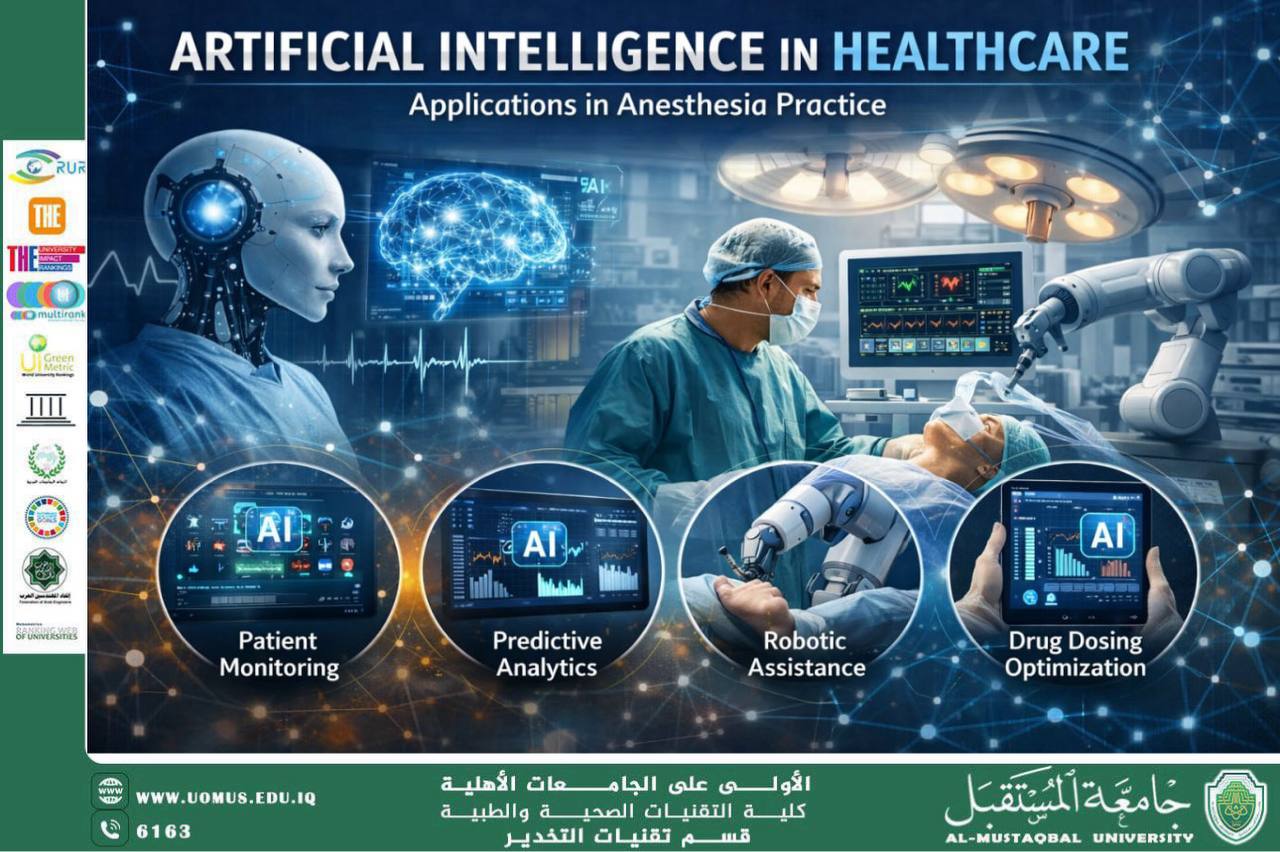
AI systems can analyze real-time physiological data to predict potential complications, such as hypotension or respiratory depression, before they become severe. Early detection allows anesthesiologists to intervene promptly and prevent serious outcomes.
2. Intelligent Drug Delivery
AI-assisted infusion systems can automatically adjust anesthetic drug dosages based on the patient’s physiological responses. For example, medications such as Propofol can be administered more precisely using AI-guided monitoring systems. This helps maintain an optimal depth of anesthesia while minimizing side effects.
3. Clinical Decision Support
AI-based decision support systems provide recommendations regarding drug selection, dosage adjustments, and risk assessment. These tools analyze patient history, laboratory results, and intraoperative data to assist anesthesiologists in making informed decisions. Importantly, AI acts as a supportive tool rather than a replacement for medical professionals.
4. Postoperative Risk Assessment
AI models can evaluate surgical and anesthetic data to predict recovery time, postoperative pain levels, and the likelihood of complications. This improves patient management in recovery units and enhances overall healthcare quality.
Benefits of AI in Anesthesia
The integration of AI into anesthesia practice offers multiple advantages:
• Improved patient safety
• Reduced medical errors
• More accurate drug dosing
• Faster emergency response
• Enhanced efficiency in operating rooms
Challenges and Ethical Considerations
Despite its promising benefits, AI implementation in healthcare faces several challenges. These include data privacy concerns, system reliability, and the need for high-quality medical datasets. Ethical guidelines must ensure that AI systems are transparent, unbiased, and supervised by qualified healthcare professionals to maintain patient trust and safety.
Conclusion
In conclusion, Artificial Intelligence is transforming healthcare and has significant potential in anesthesia practice. Through predictive monitoring, intelligent drug delivery, and clinical decision support, AI enhances patient safety and surgical outcomes.As technological advancements continue, the integration of AI in anesthesia is expected to expand, leading to more precise, efficient, and patient-centered medical care.
Tiba Hussain Shaman
Al-Mustaqbal University
The First University in Iraq.