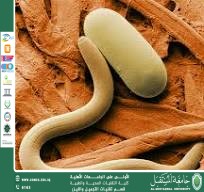
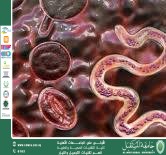
Nematodes (Roundworms)
Introduction
Nematodes, also known as roundworms, belong to the phylum Nematoda and are among the most abundant invertebrates on Earth. They inhabit diverse environments including soil, freshwater, marine ecosystems, and the bodies of plants, animals, and humans. Thousands of species have been identified, ranging from free-living organisms to parasitic forms.
Morphological and Structural Characteristics
Nematodes have elongated, cylindrical, unsegmented bodies that taper at both ends. Their bodies are covered with a tough outer layer called the cuticle, which provides protection against harsh environmental conditions. They lack specialized respiratory and circulatory systems; gas exchange and nutrient transport occur through diffusion. They possess a complete digestive system extending from the mouth to the anus.
Reproduction and Life Cycle
Most nematodes are dioecious, meaning males and females are separate individuals, and fertilization is internal. Their life cycle typically includes egg, larval, and adult stages. Some parasitic species require one or more hosts to complete their life cycle.
Medical and Agricultural Importance
Nematodes play a dual role in nature. Environmentally, they contribute to organic matter decomposition and soil fertility. Medically, certain species cause human diseases such as ascariasis and hookworm infection, leading to intestinal disorders and anemia. In agriculture, plant-parasitic nematodes can severely damage crops by infecting plant roots.
Conclusion
Nematodes represent a significant biological group with both beneficial and harmful impacts. Studying them is essential for advancing medical, agricultural, and environmental sciences.
Al-Mustaqbal University – The First University in Iraq