
Scientific Workshop on Entrepreneurship in Poor Communities According to the Indicators of the Iraqi Ministry of Planning
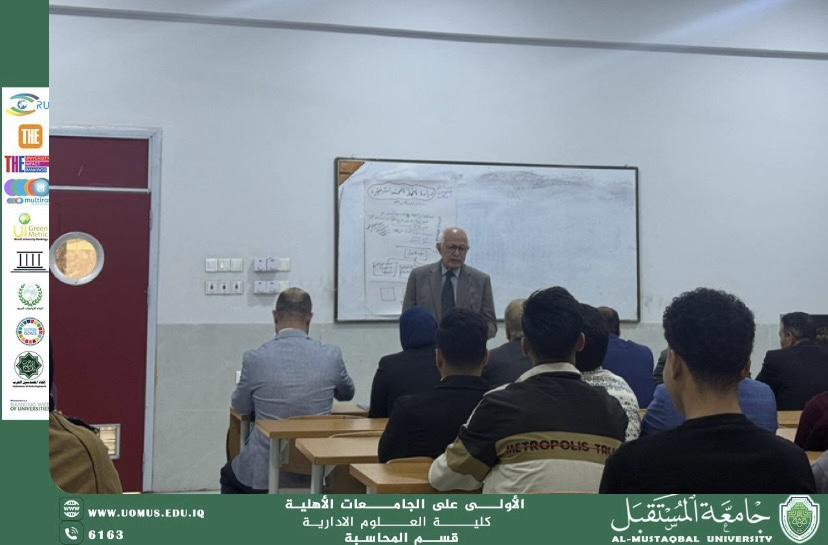
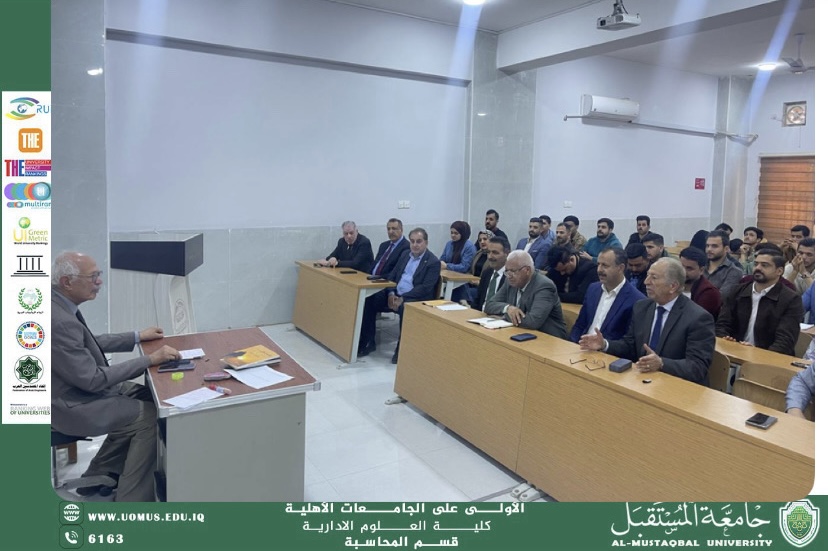
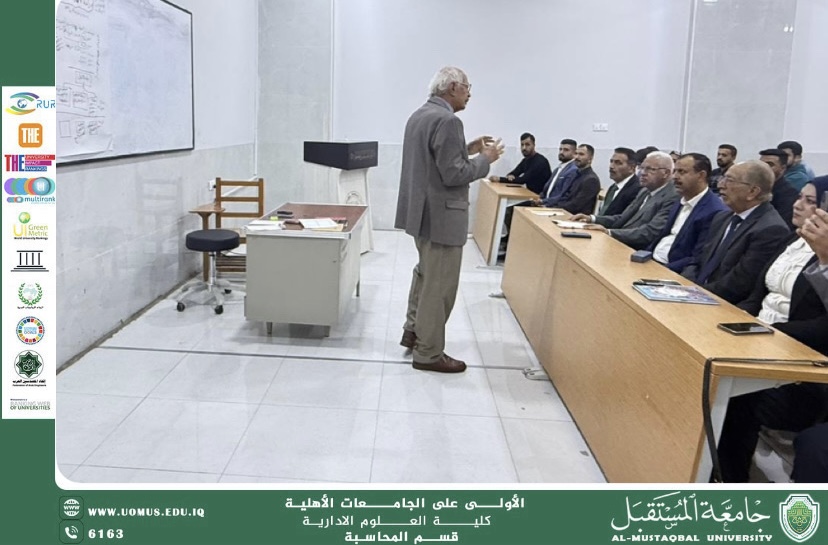
The Department of Accounting at the College of Administrative Sciences organized a scientific workshop entitled “Entrepreneurship in Poor Communities: Reality and Development Indicators in Iraq.” The workshop was attended by a number of faculty members, students, and individuals interested in economic and developmental affairs. It was delivered by Prof. Dr. Muayyad Abdul Hussein Khalil Al-Fadl.
The workshop addressed the concept of entrepreneurship and its importance in reducing poverty, creating job opportunities, and promoting local economic development. It also highlighted the characteristics of entrepreneurial projects in poor environments and the challenges they face, particularly limited access to finance, weak infrastructure, and a lack of managerial skills.
The session further reviewed poverty indicators in Iraq according to data from the Iraqi Ministry of Planning. It was explained that the poverty line for an individual is approximately 137,000 Iraqi dinars per month, while the poverty line for a family of five is around 700,000 Iraqi dinars per month. The national poverty rate stands at approximately 17.5%, with significant geographical disparities among governorates. Some southern governorates have recorded poverty rates exceeding 40%.
In addition, the workshop discussed the Multidimensional Poverty Index, which includes deprivation in areas such as education, health, and living standards—covering access to healthcare services, adequate housing, water, electricity, and education. Indicators of unemployment and vulnerable groups most exposed to poverty were also presented.
The lecturer emphasized that entrepreneurship represents a strategic tool for addressing poverty and achieving sustainable development. He called for supporting small and medium enterprises through microfinance programs, entrepreneurial training, simplifying government procedures, and strengthening partnerships between the public and private sectors.
The workshop concluded with an open discussion session, during which participants presented proposals on mechanisms to support entrepreneurs in poor communities and stressed the importance of integrating development indicators into future economic and educational policies.