A scientific article entitled "The Shift from Traditional Education to Algorithmic Education" by researcher M.M. Rafal Qusay
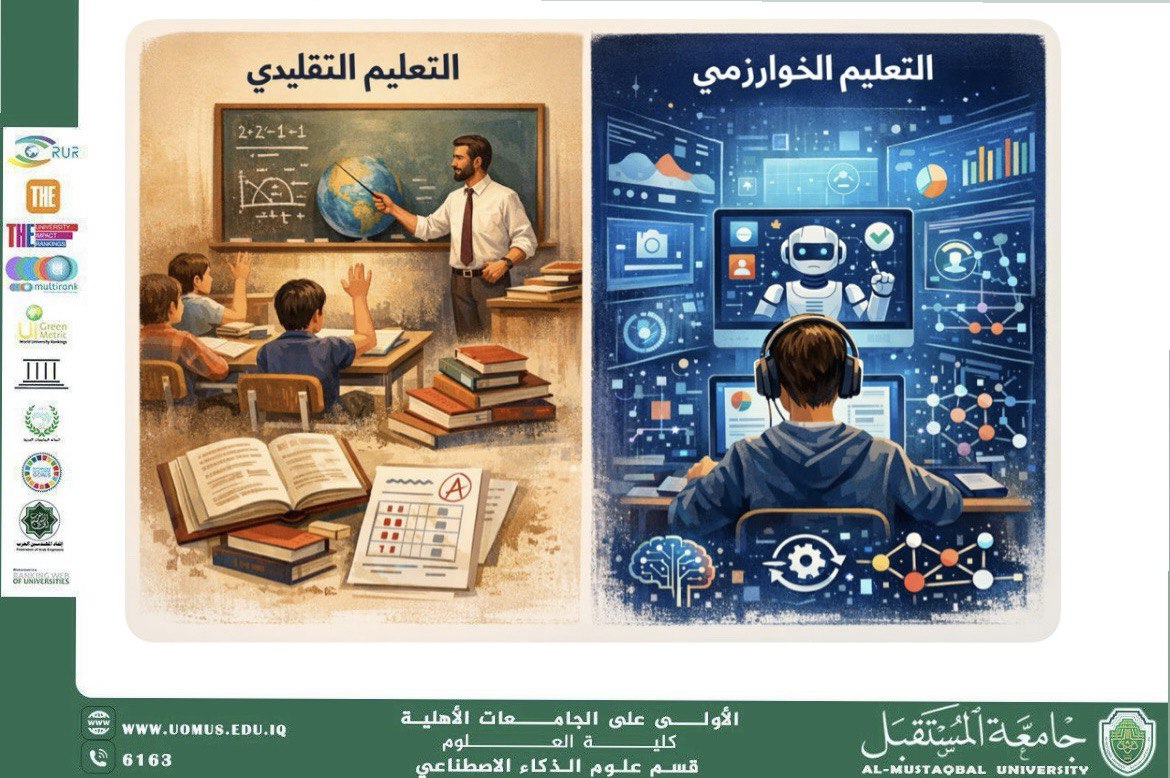
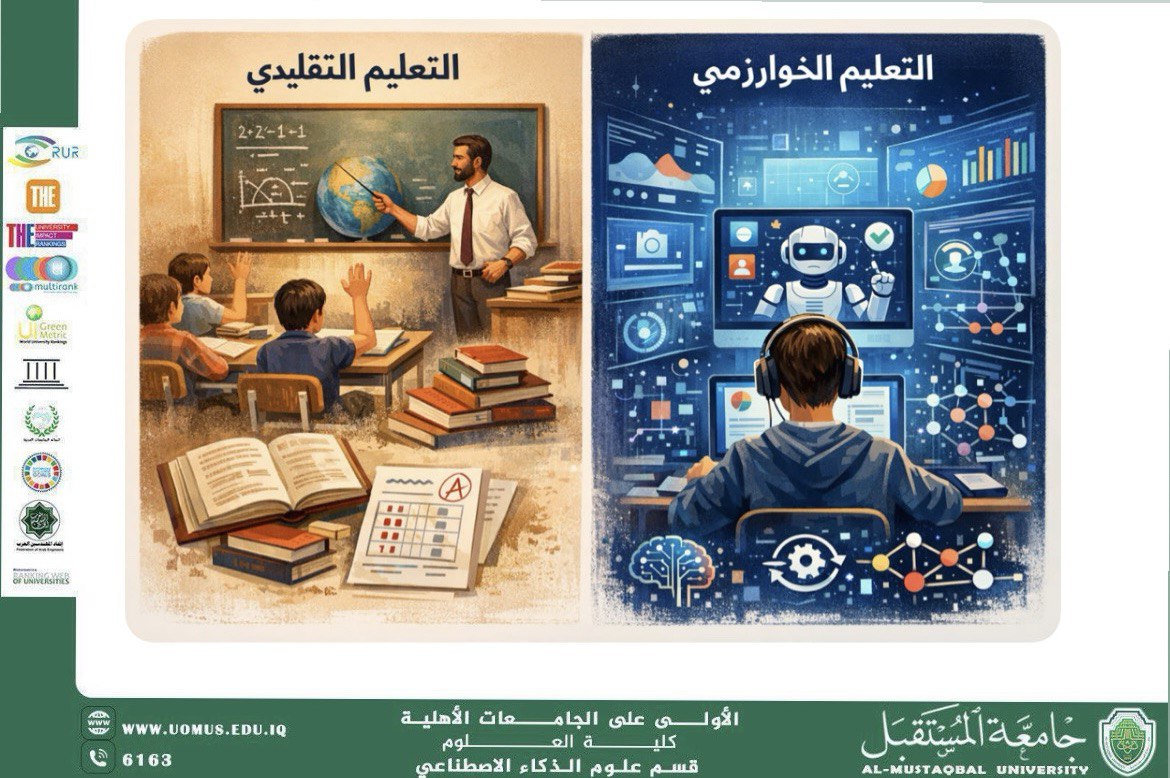
The world today is witnessing a profound shift from traditional education—based on direct instruction and rote learning—to algorithmic education, which relies on artificial intelligence and data analytics. This transformation is no longer merely a technological upgrade; rather, it has become a social phenomenon that reflects changes in the structure of knowledge and patterns of authority within society.
In traditional education, the teacher was the primary source of information, and the textbook served as the central reference. The educational process largely depended on memorization and recall. In contrast, algorithmic education enables digital platforms to analyze students’ performance and deliver personalized content according to their individual needs. In this way, the algorithm emerges as a new educational actor that shares— and sometimes even surpasses— the teacher’s role.
Platforms such as Khan Academy and Coursera clearly embody this transformation, offering personalized learning pathways based on tracking learners’ performance and preferences. The COVID-19 pandemic also played a pivotal role in accelerating this shift, as distance learning became a social necessity rather than a technological option.
From a social perspective, algorithmic education reshapes the relationship between the student and knowledge. The learner is no longer a passive recipient but an active participant engaging with continuously updated content. However, this transformation also raises questions about digital equity, as technological infrastructure is not equally available across all social groups, potentially deepening educational disparities.
Moreover, algorithmic education brings forward concerns regarding privacy and the transformation of students’ data into material for analysis and prediction. Learners not only acquire knowledge but also leave behind a permanent digital footprint that may be used to guide their educational—and perhaps even professional—trajectories.
Despite these challenges, algorithmic education opens broad horizons for lifelong learning and provides individuals with greater access to knowledge beyond the limits of time and space. The transition from traditional to algorithmic education is not simply a move from the blackboard to the screen; it is a shift from a culture of instruction to a culture of personalization, and from teacher-centered authority to a collaborative partnership between humans and machines in the production of knowledge.