Scientific Article by Assistant Professor Dr. Karrar Majeed Obeid Title: Environmental Pollutants: Their Sources, Impacts, and Mitigation Strategies
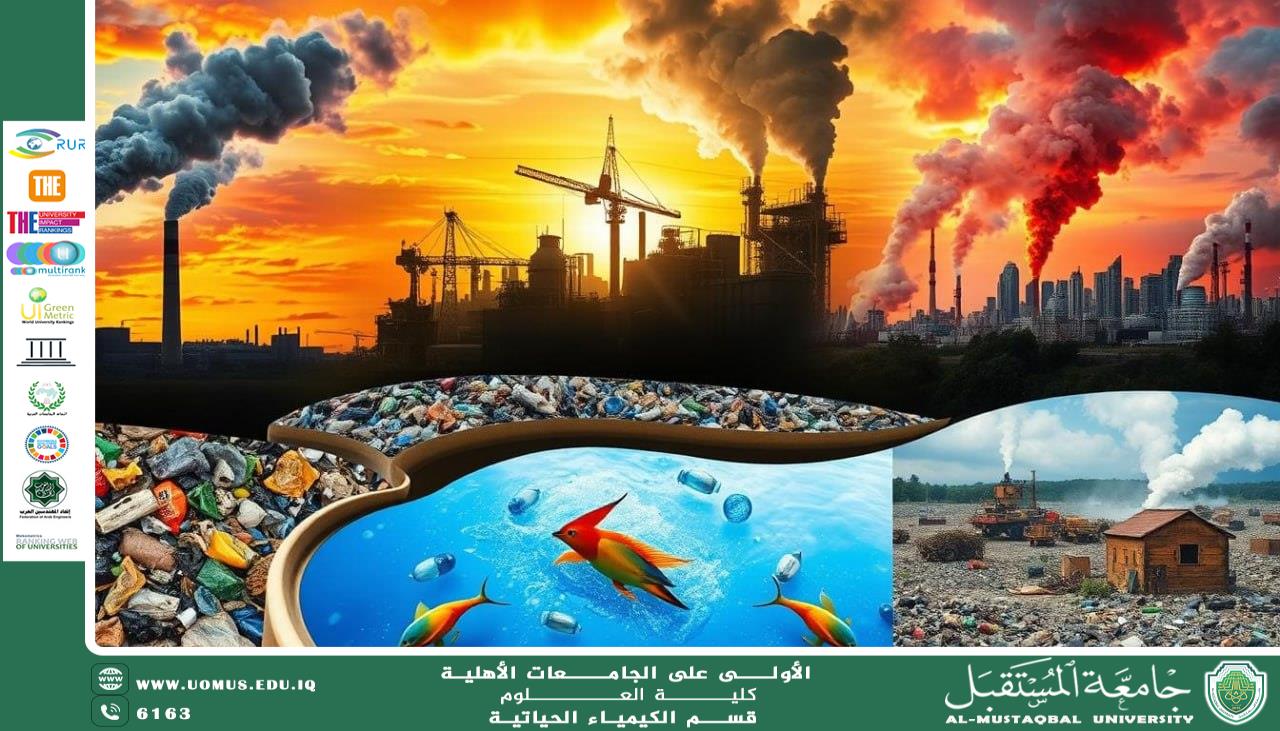
Environmental pollutants represent one of the most complex and pressing challenges facing humanity in the modern era. These pollutants include substances introduced into the environment in solid, liquid, or gaseous forms, as well as energy forms such as heat and noise. They disrupt the natural balance upon which life on Earth depends and cause harm to living organisms and essential ecosystem components including air, water, and soil. With rapid industrialization, population growth, and urban expansion, pressure on natural resources has intensified, leading to increased production of waste and synthetic chemicals that the environment cannot naturally degrade or assimilate. Environmental pollutants are therefore defined as chemical, physical, or biological agents present in inappropriate concentrations, locations, or times, resulting in adverse effects on human health and environmental quality.
Pollutants can be classified according to several criteria. Based on degradability, they are divided into biodegradable pollutants, such as organic sewage that can be naturally decomposed if within the ecosystem’s capacity, and non-biodegradable pollutants, such as plastics, heavy metals (lead and mercury), and radioactive compounds that persist for long periods and accumulate in food chains. Another classification is based on the affected medium. Air pollutants include particulate matter, sulfur oxides, nitrogen oxides, carbon monoxide, and ground-level ozone. Water pollutants include pesticides, fertilizers causing eutrophication, industrial effluents, heavy metals, and pathogenic microorganisms. Soil pollutants include pesticides, landfill waste, oil spills, and toxic chemicals that reduce soil fertility and contaminate groundwater.
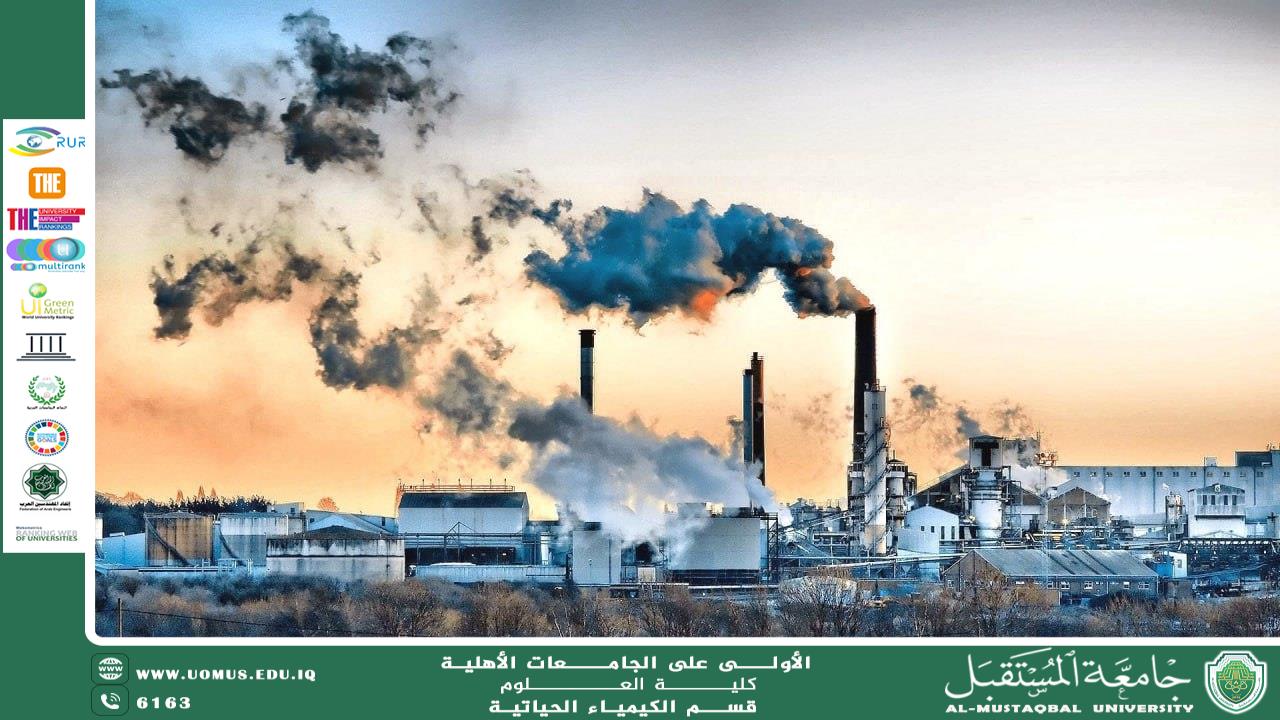
The sources of these pollutants may be natural or anthropogenic. Natural sources include volcanic eruptions, dust storms, wildfires, and methane emissions from wetlands. However, anthropogenic sources pose greater risks and diversity, including industrial emissions, transportation exhaust from vehicles, aircraft, and ships, excessive agricultural use of fertilizers and pesticides, and domestic waste such as plastics, electronic waste, and untreated sewage.
The impacts of environmental pollution are severe for both human health and ecosystems. For humans, pollution contributes to respiratory diseases such as asthma and bronchitis, cardiovascular disorders, various cancers due to carcinogenic substances, and neurological disorders, particularly in children exposed to lead. Ecologically, pollution leads to global warming through greenhouse gas accumulation from fossil fuel combustion, acid rain resulting from sulfur and nitrogen oxides reacting with atmospheric moisture, ozone layer depletion caused by chlorofluorocarbons (CFCs), and biodiversity loss due to habitat destruction and species sensitivity to contamination.
Among the most dangerous consequences of persistent pollutants is bioaccumulation and biomagnification. Substances such as DDT and mercury accumulate in the tissues of living organisms, with concentrations increasing at higher trophic levels in the food chain, reaching toxic levels in top predators and humans.
To address these growing threats, various monitoring and mitigation strategies have been developed. Environmental monitoring utilizes advanced sensors, satellite imagery, and bioindicators such as lichens to detect pollution levels and sources. Clean technology promotes renewable energy sources such as solar and wind power as alternatives to fossil fuels and encourages industrial processes that minimize waste. Bioremediation employs microorganisms and plants to degrade or absorb pollutants from soil and water. Recycling and the circular economy further reduce waste generation and limit pollutants reaching landfills and oceans.
In conclusion, environmental pollution is not an inevitable phenomenon but rather a consequence of unsustainable lifestyles and practices. Combating it requires strong political commitment, strict environmental legislation, comprehensive public awareness, and a preventive approach that prioritizes clean energy and sustainable production. Adherence to international agreements such as the Paris Climate Agreement and the Montreal Protocol is essential to ensuring a safe and healthy future for coming generations. Investing in environmental protection today is ultimately an investment in human health and planetary stability.
Al-Mustaqbal University Ranked First Among Iraqi Private Universities