Scientific Article Dr. Aseel Amer Hadi Rapporteur, Department of Biochemistry Al-Mustaqbal University Blood Collection Techniques and Their Importance in Medical Diagnosis
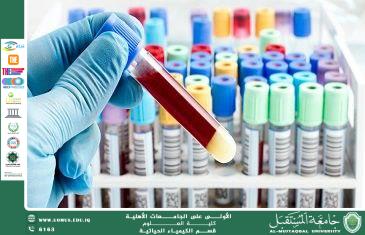
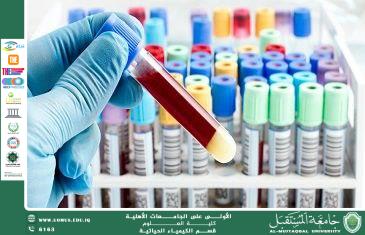
Blood collection techniques represent a fundamental pillar in medical and laboratory practice, as they constitute the first critical step in obtaining accurate information about a patient’s health status. The reliability of laboratory test results depends directly on the correctness of the sampling method, proper handling of the specimen, and the technique employed. Therefore, understanding blood collection techniques and their clinical significance is essential for healthcare professionals and students in medical sciences.
Importance of Blood Collection in Medical Diagnosis
Blood sampling plays a vital role in:
Diagnosing various diseases such as anemia, infections, and liver and kidney disorders.
Assessing the function of vital organs.
Monitoring the progression of chronic diseases such as diabetes mellitus and cardiovascular diseases.
Evaluating treatment effectiveness and adjusting appropriate drug dosages.
Early detection of hormonal imbalances and coagulation disorders.
Accurate blood analysis enables clinicians to make evidence-based decisions that significantly improve patient outcomes.
Main Blood Collection Techniques
1. Venipuncture
Venipuncture is the most commonly used method in medical laboratories. Blood is typically drawn from superficial veins, most often the median cubital vein in the antecubital fossa.
Advantages:
Provides an adequate volume of blood for most laboratory investigations.
Suitable for biochemistry, hematology, serology, and immunology tests.
Considered reliable for comprehensive diagnostic evaluation.
2. Capillary Sampling
Capillary blood sampling is commonly used in pediatric patients or when only a small volume of blood is required. It is performed through a finger prick or heel prick in neonates.
Advantages:
Quick and minimally invasive.
Ideal for point-of-care testing such as blood glucose measurement.
Convenient in emergency or outpatient settings.
3. Arterial Sampling
Arterial blood sampling is primarily used for arterial blood gas (ABG) analysis and is typically obtained from the radial artery.
Advantages:
Provides precise information about oxygenation, carbon dioxide levels, and acid–base balance.
Essential for assessing respiratory function and critically ill patients.
Factors Affecting the Accuracy of Laboratory Results
Several pre-analytical factors can significantly influence test outcomes, including:
Selection of the appropriate technique for the requested test.
Strict adherence to aseptic procedures to prevent contamination.
Correct order of draw for blood collection tubes.
Proper mixing, storage, and transportation of specimens.
Patient-related factors such as fasting status, medications, and body position.
The pre-analytical phase accounts for a substantial proportion of laboratory errors; therefore, meticulous attention to protocol is crucial.
Risks of Blood Collection and Preventive Measures
Although generally safe, blood collection may involve minor risks such as local bruising, mild pain, dizziness, or rarely infection.
These risks can be minimized by:
Using sterile, high-quality equipment.
Selecting an appropriate vein or artery.
Following occupational safety guidelines.
Reassuring and monitoring the patient after the procedure.
The Role of Proper Technique in Enhancing Diagnostic Quality
Applying correct blood collection techniques ensures:
Accurate and reliable laboratory results.
Reduced need for repeat sampling.
Faster clinical decision-making.
Improved overall quality of healthcare services.
In conclusion, blood collection is not merely a routine clinical procedure; it is a scientifically structured process that directly impacts diagnostic precision and patient care quality. Continuous training and adherence to standardized protocols are essential to maintain excellence in laboratory medicine.
Al-Mustaqbal University Ranked First Among Iraqi Private Universities