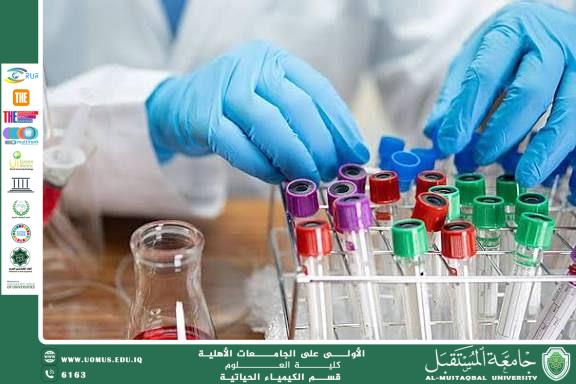

Scientific Article Assistant Professor Dr. Aseel Amer Hadi Rapporteur, Department of Biochemistry Al-Mustaqbal University The Correct Steps of Blood Collection and Occupational Safety Principles and Their Impact on Laboratory Diagnostic Accuracy
Introduction
Blood collection is one of the essential procedures in medical and laboratory practice, as it represents the first step in obtaining accurate information about a patient’s health status. The reliability of laboratory test results depends directly on the proper techniques used during sample collection and handling. Therefore, adherence to scientific standards and occupational safety principles is crucial to ensure high-quality results and to protect healthcare professionals from potential risks.
First: Preparation Before Blood Collection
The preparation stage forms the foundation of a successful blood collection process and includes:
Confirming the patient’s identity using the full name or medical record number.
Explaining the procedure to reassure the patient and reduce anxiety.
Performing proper hand hygiene before wearing gloves.
Wearing appropriate personal protective equipment (PPE).
Preparing sterile equipment and selecting the correct collection tubes according to the required tests.
Second: Correct Scientific Steps of Blood Collection
Applying the tourniquet at an appropriate distance above the puncture site to make the vein more visible.
Selecting the most suitable vein, commonly the median cubital vein.
Disinfecting the puncture site and allowing it to dry completely.
Inserting the needle at a 15–30° angle toward the vein.
Gently withdrawing the required volume of blood without excessive pressure.
Releasing the tourniquet before removing the needle to prevent hemolysis.
Applying sterile cotton with gentle pressure to prevent bleeding.
Placing the blood into the appropriate tubes following the recommended order of draw.
Third: Proper Handling of the Sample
Labeling the sample immediately after collection.
Gently mixing tubes containing anticoagulants when required.
Transporting samples promptly to the laboratory under appropriate storage conditions.
Fourth: Occupational Safety Principles
Disposing of needles immediately in puncture-resistant sharps containers.
Avoiding recapping of needles after use.
Treating all blood samples as potentially infectious.
Disinfecting the work area after completing the procedure.
Reporting immediately any accidental blood exposure or needle-stick injury.
Fifth: Common Errors and Their Impact
Using an inappropriate needle size may cause pain or hematoma.
Vigorous shaking of tubes may result in hemolysis and compromised samples.
Delayed transport of samples may affect the stability of certain biochemical parameters.
The Impact of Adherence to Proper Procedures on Diagnostic Quality
Strict adherence to standardized blood collection protocols contributes to:
Reducing laboratory errors in the pre-analytical phase.
Ensuring accurate and reliable results.
Accelerating appropriate clinical decision-making.
Enhancing occupational safety standards in laboratories and healthcare institutions.
Conclusion
Blood collection is a precise scientific procedure that requires skill, knowledge, and strict compliance with quality and safety standards. Continuous training of healthcare personnel and adherence to established guidelines significantly improve diagnostic accuracy and minimize occupational risks, ultimately enhancing the overall quality of patient care.
Al-Mustaqbal University ranks first among Iraqi private universities, reflecting its commitment to academic excellence and high standards in medical and scientific education.