The Relationship Between Design Principles and Elements in Creating an Integrated Work
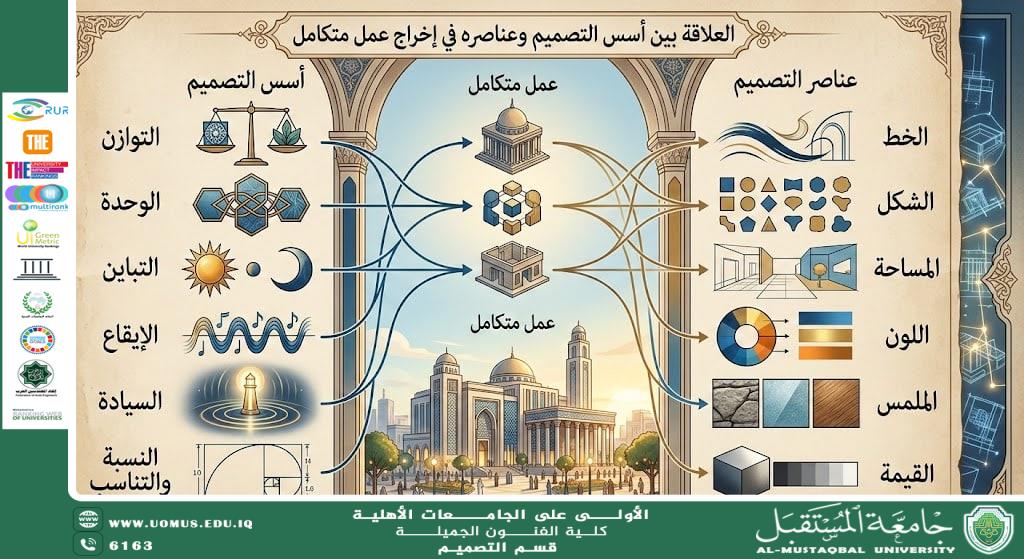
Design is both an artistic and scientific process aimed at conveying a message or idea in a clear and impactful visual manner. To create an integrated design work, it is not enough to rely solely on visual elements; they must be combined with design principles that organize their use in a coordinated way.
Elements represent the basic components of a design, including colors, shapes, lines, spaces, and textures. Design principles, on the other hand, are the rules that determine how these elements are arranged and utilized coherently to achieve a specific goal, such as balance, contrast, unity, proportion, and rhythm. For example, using harmonious colors and geometric shapes while considering balance and contrast can produce an appealing and visually comfortable design.
The integration of design principles and elements helps convey the message clearly and achieve the intended purpose of the work, whether it is educational, marketing, or artistic. An integrated design allows the viewer to engage with the work easily and grasp the intended message without confusion or loss of meaning.
Understanding the relationship between principles and elements enables the designer to address design challenges flexibly and professionally, allowing adjustments to elements according to the appropriate principles to achieve the best results. Furthermore, this integration enhances the aesthetic sense of the audience and enriches the overall viewing experience.
Therefore, designers should study both elements and principles together and apply them thoughtfully and in balance to ensure the production of a professional design capable of influencing the audience and achieving its intended objective. In this way, design becomes not merely a visual arrangement, but an integrated experience that combines creativity, beauty, and functionality, making it an effective tool for communication and impact.
Almustaqbal University, The First University in Iraq.