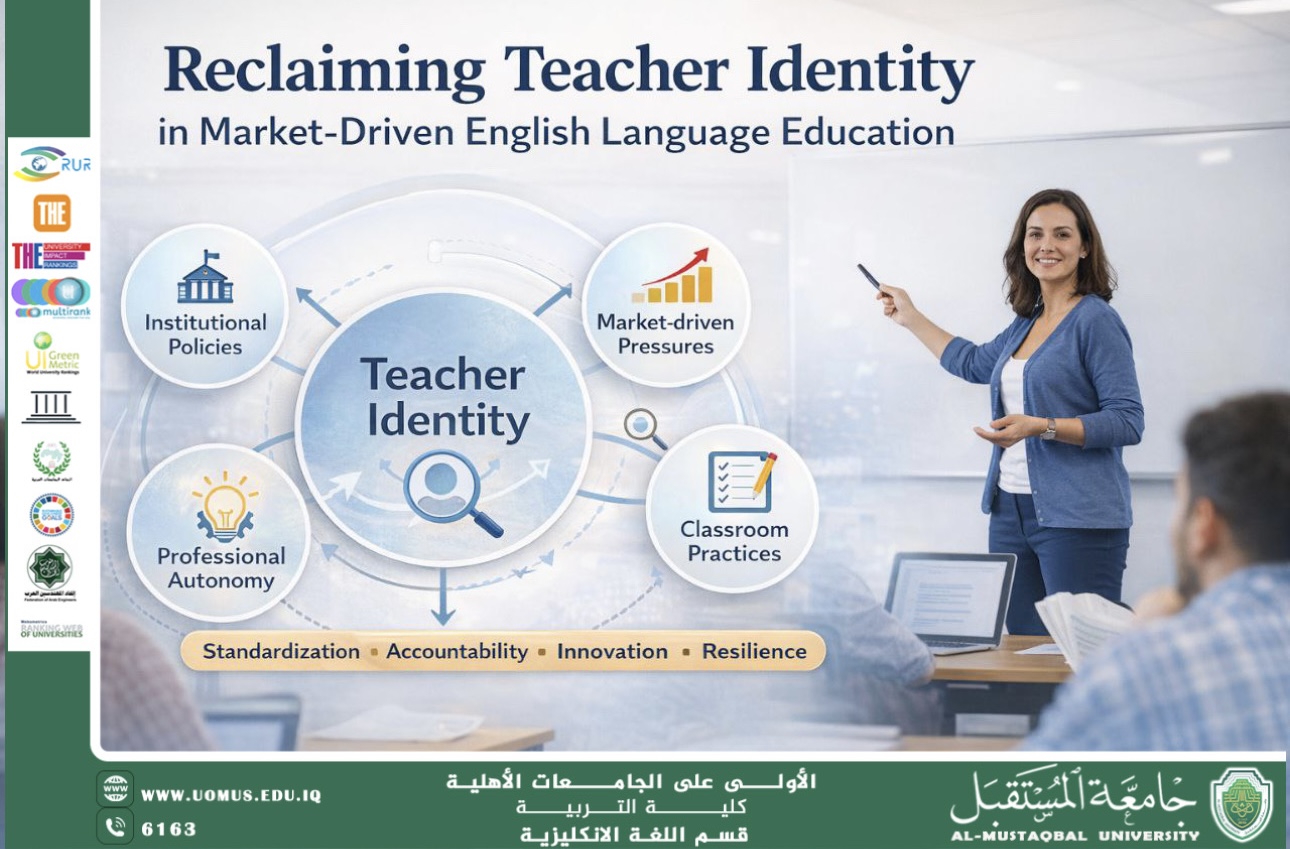
Reclaiming Teacher Identity in Market-Driven English Language Education
In recent years, English language education has increasingly been influenced by market-oriented
values. Universities and institutions often emphasize measurable outcomes, standardized testing, and
student satisfaction as primary indicators of success. While these elements may contribute to
institutional efficiency, they also reshape the role and identity of the English language teacher.
Traditionally, teachers were viewed as intellectual guides and facilitators of learning. However, in
market-driven educational systems, teachers are sometimes positioned as service providers whose
performance is evaluated mainly through quantitative measures. This shift may affect teachers’ sense
of autonomy and professional agency.
Teacher identity is not fixed; it develops through interaction
with institutional policies, classroom realities, and social
expectations. When educators face continuous pressure to
meet performance indicators, they may experience tension
between their pedagogical beliefs and administrative demands.
For example, a teacher who values critical thinking and
communicative competence may feel constrained by
exam-oriented curricula. Despite these challenges,
English language teachers demonstrate resilience and
adaptability. Many find creative ways to balance institutional
expectations with meaningful teaching practices.
They incorporate interactive tasks, reflective activities,
and learner-cantered strategies even within structured systems.
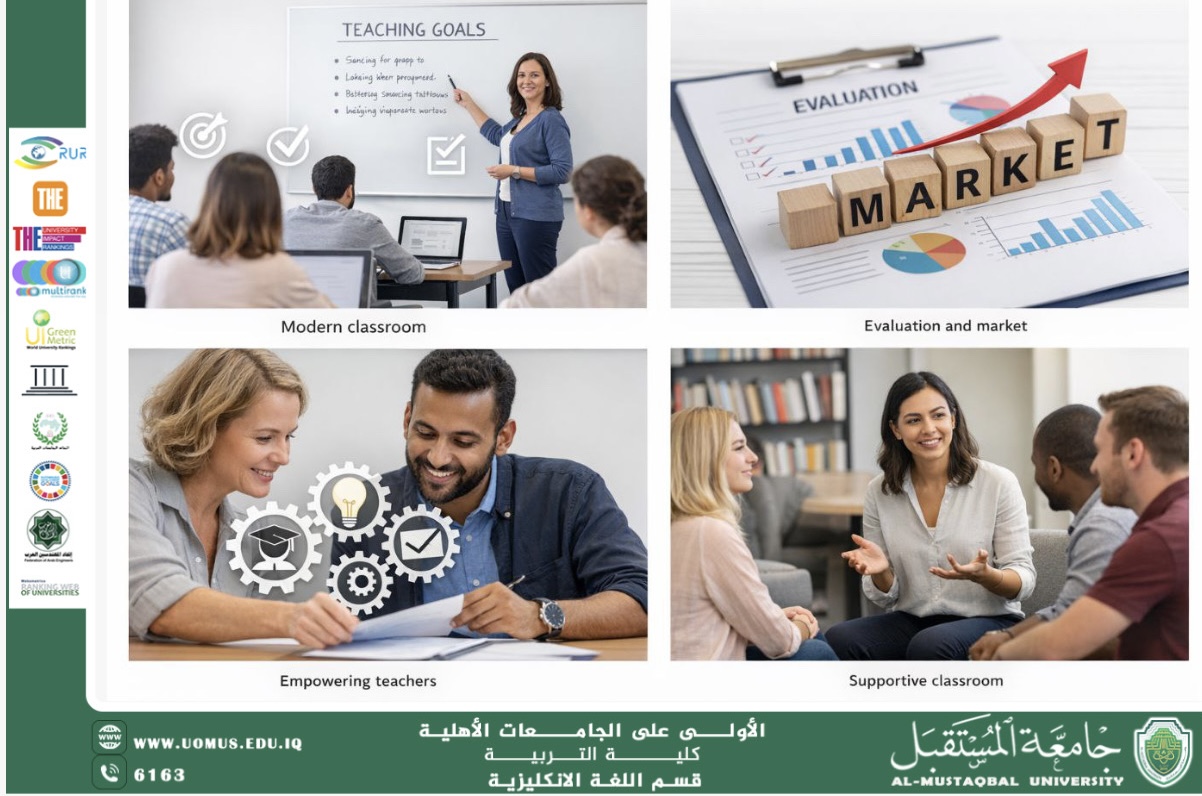
Reclaiming teacher identity does not mean rejecting accountability. Rather, it involves redefining
professionalism beyond numerical results. Institutions should recognize that quality education
depends not only on measurable outputs but also on supportive environments that respect teacher
expertise.
In conclusion, sustaining strong teacher identity is essential for effective English language education.
When teachers are empowered as professionals rather than reduced to performance units, both
students and institutions benefit. A balanced approach that integrates accountability with autonomy
can lead to more ethical and sustainable educational practices
Tebark Aqeel Dawood
جامعه المستقبل الاولى في العراق
جامعه المستقبل الاولى في العراق