Digital Twin in Hospitals: An Intelligent Simulation Model for Improving Medical Decisions (Lecturer Najat Hamid Jassim).
The concept of the “Digital Twin” is considered one of the most innovative ideas in the field of biomedical engineering and intelligent healthcare systems. It is based on creating a digital model identical to a patient, medical devices, or even the entire hospital environment. This model allows the simulation and analysis of different scenarios with high accuracy, which helps in making highly efficient clinical and operational decisions.
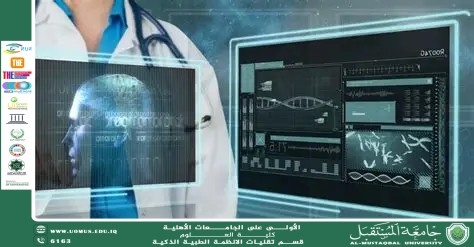
In the medical field, a digital twin can represent a digital replica of a patient’s organs, which can be used to simulate treatments before they are actually applied. This opens new possibilities for surgeons to test optimal surgical pathways, understand potential risks, and determine the most effective treatment strategy, thereby reducing errors and increasing success rates.
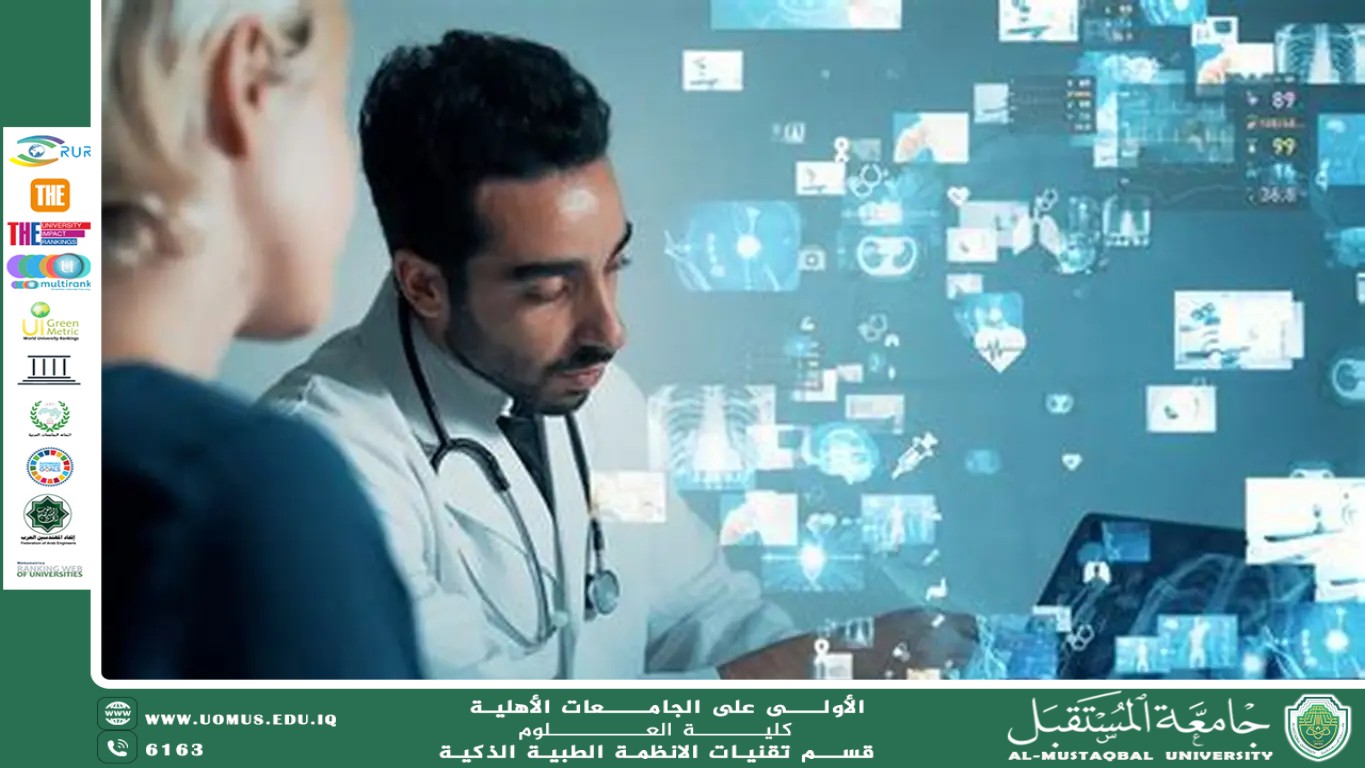
At the hospital level, digital twins can be used to model patient flow, equipment operation, and resource consumption. This enables healthcare institutions to improve performance and predict health crises before they occur. In addition, the digital twin can be integrated with artificial intelligence to analyze real-time data and provide immediate recommendations.
The strength of this model lies in its ability to integrate real-world data with intelligent simulations, making it a strategic tool for the development of future healthcare systems. Through this technology, hospitals can transform into smarter environments that are more predictive and better prepared to face operational and clinical challenges.
Al-Mustaqbal University – The First University in Iraq.