
A Scientific Article by Lecturer Fatima Haider Jasim Entitled: The Effect of Fasting on Psychological Well-Being and Self-Discipline During the Holy Month of Ramadan
The Holy Month of Ramadan: An Opportunity to Enhance Self-Discipline and Psychological Well-Being
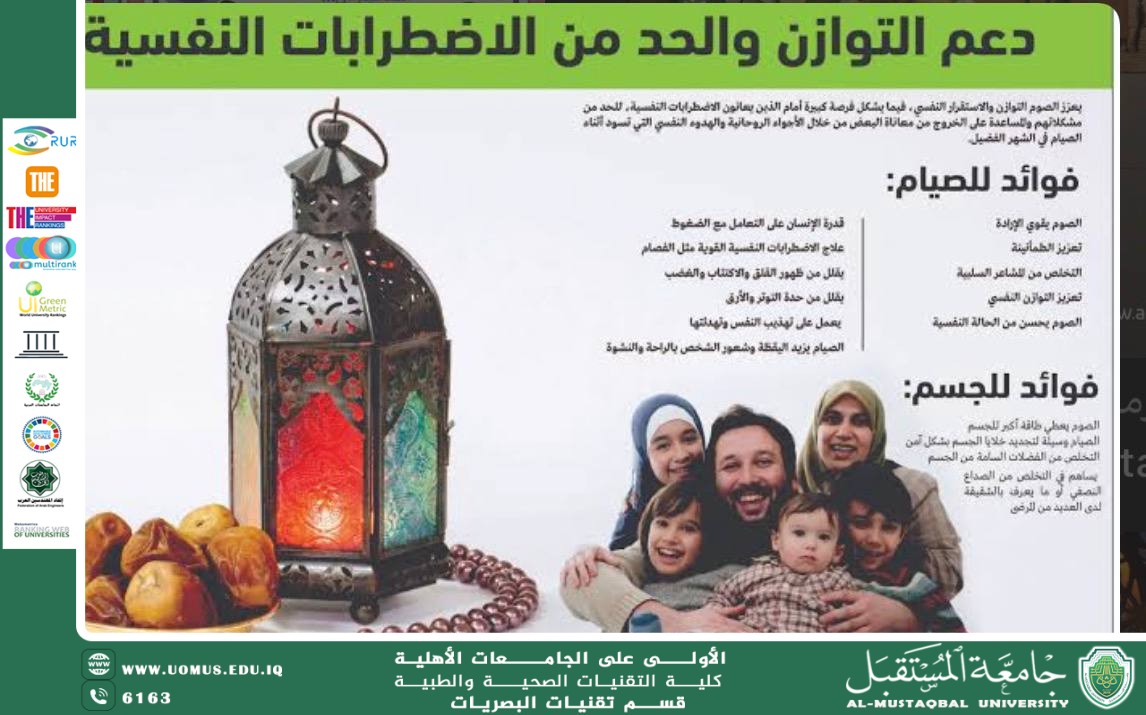
The holy month of Ramadan represents a unique opportunity to strengthen self-discipline and psychological health, going beyond its role as a month of fasting alone. Numerous studies have shown that fasting is not merely the abstention from food and drink, but rather an organized practice that develops the ability to control desires and impulses, thereby enhancing self-discipline and the capacity to adhere to daily routines.
From a psychological perspective, fasting helps cultivate patience and endurance, strengthens mental focus, and encourages the reevaluation of priorities in life. It provides individuals with an opportunity to step away from daily pressures, engage in self-reflection, and increase self-awareness—an approach recognized in psychology as "self-reflective practice," which is associated with improved mood and reduced stress and anxiety.
Self-discipline is among the most significant benefits of fasting, as it requires individuals to follow strict schedules for meals, worship, and sleep. This structured routine aids in better time management and increased productivity—essential skills that positively impact both academic and professional performance.
Thus, the month of Ramadan serves as a practical environment for developing self-control and self-discipline, offering a combined educational and spiritual experience that integrates religious, health, and psychological values. This allows individuals to improve their personal and academic lives in a balanced and meaningful way.
University of Al-Mustaqbal – The First and Leading Private University