The Impact of Oil Price Fluctuations on Banking Liquidity in Iraq
Introduction
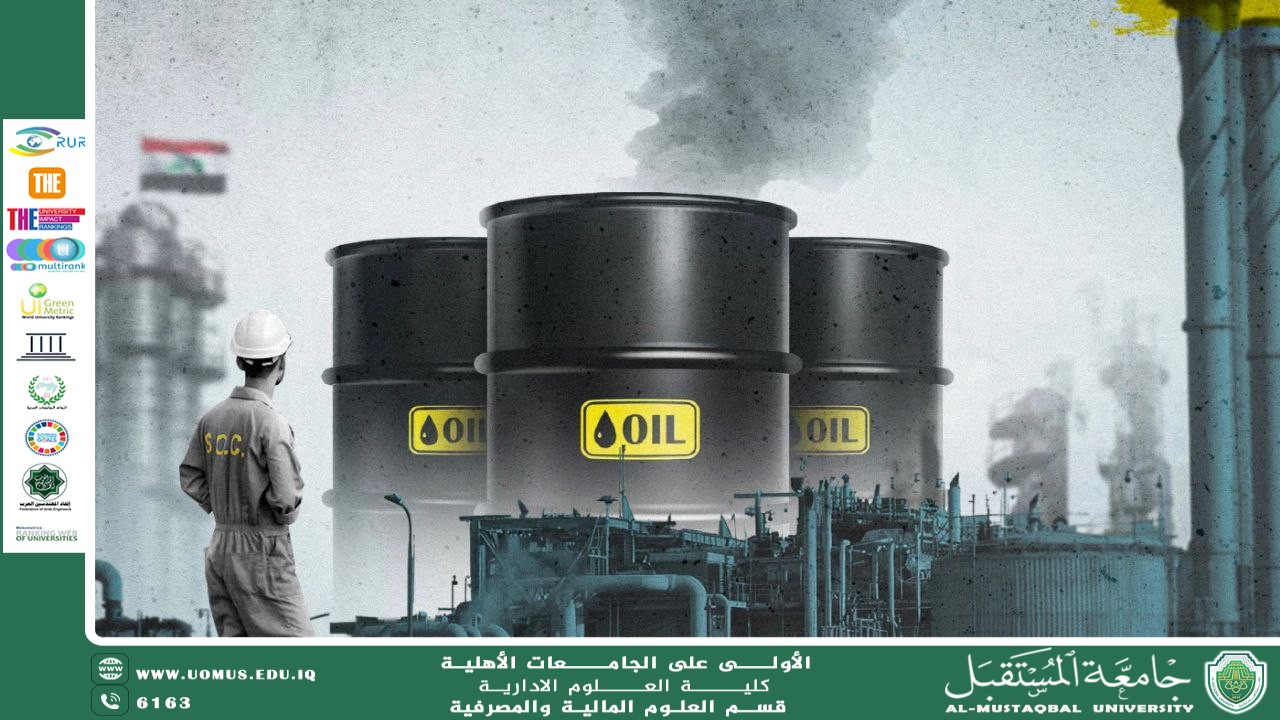
Oil represents the main pillar of the Iraqi economy. Iraq relies heavily on oil revenues to finance the public budget and stimulate economic activity. Oil revenues constitute the largest share of exports and government income, making the Iraqi economy highly dependent on a single resource.
Because of this dependence, fluctuations in global oil prices directly affect various economic sectors, especially the banking sector, which plays a key role in financial intermediation and economic development.
First: Concept of Banking Liquidity
Banking liquidity refers to the ability of banks to provide cash or easily convertible assets in order to meet withdrawal requests from depositors and fulfill short‑term financial obligations.
Liquidity is considered one of the most important indicators of financial stability. The main sources of banking liquidity include bank deposits, reserves held at the central bank, short‑term financial assets, and cash flows generated by economic activity.
Second: Nature of the Iraqi Economy and Oil Prices
The Iraqi economy is characterized as a rentier economy that relies heavily on oil exports as its main source of government revenue and foreign currency.
This heavy dependence makes the Iraqi economy highly sensitive to fluctuations in global oil prices, which directly influence government revenues, public spending, and overall economic performance.
Third: Relationship Between Oil Revenues and Banking Liquidity
Banking liquidity in Iraq is closely linked to government oil revenues because the government is a major source of liquidity injection into the national economy.
When oil prices rise, government revenues increase, leading to higher public spending on salaries, infrastructure projects, and public services. This spending increases money circulation in the economy and strengthens banking liquidity through higher deposits.
Fourth: Effects of Falling Oil Prices
When oil prices decline, government revenues decrease, forcing the government to reduce public spending or postpone development projects. This reduction in spending leads to a decrease in money circulation within the economy.
Lower economic activity also results in reduced income for individuals and businesses, which leads to lower bank deposits and weaker liquidity levels in the banking sector.
Fifth: Role of the Central Bank of Iraq
The Central Bank of Iraq plays an important role in managing liquidity and maintaining financial stability. It uses several monetary policy tools such as open market operations, reserve requirements, and other regulatory measures to ensure stability within the banking system.
Conclusion
Oil price fluctuations have a significant impact on banking liquidity in Iraq due to the country's heavy reliance on oil revenues. Rising oil prices increase government spending and liquidity in the economy, while falling prices reduce liquidity and increase financial risks.
Achieving financial stability therefore requires diversifying the economy and strengthening the banking sector to support sustainable economic development.