
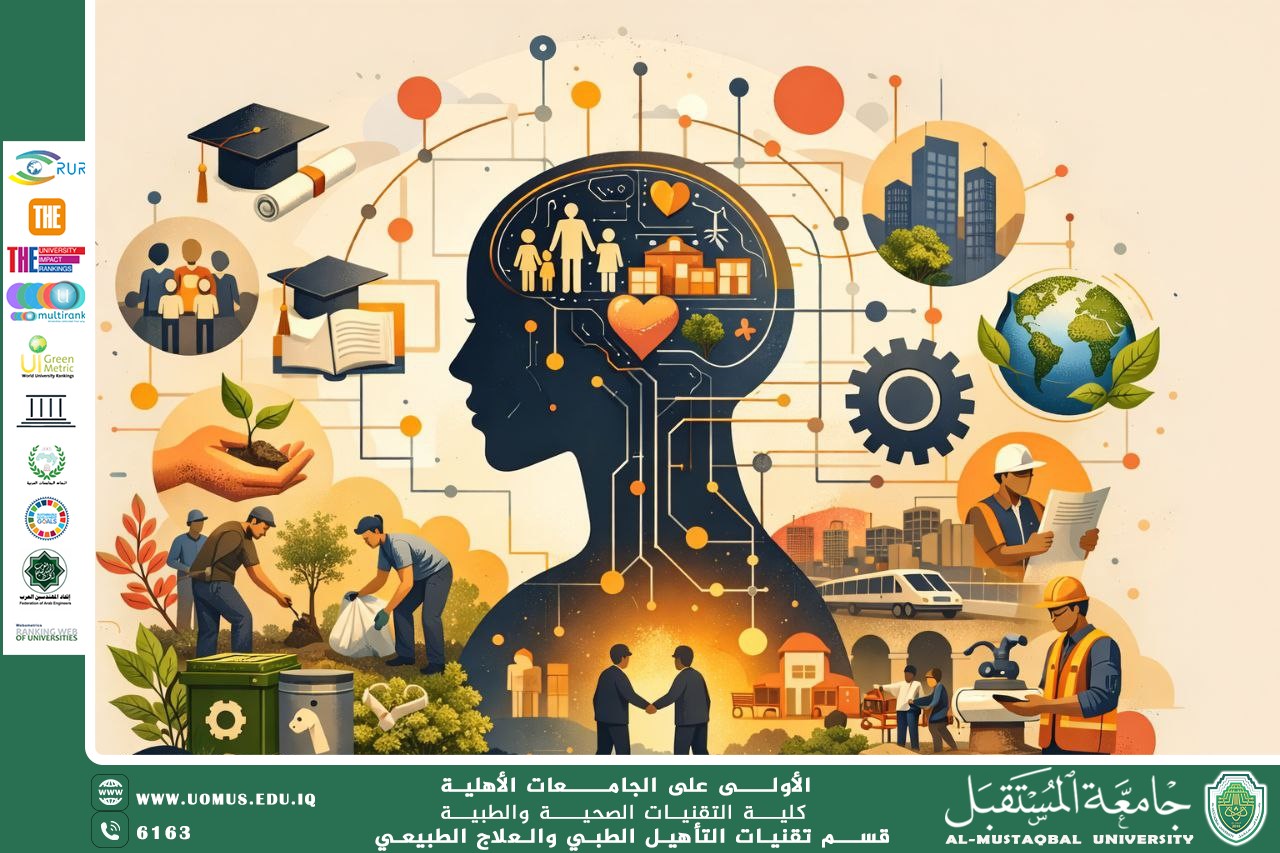
The Role of Society in Shaping Individuals and Supporting Pathways to Sustainable Development
Society represents the fundamental framework within which individuals interact, exchange knowledge, and develop shared values and norms. Through these interactions, social relationships are formed, contributing to the establishment of cooperation, responsibility, and collective engagement among members of the community.
Educational, health, and social institutions play a crucial role in strengthening community awareness by organizing educational and outreach activities that promote scientific and health-related knowledge among different segments of society. Such initiatives contribute to encouraging positive behaviors that directly influence the well-being of individuals and the overall stability of the community.
Within this context, health-related disciplines—particularly physical therapy—play a significant role in improving individuals’ quality of life. Physical therapy contributes to the prevention of injuries, rehabilitation of patients, and restoration of functional abilities, enabling individuals to return to their daily activities effectively. Moreover, these disciplines help raise public awareness about the importance of maintaining physical health through regular physical activity and healthy lifestyle practices.
Promoting collaboration and social responsibility among community members is essential for sustainable development. Community initiatives and awareness programs foster a culture of participation and encourage individuals to contribute actively to community service and public well-being.
In conclusion, society remains the cornerstone of human development and progress. Increasing public awareness, strengthening social values, and supporting educational and health initiatives are essential factors in achieving sustainable development and building a healthier and more resilient community.
Al-Mustaqbal University, the first university in Iraq.