How Literature Teaches Us to Understand Others
The defining characteristics of literature in general, and English literature in particular, is its ability to explore the emotions of characters who differ from the reader in class, culture, or historical circumstances. Through this engagement, a deeper awareness of the suffering and motivations of others is formed, moving beyond superficial judgments or generalized views that reduce humanity to a narrow social or economic framework.
Writers often delve into the depths of their characters, exploring their lives and psyches, analyzing their circumstances, and connecting them to reality. The primary aims of literature are, firstly, enjoyment, and secondly, education. Several novels exemplify this purpose.
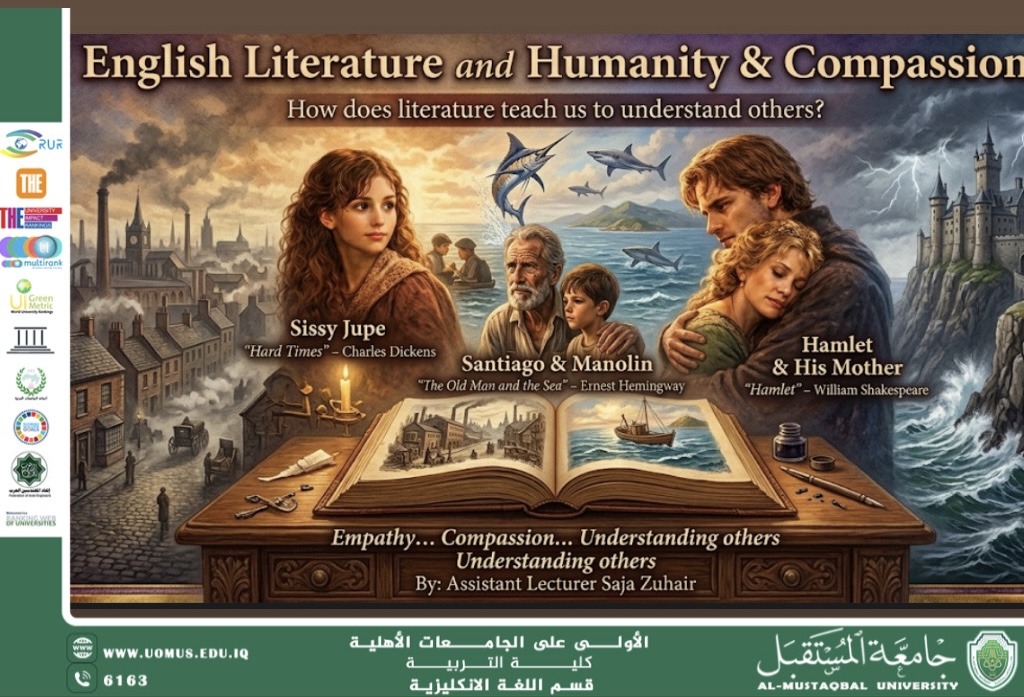
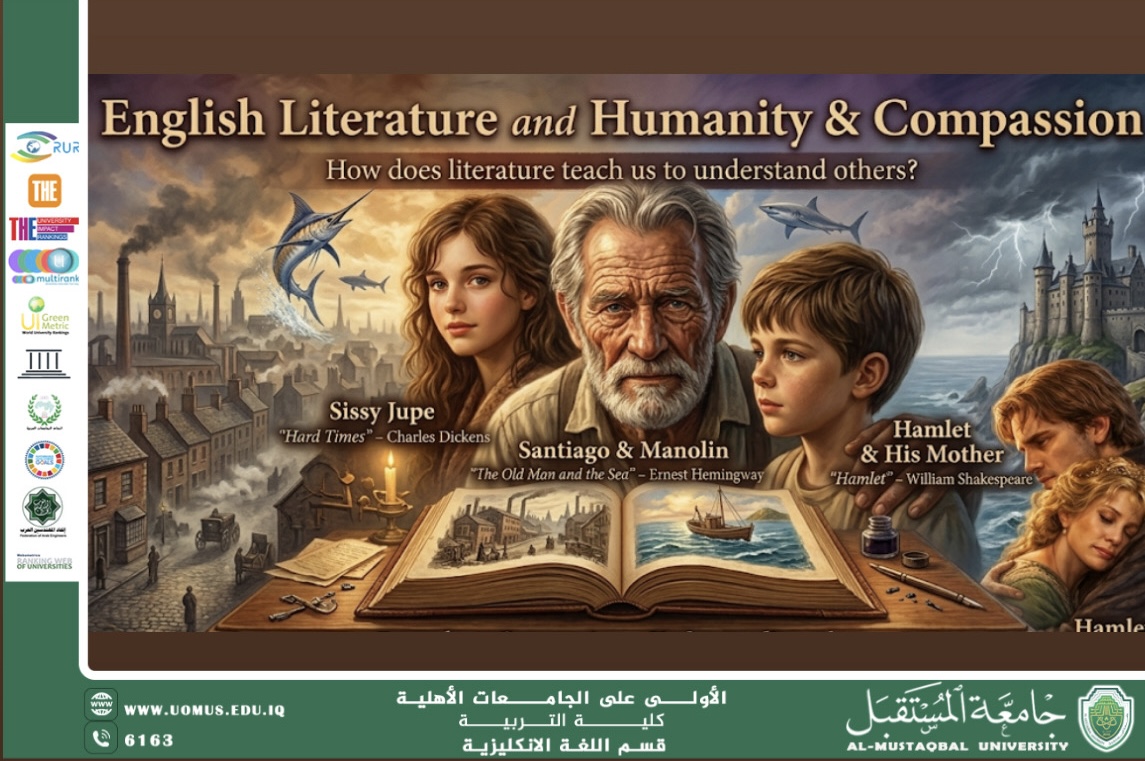
Charles Dickens' novel Hard Times clearly demonstrates how literature can reveal the gap between abstract thinking adopted by systems and institutions and the individual human experience of their characters. Through the character of Sissy Jupe, Dickens shows that while authorities focus on solving general problems, Sissy is concerned with the well-being of individual people. When asked about social issues related to poverty or the number of suffering people, she responds differently from the other students. While they speak in terms of numbers and statistics, Sissy emphasizes the human dimension of suffering.
She replies:
“I don’t just think about the number of poor people, but I think about each family individually, and the pain and suffering they feel.”
This scene illustrates a key idea of Dickens: education based solely on facts can harden a person, whereas imagination and compassion allow us to understand others and empathize with their suffering.
Another example is Ernest Hemingway's The Old Man and the Sea. When Santiago returns exhausted after his long struggle with the fish, Manolin weeps at the sight of his injured hands and vows to return to work with him. Manolin's humanity is evident in his compassion, loyalty, and concern for others. He does not see Santiago as a failed fisherman, but as a human being deserving of love and respect. This demonstrates the role of English literature in awakening human emotions and allowing readers to experience the world through the lives of others. By witnessing Manolin's loyalty and empathy, readers learn not only about fishing but also about essential human values such as compassion, loyalty, and solidarity with the vulnerable.
Shakespeare's play The Tragedy of Hamlet provides yet another example. In the scene where Hamlet confronts his mother after learning of her intent to marry his uncle shortly after his father's death, he does not respond with revenge or insult, despite his anger. Instead, he seeks to guide her gently and warn her.
Dickens, like Shakespeare and Hemingway, uses literature to highlight humanity, compassion, and empathy, enabling readers to emotionally connect with the characters. English literature does not merely present events; it trains the reader to understand others and share their feelings. This, ultimately, is the essence of "arousing humanity and emotion" in literature.
In conclusion, it becomes clear that English literature does not merely narrate events or convey facts, but seeks to evoke the reader's emotions and cultivate their capacity for empathy. From Sissy Jupe, who teaches us compassion for the poor, to Manolin, who embodies loyalty and solidarity, and from Hamlet, who makes us reflect on the human condition and the value of love and family, literature proves to be a powerful tool for understanding humanity and its emotions. Thus, literature becomes not just a collection of stories to be read, but a living human experience that teaches us how to be more compassionate and empathetic in our daily lives.
By Asst.Lect.Saja zuhair
جامعة المستقبل الاولى في العراق