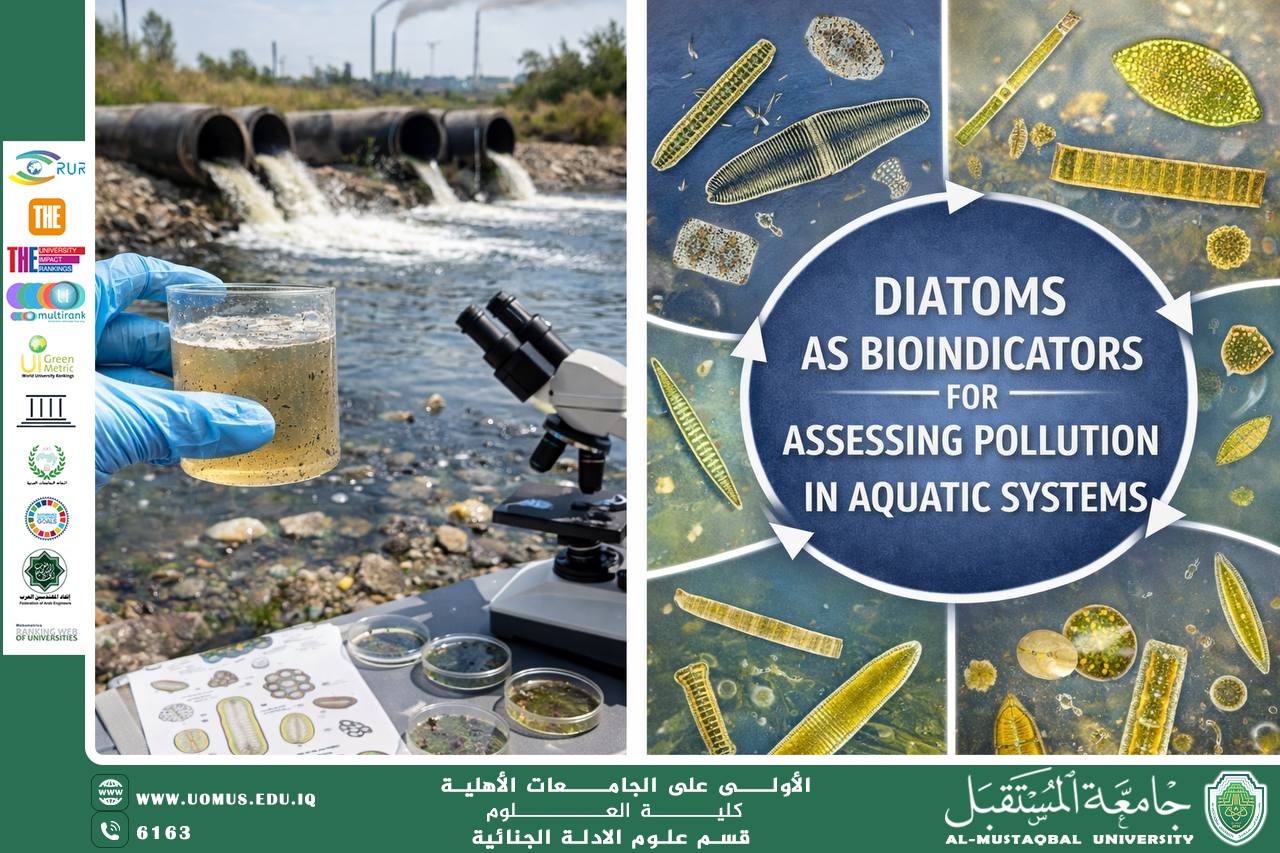

Diatoms as Bioindicators for Assessing Pollution in Aquatic Systems (Assistant Lecturer Mais Uday Mohammed)
Diatoms are among the most important groups of microscopic algae used in environmental studies due to their high sensitivity to physical and chemical changes in aquatic environments. They are unicellular algae characterized by a distinctive siliceous cell wall, which enhances their preservation and facilitates detailed microscopic examination. Numerous studies have demonstrated that diatom community structure accurately reflects water quality and pollution levels.
Diatoms respond rapidly to variations in environmental factors such as temperature, pH, salinity, and nutrient concentrations, including nitrates and phosphates, as well as organic matter. Therefore, analyzing the relative abundance of dominant species can reveal the prevailing environmental impacts, whether resulting from organic pollution, agricultural runoff, or wastewater discharge.
Water quality assessment using diatoms relies on examining biodiversity, species density, and similarity or dissimilarity indices among different sites. In relatively clean environments, sensitive species tend to dominate, whereas pollution-tolerant species increase in impacted areas. The application of multivariate statistical analyses further enhances the understanding of the relationship between species distribution and influencing environmental factors.
The significance of diatoms lies in their ability to provide an accurate and relatively cost-effective tool for monitoring environmental changes over both short and long terms, making them essential components of environmental monitoring programs and sustainable water resource management.
In conclusion, diatoms serve as effective bioindicators that reflect the complex interactions between living organisms and aquatic environments, contributing to a solid scientific basis for sound environmental decision-making.
Al-Mustaqbal University – the first university in Iraq.