Neurodegenerative Disorders and Their Molecular Mechanisms (Asst. Lecturer Huwayda Nazzal Hussein)
Neurodegenerative disorders are a group of diseases characterized by the progressive loss of neurons in the brain or nervous system. These conditions include Alzheimer’s disease, Parkinson’s disease, and Huntington’s disease, and they represent major causes of neurological disability in older adults.
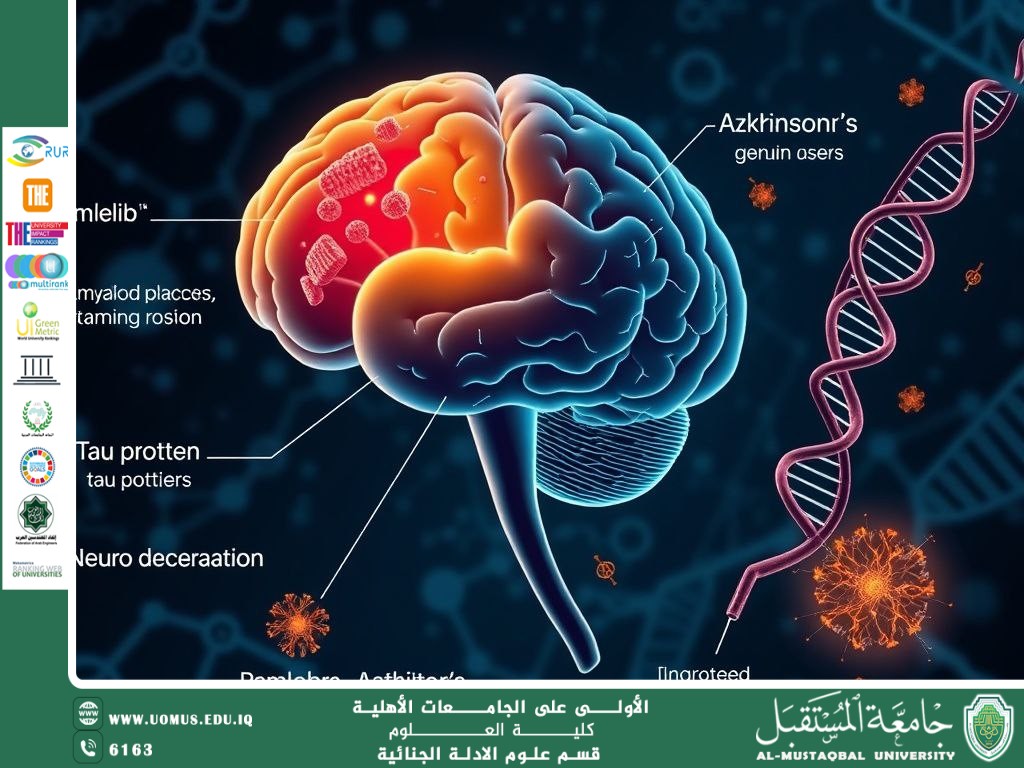
One of the main molecular causes of these disorders is the accumulation of abnormal proteins within neurons. In Alzheimer’s disease, for example, amyloid-beta proteins accumulate and form plaques in the brain. Additionally, the tau protein becomes abnormally phosphorylated and forms neurofibrillary tangles inside neurons, disrupting cellular function.
In Parkinson’s disease, there is degeneration of dopamine-producing neurons in a region called the substantia nigra. This condition is also associated with the accumulation of alpha-synuclein, which forms Lewy bodies inside neurons.
Another major contributing factor is oxidative stress, where excessive production of reactive oxygen species damages proteins, lipids, and DNA in neural cells.
Neuroinflammation also plays an important role. Immune cells in the brain release inflammatory molecules that can further damage neurons and accelerate disease progression.
Modern research aims to develop treatments targeting these molecular mechanisms, including drugs that prevent protein aggregation or reduce neuroinflammation.
Al-Mustaqbal University – the first university in Iraq.