A Workshop Titled “Primitive Arts Between Aesthetic and Functional Aspects” by Assistant Lecturer Esraa Qasim..
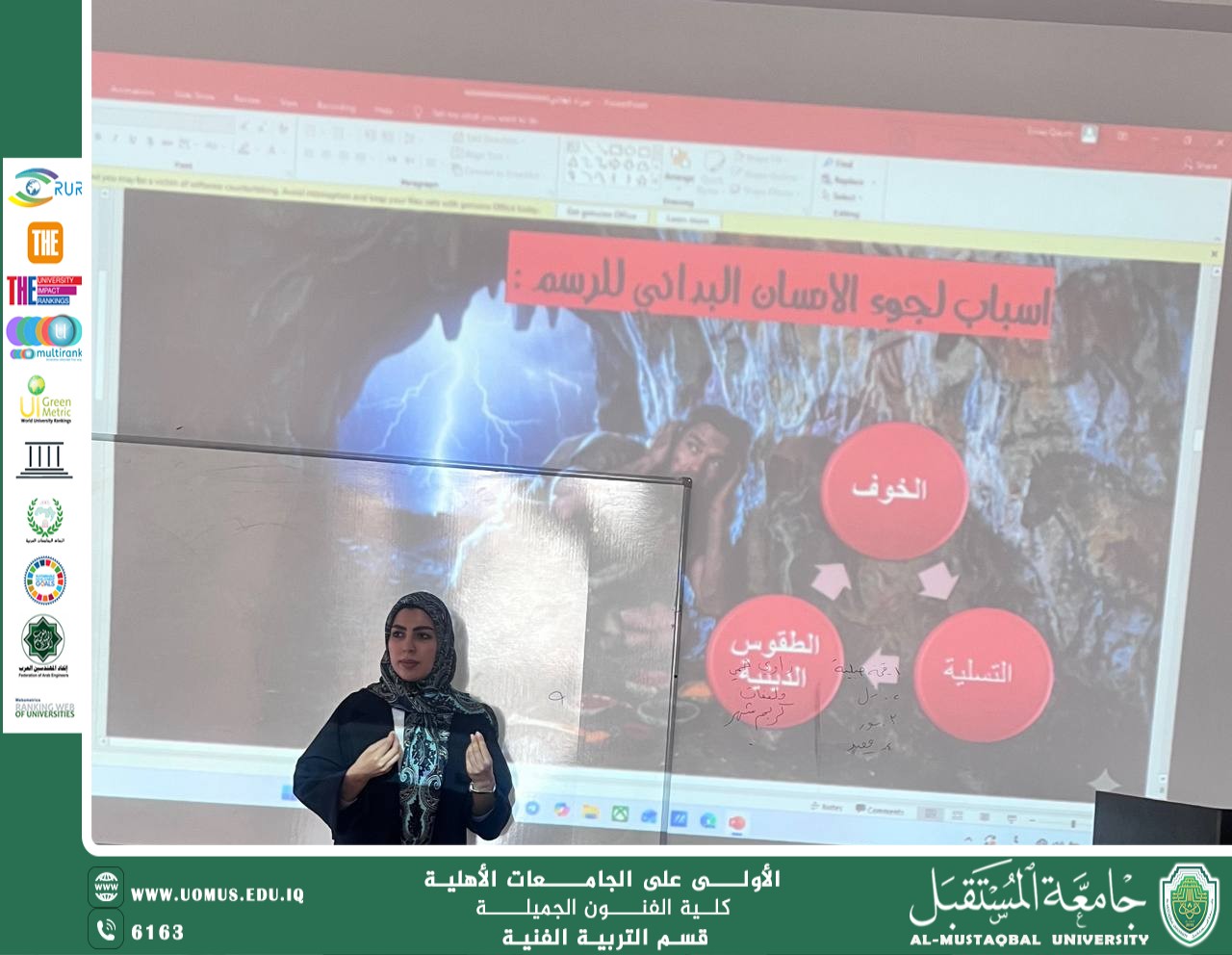
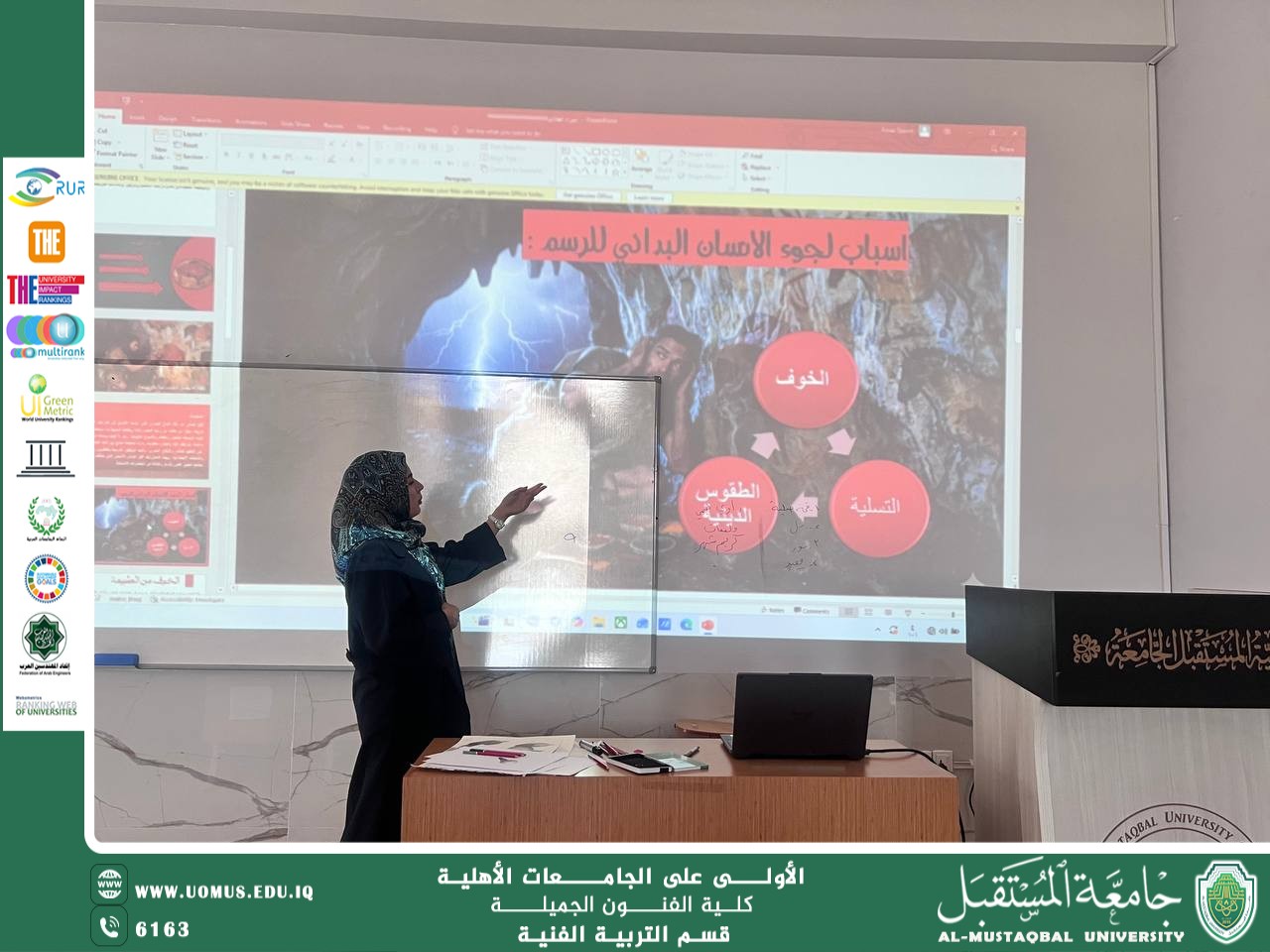
Assistant Lecturer Esraa Qasim Ali held a scientific workshop entitled “Primitive Arts Between the Aesthetic and the Functional”, in which she discussed the dimensions of this art and its significance in the life of early humans, highlighting the relationship between the aesthetic aspect and the functional aspect in primitive artworks.
At the beginning of the workshop, primitive arts were defined as the arts practiced by early humans before the emergence of organized civilizations. Humans relied on drawing, sculpture, and engraving on rocks and cave walls to express their ideas and beliefs. At that time, they used simple materials derived from nature, such as pigments extracted from soil, minerals, and charcoal, to create images of animals, hunting scenes, and religious rituals.
The workshop also explained that primitive art has two main dimensions. The first is the aesthetic dimension, which is reflected in the organization of lines and shapes and in the artistic sense shown by early humans, who sought to achieve a form of balance and harmony in the drawings they created on cave walls or on stone tools. The second is the functional dimension, which relates to the practical or ritual purpose of art. Early humans used drawings in hunting rituals, believing that drawing an animal could grant them the power to control it in reality. Some symbols and shapes were also used to express spiritual beliefs or to document important events in their daily lives....Almustaqbal University, The First University in Iraq.