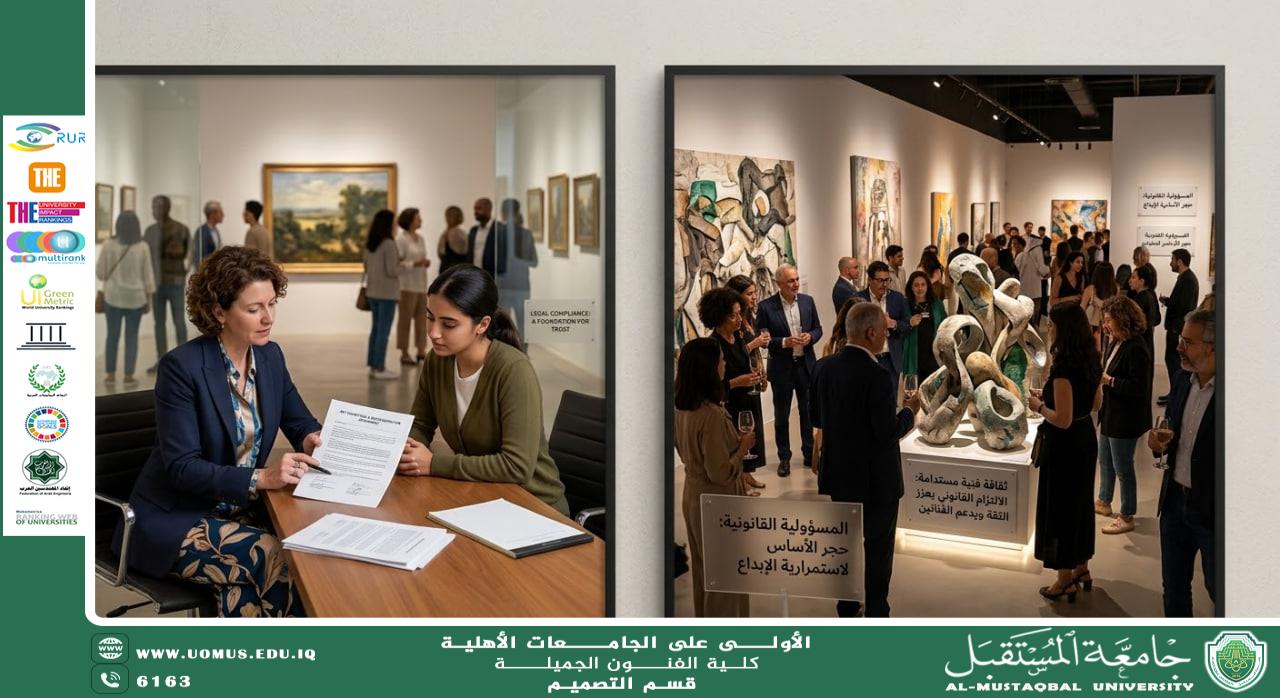

Legal Responsibility in Art Exhibitions and Its Role in Promoting Sustainable Cultural Practices
Art exhibitions are considered one of the most important platforms for spreading artistic culture and strengthening communication between artists, audiences, and cultural institutions. With the increasing number and diversity of art exhibitions, the importance of legal responsibility becomes more evident in organizing these events and protecting the rights of all parties involved. An art exhibition is not only about displaying creative works but also about adhering to legal frameworks that regulate the exhibition process and protect artists’ intellectual property rights.
Legal responsibility in art exhibitions includes several aspects, most notably the protection of intellectual property rights of the artworks displayed. Laws protect artists from having their works copied, reproduced, or used without prior permission. Exhibition organizers are also responsible for ensuring that the artworks presented are original and do not violate the rights of other artists. Proper documentation and clear ownership identification are also essential parts of this process.
Another important legal aspect is the responsibility for protecting artworks during the exhibition. Organizing institutions must provide a secure environment to safeguard artworks from damage or theft by implementing appropriate security and organizational measures. In addition, legal responsibility includes ensuring the safety of visitors inside exhibition spaces by maintaining proper safety standards and well-organized exhibition environments.
Legal responsibility also involves adhering to contracts and agreements between artists and organizers. These agreements define participation conditions, exhibition rights, the duration of the exhibition, and the use of images or media related to the artworks. Such contracts help regulate relationships between the parties involved and prevent potential legal disputes.
Beyond protecting individual rights, legal responsibility contributes to promoting responsible cultural practices that respect laws and societal values. When art exhibitions are organized within a clear legal framework, they create a safe cultural environment that encourages creativity and supports the sustainability of artistic activities.
This topic is closely related to the Sustainable Development Goals, particularly Goal 16: Peace, Justice, and Strong Institutions, which emphasizes the importance of fair legal systems and strong institutions that protect rights and regulate cultural activities in a transparent and responsible manner. Respecting legal frameworks in organizing art exhibitions enhances trust between artists, institutions, and audiences and contributes to building a sustainable cultural environment that supports creativity and respects intellectual property rights.
Almustaqbal University, The First University in Iraq.