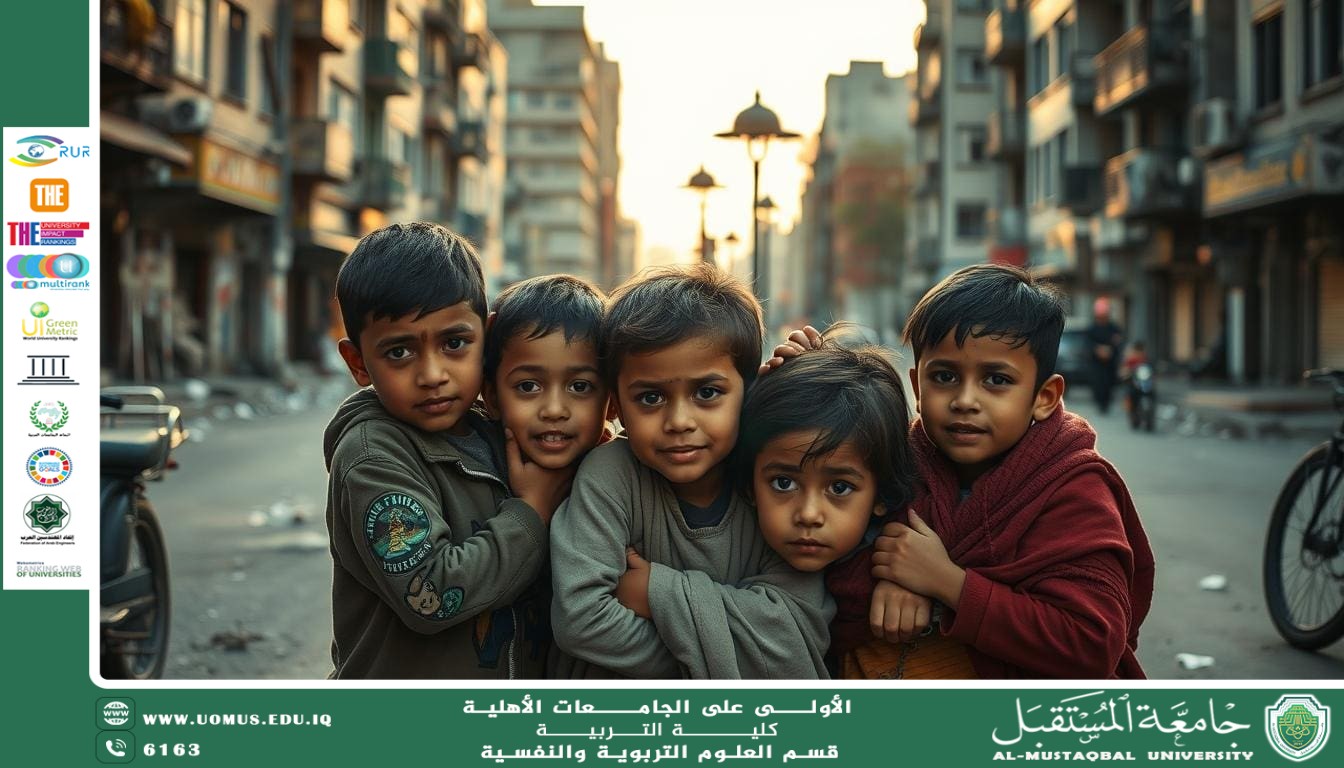

Strategies for Reducing Child Homelessness: A Vision for Community Empowerment and Protection Mechanisms
Prepared by: M.M. Rula Saad Habib
Child homelessness is one of the most complex humanitarian issues threatening the future of generations. It is a direct reflection of family breakdown and economic pressures. Addressing this phenomenon is not limited to providing immediate aid; rather, it requires a structural framework that eradicates the roots of marginalization and returns the child to their natural environment as a cornerstone for building civilization. This vision is embodied in the following axes:
First: The Values-Based Strategy and Ethical Responsibility
This axis stems from the belief that children's rights are moral and religious obligations before they are legal texts. Divine religions and human values prohibit neglecting childhood or exposing it to loss. Homelessness is not fate, but rather the result of a breakdown in social solidarity. Therefore, restoring "parental values" and societal responsibility towards orphans and the deprived is the first step in protecting childhood from the dangers of the streets.
Second: Cognitive and Educational Empowerment (Preventing Dropout)
Homelessness cannot be eradicated without addressing its root causes, the most significant of which is school dropout. This strategy focuses on raising awareness of the importance of education as a fundamental right and activating the role of educational institutions in identifying at-risk children and providing them with psychological support. "Cognitive empowerment" gives children the ability to reject exploitation and opens horizons that transcend the limitations of need and poverty.
Third: Institutional Initiatives and a Safe Environment
Here, the confrontation moves to the implementation phase through the establishment and development of care facilities that do not merely provide shelter but also function as "rehabilitation and integration centers." This includes leveraging partnerships between universities and NGOs to provide specialized health and psychological care programs, ensuring the existence of strict legal mechanisms to prevent the exploitation of children in forced labor or begging, while providing safe alternatives under the supervision of specialists.
Fourth: The Role of Collective Awareness and Self-Regulation
The protection cycle is completed by transforming every citizen into a guardian of childhood. Remaining silent in the face of seeing a homeless child is complicity in the crime. Therefore, collective consciousness must reject the phenomenon of "street children" not merely as a disturbing sight, but as a matter of human dignity. The success of child protection laws depends on the daily practice of "preventing homelessness," beginning with families embracing their children and culminating in the collective efforts of society to rescue every child from the cycle of neglect.
Conclusion and Recommendations:
Achieving a healthy society requires making the "child's right to safety" a national priority, integrating child protection concepts into school curricula, and supporting institutions that adopt comprehensive inclusion policies. Saving a child from homelessness is saving the future of an entire nation.
(Al-Mustaqbal University is the leading university in Iraq)