Scientific Article By: Dr. Aseel Amer Hadi Position: Rapporteur of the Department of Biochemistry Title: Synthesis of Nanomaterials and Their Role in Advancing Chemical Sciences
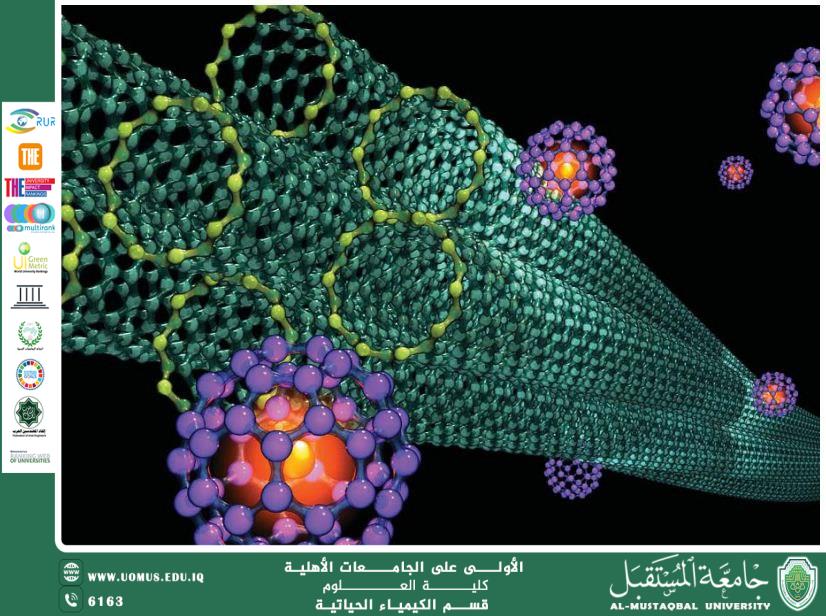
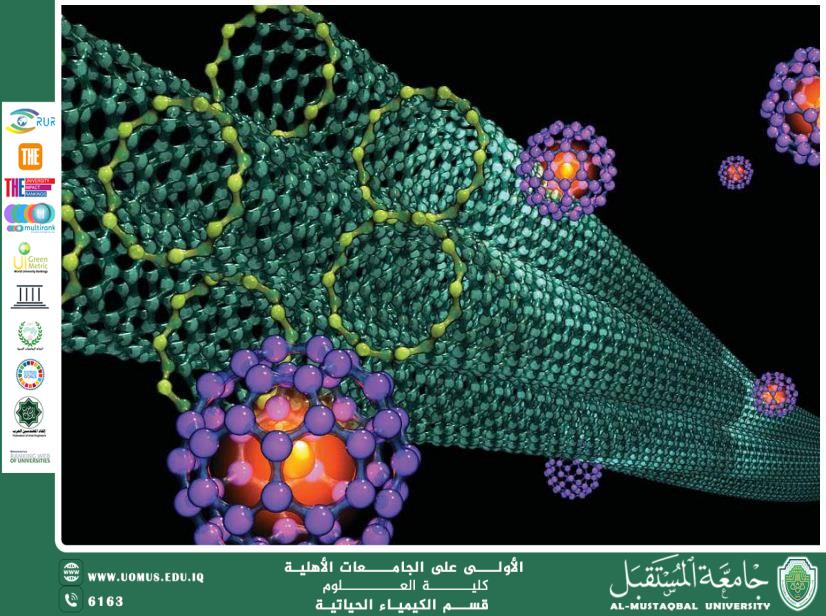
Modern science has witnessed remarkable progress in many research fields, particularly in nanotechnology, which is considered one of the most important scientific areas of the twenty-first century. Nanomaterials are defined as materials whose dimensions range between 1 and 100 nanometers. At this scale, materials exhibit unique physical and chemical properties that differ significantly from those observed in their bulk forms. As a result, the synthesis of nanomaterials has become a major focus of researchers in chemical sciences due to their wide applications in industry, medicine, environmental protection, and energy technologies.
Concept of Nanomaterial Synthesis
Nanomaterial synthesis refers to the set of processes and techniques used to produce nanoparticles or nanostructures with specific size, shape, and composition. These processes aim to control the structural and chemical properties of materials at the atomic or molecular level. Various chemical and physical principles are employed in the synthesis methods, allowing scientists to obtain materials with distinctive characteristics suitable for different applications.
Methods of Nanomaterial Synthesis
There are several methods used to synthesize nanomaterials, which are generally classified into two main approaches:
1. Top-Down Approach
This method involves reducing bulk materials into nanoscale particles through physical or mechanical processes such as mechanical milling, photolithography, or physical vapor deposition. Although this method is relatively simple and widely used, it may sometimes lead to non-uniform particle sizes.
2. Bottom-Up Approach
In this approach, nanoparticles are built from atoms or small molecules through controlled chemical reactions. Common techniques include chemical vapor deposition, the sol–gel method, and wet chemical synthesis. This method provides better control over the size, shape, and structure of the nanoparticles.
Role of Nanomaterials in Chemical Sciences
Nanomaterials play a significant role in advancing chemical sciences by improving many chemical processes and applications. Some of the most important contributions include:
Improving the Efficiency of Chemical Reactions
Nanoparticles are widely used as highly efficient catalysts due to their large surface area, which enhances reaction rates and improves the efficiency of chemical processes.
Advancement of Chemical Analysis
Nanomaterials have contributed to the development of highly sensitive chemical and biosensors capable of detecting extremely low concentrations of substances.
Contribution to Green Chemistry
Nanomaterials help in developing more efficient and environmentally friendly chemical processes, reducing chemical waste and minimizing energy consumption.
Environmental Applications
Nanomaterials are widely used in environmental remediation, such as water purification and the removal of chemical pollutants. For example, nanoparticles can be used to absorb heavy metals and toxic substances from contaminated water.
Challenges and Future Perspectives
Despite the significant advantages of nanomaterials, several challenges remain, including difficulties in fully controlling their properties and concerns about their potential health and environmental impacts. Therefore, current research efforts focus on developing safer and more efficient synthesis methods, as well as studying the effects of nanomaterials on living organisms and the environment.
Al-Mustaqbal University
The first among Iraqi private universities.