Scientific Article by Ass .Prof. Mustafa Ali Al-Awadi Department of Biochemistry Title The Role of Analytical Chemistry in the Development of Drug Detection Devices: Toward Smart and Rapid Analytical Technologies
Analytical chemistry represents one of the fundamental scientific pillars in the development of modern technologies used for detecting illicit drugs. These devices rely on principles of chemical separation, spectroscopic analysis, and chemical sensing to accurately identify drug compounds even at extremely low concentrations. With the continuous emergence of new psychoactive substances and the increasing diversity of illicit drugs, there is a growing need for analytical devices that are more sensitive, faster, and suitable for field applications outside traditional laboratory environments.
Traditionally, forensic and medical laboratories have relied on advanced analytical techniques such as Gas Chromatography (GC) and High-Performance Liquid Chromatography (HPLC) coupled with Mass Spectrometry (MS). These techniques allow the separation of complex chemical mixtures and the precise identification of drug compounds based on their retention time and molecular fingerprint. Despite their high accuracy and reliability, these systems are often limited to specialized laboratories due to their high cost, complex instrumentation, and the need for skilled operators.
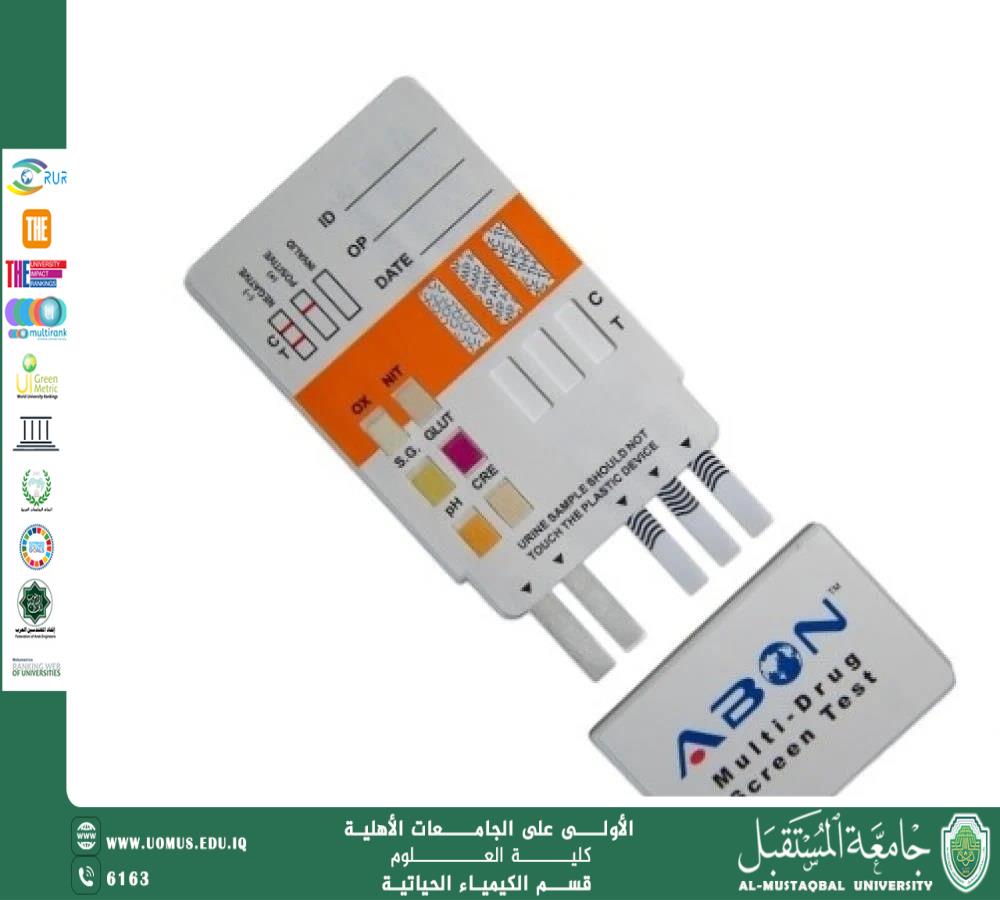
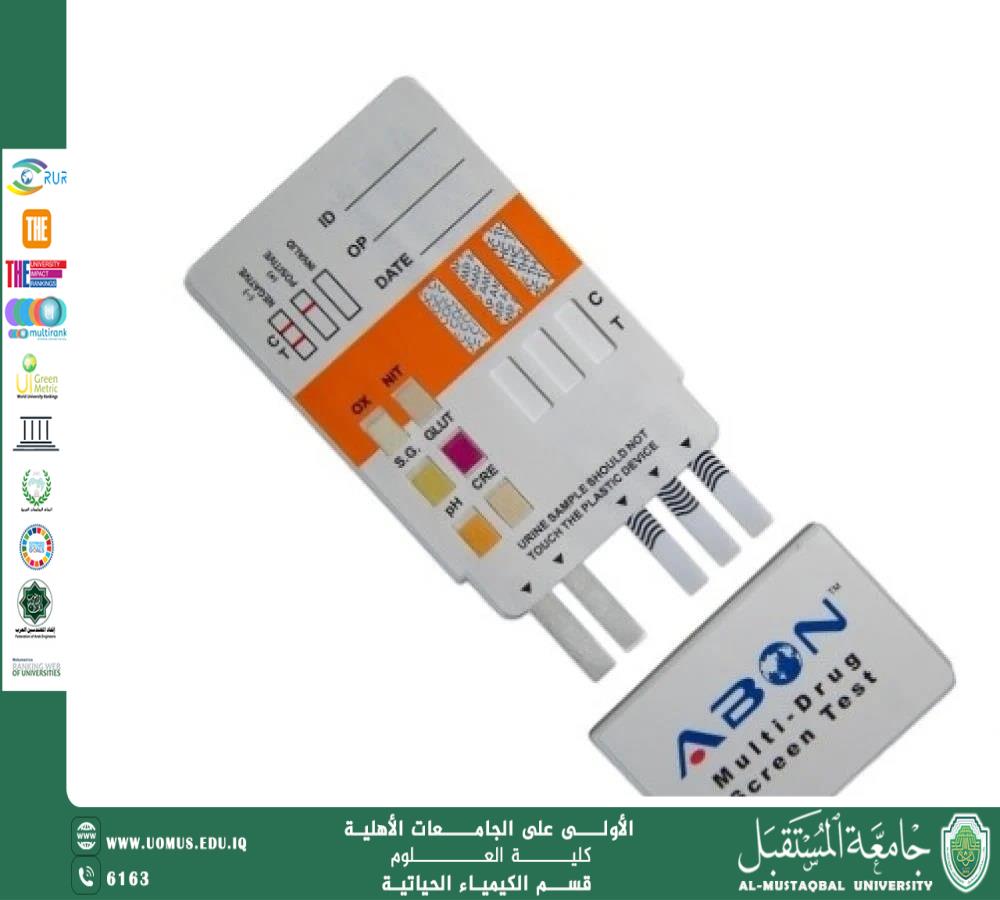
In recent years, research in analytical chemistry has increasingly focused on developing portable drug detection systems based on chemical and electrochemical sensors capable of providing rapid responses to trace amounts of narcotic substances. These sensors operate through oxidation–reduction reactions that occur on the surface of electrodes when drug molecules interact with the sensing material, producing an electrical signal that can be measured and analyzed directly. Such systems offer significant advantages including high sensitivity, rapid response time, and relatively low manufacturing costs compared with conventional laboratory instruments.
Nanomaterials have also played a crucial role in enhancing the performance of these sensing platforms. The incorporation of advanced materials such as graphene and carbon nanotubes significantly increases the effective surface area and improves electron transfer efficiency, leading to lower detection limits and improved analytical sensitivity. Furthermore, portable spectroscopic techniques such as Raman spectroscopy and infrared spectroscopy are increasingly being integrated into field-deployable devices, enabling rapid molecular identification based on the unique spectral fingerprints of drug compounds.
The rapid progress in smart sensing technologies and advanced materials is opening new horizons for analytical chemistry in the development of next-generation drug detection systems. These technologies have the potential to provide highly accurate, rapid, and portable solutions that can be deployed in airports, border control points, and forensic investigations. Ultimately, such advancements will strengthen global efforts to combat illicit drug trafficking while contributing to the protection of public health and societal security.