Nanoparticle – Biomolecule Interactions (Binding and Transport) Prepared by: Dr. Aseel Amer Hadi Course Coordinator – Department of Biochemistry
Introduction
Nanoparticles are considered one of the most important tools in biotechnology and modern medicine due to their ability to interact with biological molecules inside the body.
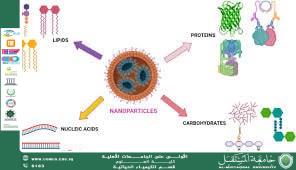
When nanoparticles enter a biological system, they interact with many biomolecules such as:
• Proteins
• Nucleic acids (DNA / RNA)
• Lipids
• Carbohydrates
These interactions significantly influence:
• The behavior of nanoparticles
• Their transport within the body
• Their biological effects
• Their use in medical applications
First: What are Biomolecules?
Biomolecules are chemical compounds that make up living organisms and perform essential biological functions.
Major types of biomolecules
1. Proteins
Proteins perform many important functions, including:
• Enzymatic catalysis
• Transport within cells
• Immune defense
• Structural roles in cells
2. Nucleic Acids
Examples include:
• DNA
• RNA
Their functions include:
• Storing genetic information
• Transmitting genetic instructions
3. Lipids
Lipids are involved in:
• Formation of cell membranes
• Energy storage
4. Carbohydrates
Their functions include:
• Serving as a source of energy
• Cell recognition
Second: Nanoparticle–Biomolecule Interactions
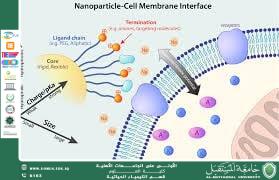
When nanoparticles enter biological fluids such as blood or cytoplasm, biomolecules begin to attach to their surface.
This leads to the formation of a layer called the:
Protein Corona
The protein corona is a layer of proteins surrounding the nanoparticle that determines how the body interacts with it.
This layer influences:
• Nanoparticle stability
• Transport within the body
• Cellular recognition
Third: Binding Between Nanoparticles and Biomolecules
Binding refers to the process by which nanoparticles attach to biomolecules.
This interaction occurs through several chemical and physical forces.
Types of binding forces
1. Electrostatic Interactions
These interactions arise from differences in electrical charge between:
• The nanoparticle surface
• Biomolecules
Example:
A positively charged nanoparticle can easily bind with negatively charged DNA.
2. Hydrogen Bonding
Hydrogen bonds occur between:
• Hydrogen atoms
• Oxygen or nitrogen atoms
These bonds commonly occur during interactions between nanoparticles and proteins.
3. Van der Waals Forces
These are weak forces, but they play an important role in stabilizing interactions between nanoparticles and biomolecules.
4. Hydrophobic Interactions
These interactions occur when non-polar molecules cluster together away from water.
Fourth: Transport of Nanoparticles in Biological Systems
Transport refers to the movement of nanoparticles within the body or inside cells.
Nanoparticles may move through several mechanisms.
1. Transport in the Bloodstream
Blood Circulation
After entering the bloodstream, nanoparticles may:
• Bind to proteins
• Move to different tissues
• Be eliminated through the liver or kidneys
2. Cellular Uptake
Nanoparticles can enter cells through a process called:
Endocytosis
Endocytosis is a process by which a cell engulfs particles from its surrounding environment.
Types of Endocytosis
• Phagocytosis
• Pinocytosis
• Receptor-mediated endocytosis
3. Intracellular Transport
After entering the cell, nanoparticles may move to different cellular components such as:
• Cytoplasm
• Nucleus
• Mitochondria
• Endoplasmic reticulum
This movement depends on the properties of the nanoparticle.
Al-Mustaqbal University – The First Among Iraqi Private Universities