Attention Deficit Hyperactivity Disorder (ADHD) in Children Prepared by: Assist. Lect. Abbas Hamza Khudhair Department of Biochemistry – College of Science – Al-Mustaqbal University
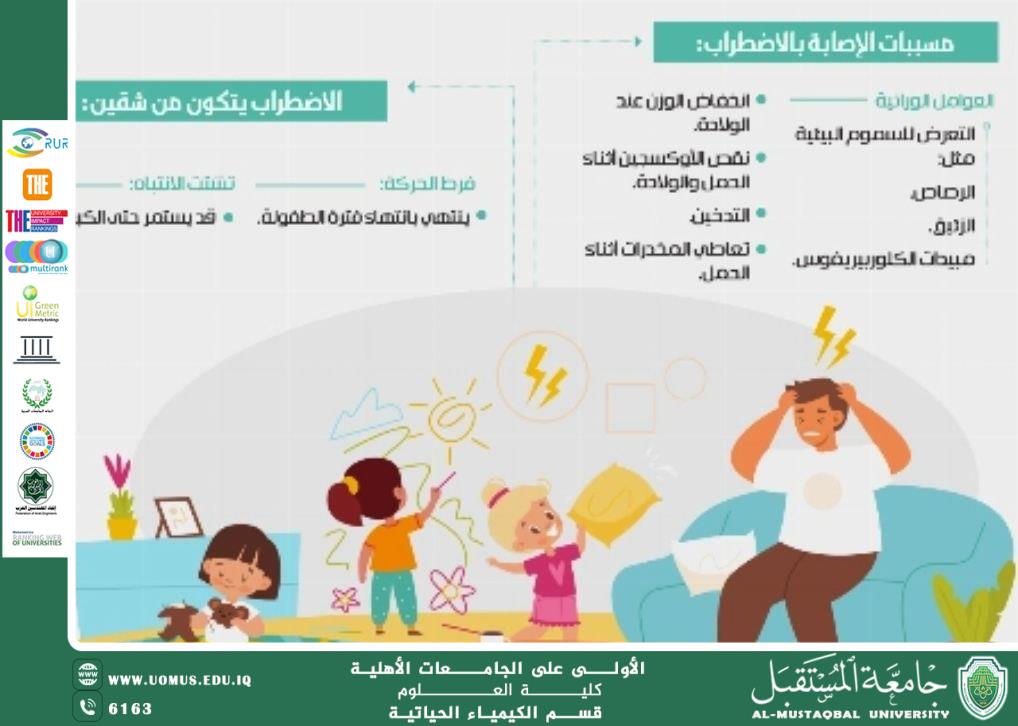
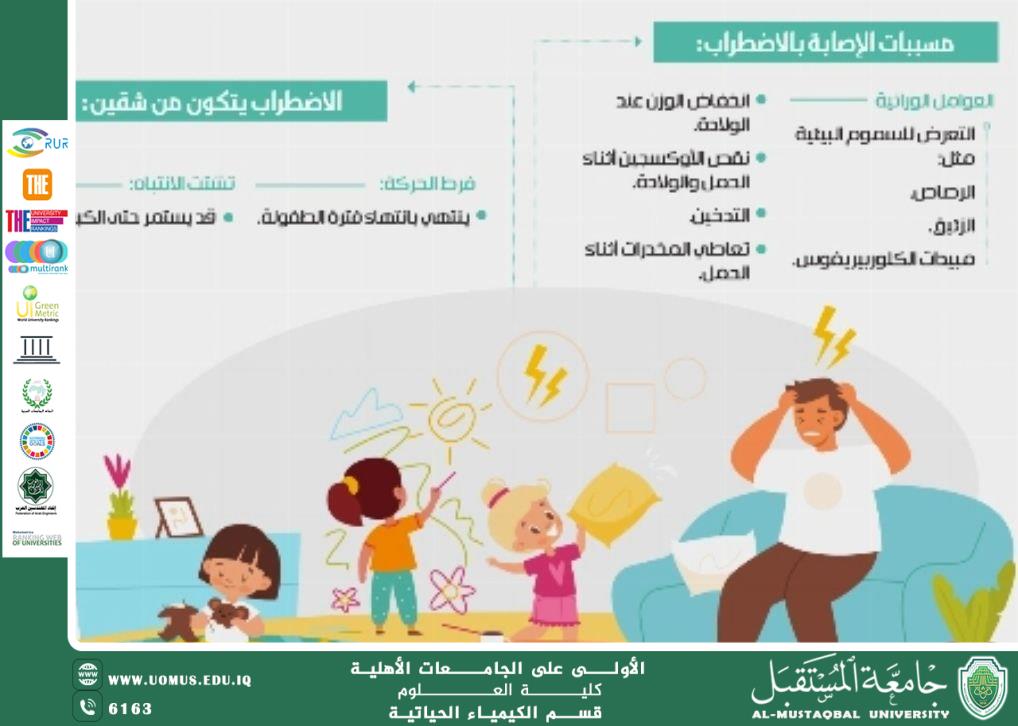
Attention Deficit Hyperactivity Disorder (ADHD) is one of the most common neurodevelopmental disorders affecting children. It is characterized by persistent patterns of inattention, hyperactivity, and impulsivity that interfere with a child’s academic performance, behavior, and social interactions.
Biological Basis
ADHD is associated with alterations in brain regions involved in attention and behavioral control, particularly the prefrontal cortex. Neurochemical studies suggest an imbalance in neurotransmitters such as dopamine and norepinephrine, which play essential roles in regulating attention, motivation, and executive functions.
Common Symptoms
Children with ADHD may show several symptoms, including:
Difficulty maintaining attention or concentration
Excessive physical activity and restlessness
Impulsive behavior and difficulty waiting for their turn
Frequent interruptions during conversations or activities
These symptoms typically appear in early childhood and may continue into adolescence and adulthood if not properly managed.
Diagnosis and Management
The diagnosis of ADHD is based on clinical evaluation, behavioral assessment, and standardized diagnostic criteria. Management strategies may include:
Behavioral therapy and psychological support
Educational interventions
In some cases, pharmacological treatment such as stimulant medications
Early identification and proper management can significantly improve the child’s academic performance and social development.
Conclusion
ADHD is a complex neurodevelopmental disorder that requires early recognition and multidisciplinary management. Understanding its biological and behavioral aspects helps in providing effective support for affected children and improving their quality of life.
Al-Mustaqbal University – Ranked First Among Iraqi Private Universities